    |
 |
|
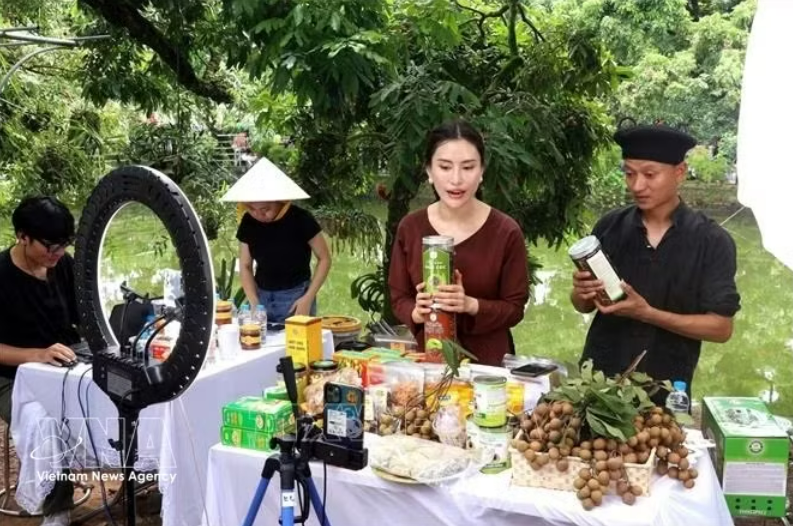
Content creators help farmers sell longan and OCOP products on TikTok. |
The move aims to build a more transparent livestream shopping environment, protect consumers and legitimate businesses, and curb counterfeit and substandard goods in the digital space.
Under the stricter process, checks now cover not only products but also sellers, businesses, promotional content and livestream participants. Content creator and affiliate marketer Vo Truong Duy said that sellers are required to provide products and relevant documents for verification before livestreams. Information on distributors, product declarations, labels and ingredients must be consistent.
He noted that content creators also avoid making absolute claims, such as guaranteeing 100% effectiveness, as inaccurate information could expose both sellers and promoters to risks.
Nguyen Huu Tho, an e-commerce representative of Be’Balance Viet Nam, said businesses are strengthening controls throughout the supply chain, from production, testing and packaging to listing products on e-commerce platforms. Product information is also reviewed more carefully before being handed to digital content creators.
The tighter controls have become more evident since the Law on E-Commerce took effect in July. Platforms have already applied measures to monitor sellers and products, but these efforts have been intensified.
Nguyen Lam Thanh, a TikTok representative in Vietnam, said the platform is implementing seller and content creator verification in line with new legal requirements, while using technical measures to detect cases where actual goods differ from sellers’ descriptions. Consumers can also report suspected violations directly on the platform, allowing products or sellers to be reviewed and sanctioned where necessary.
Nguyen Huu Tuan, Director of the Center for E-commerce and Digital Technology Development under the Ministry of Industry and Trade’s Vietnam E-Commerce and Digital Economy Agency, said that platforms are preparing to meet new requirements covering product controls, identification, electronic verification, data storage and complaint handling.
Vietnam’s e-commerce market has maintained annual growth of around 20-25% in recent years, with growth estimated at 20-22% in the first half of 2026. As online shopping continues to expand, stronger and coordinated product controls are expected to help curb counterfeit goods and strengthen consumer confidence in livestream shopping.
Source: VNA