PM Pham Minh Chinh stressed that by the end of the 2021–2025 term, Vietnam had achieved important socio-economic outcomes, laying a solid foundation for rapid and sustainable breakthrough growth in the next phase, with flexible and effective macroeconomic management playing a crucial role.
    |
 |
|
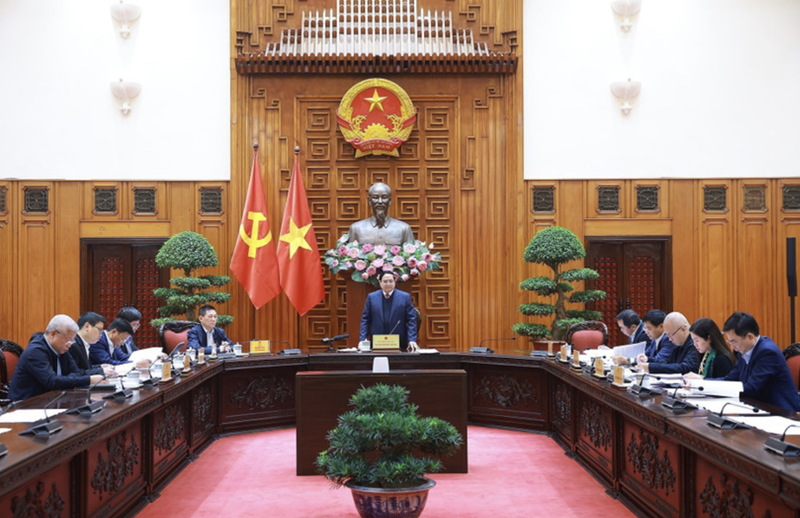
Prime Minister Pham Minh Chinh chairs the Government Steering Committee for Macroeconomic Management and Administration's second meeting. |
Highlighting key lessons, he noted that global developments in 2026 will remain unpredictable and complex. Domestically, priority tasks include maintaining macroeconomic stability; controlling inflation; striving for double-digit growth; ensuring major balances; keeping budget deficits and public debt within safe limits; safeguarding social security, security and safety; and improving the material and spiritual life of the people in line with targets set by the Party Central Committee and the National Assembly.
He instructed ministries and sectors to immediately begin implementing resolutions of the 14th National Party Congress and related Party congresses for the 2026–2030 term.
He called for proactive, flexible and effective responses based on clearly grasping developments. He directed the continued implementation of an expanded but focused fiscal policy, with appropriate tax and fee measures to support development, especially the double-digit growth target, alongside measures to increase revenues, reduce expenditures, and prioritize spending on defense, security, growth drivers and social welfare. Monetary policy should be managed proactively, flexibly, timely and effectively, with close coordination between fiscal and monetary policies so that they reinforce one another.
The Government leader also underscored the need to strengthen fiscal and budgetary discipline, ensure accurate and timely revenue collection, expand the tax base and combat revenue losses, especially in e-commerce and services, while continuing tax and fee reductions and extensions to support people and businesses, particularly small- and medium-sized enterprises. Available room on public debt and overspending should be used prudently to mobilize resources for investment in national priority projects and areas such as science, technology, innovation and digital transformation.
The Prime Minister also directed efforts to develop stable and healthy stock and corporate bond markets, manage interest rates and exchange rates in line with macroeconomic conditions, stabilize the Vietnamese dong, continuously renew traditional growth drivers, and vigorously promoting new ones.
He also stressed the importance of promoting public investment disbursement, attracting high-quality FDI, accelerating green transition, ensuring food security, stabilizing markets and prices, and intensifying the fight against smuggling, trade fraud and counterfeit goods, so as to create strong momentum for growth in 2026 and the entire 2026–2030 period.
The committee noted that in 2025 the global environment remained highly uncertain due to geopolitical tensions and tariff policies, while domestically, natural disasters, storms and floods were unusually severe, exceeding historical levels. Despite these challenges, Vietnam recorded encouraging economic results, with inflation kept under control at 3.31%, macroeconomic stability consolidated, major economic balances safeguarded, and GDP growth reaching 8.02% – a notable rate globally.
Source: VNA