The Resolution stresses a comprehensive, synchronized approach to improving the investment and business climate across all fields, from mechanisms, policies, and administrative procedures to digital platform development and stronger enforcement capacity. It seeks to ensure fair, transparent access to resources, markets, and development opportunities, while promoting new production forces and methods, with a focus on the digital, green, and circular economies and the building of an environmentally friendly digital society.
    |
 |
|
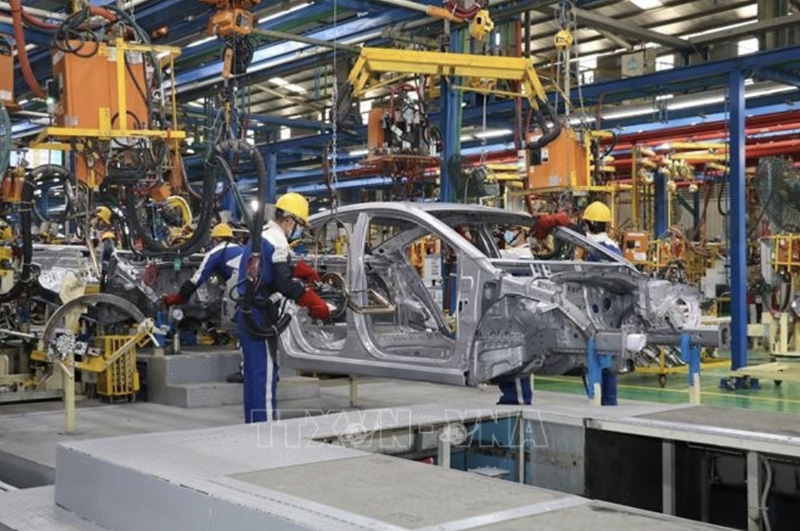
Hyundai Thanh Cong automobile production line |
A key requirement is a decisive shift in lawmaking mindset from “management” to “facilitation and development,” with citizens and businesses placed at the center of public service delivery. The resolution calls for improving the quality of legal drafting and policy advice, revising regulations in a coordinated manner to remove bottlenecks, encouraging enterprises to invest in priority sectors, protecting business and property rights, and fostering innovation. Breakthrough mechanisms and policies are to be proposed to unlock resources, turn institutional constraints into national competitive advantages, and create strong momentum for development.
Administrative reform will be accelerated through thorough decentralization paired with strict inspection and supervision, greater transparency, enhanced autonomy, and stronger accountability to prevent corruption and wastefulness. The Government will replace pre-inspection with post-inspection based on clear standards, while ensuring clear assignment of responsibilities, aiming for easy implementation, monitoring, and evaluation.
The resolution sets the goal of markedly improving the quality of the business environment in line with domestic conditions and global trends, raising Vietnam’s standing in international rankings and reducing compliance costs in accordance with best international practices. In 2026, Vietnam targets a top-50 position in the UN Sustainable Development Goals index, a rise of at least three places in the International Property Rights Index, one place in the Global Innovation Index, two places in the E-Government Development Index, maintenance of the tier-1 status in the Global Cybersecurity Index, and gains of at least four places in both the Logistics Performance Index and the Travel and Tourism Development Index.
Domestically, the Government aims to improve perception-based indicators, including raising the national median Provincial Competitiveness Index score by one point, achieving average administrative reform scores of 84.7% for ministries and ministry-level agencies and 88.87% for localities, and lifting the Satisfaction Index of Public Administrative Services to 86%. The number of enterprises entering and re-entering the market is expected to rise by 15–20% compared with 2025.
To realize these goals and advance the vision of a developed, high-income Vietnam by 2045, the Resolution identifies four key task groups, including effective implementation of major Party resolutions on science, technology, international integration, and legal reform; improving the operation of the two-tier local government model; strengthening ministerial accountability for indices; and executing focused solutions to remove legal bottlenecks, reform procedures, support innovation, and reduce inspection burdens on enterprises.
Source: VNA