During the same period last year, China imported just over 565,000 tons, valued at 286.7 million USD. With the surge, China rose from fourth place during the same period in 2025 to the second position, just behind the Philippines.
China’s import value accounted for 17.4% of Viet Nam’s total export volume over the eight-month period.
    |
 |
|
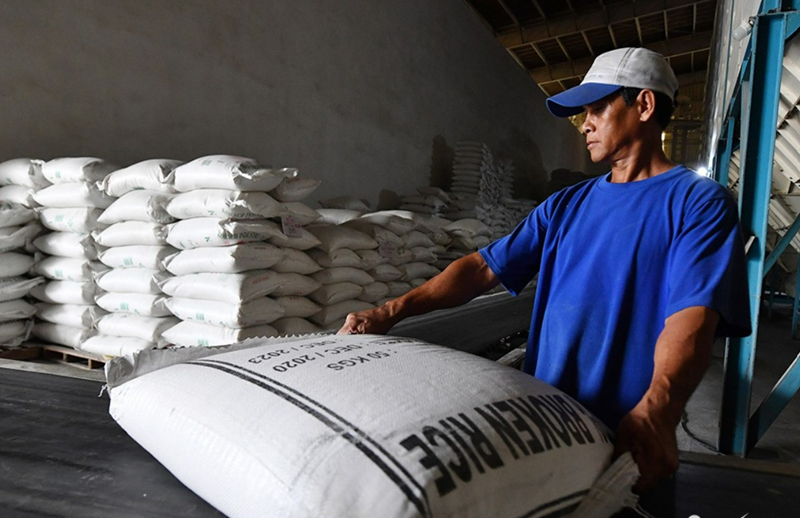
Vietnam’s rice export revenue is forecast to reach around $3.94 billion in 2026. Photo: Hoang Ha |
The Ministry of Agriculture and Environment reported a sharp rise in demand for broken rice from China, primarily for use in animal feed production.
According to the ministry, during the first eight months of 2026, Viet Nam's rice exports to Iraq also surged 98.9-fold compared to the same period last year. However, the export value to this market remains modest, totaling just under 14 million USD.
The Philippines remains the largest buyer of Vietnamese rice, accounting for a 40.9% market share.
In its assessment of supply, demand, trade, and prices for the 2026–2027 crop year, the ministry noted that the recovery of exports to Iraq indicates untapped potential for market diversification – an opportunity that should be exploited more proactively and sustainably during the final months of the year.
The ministry observed an increased concentration on the Philippine and Chinese markets, which account for over 64% of total exports, offers a short-term advantage, but also poses the risk of over-reliance on a few specific markets. Therefore, the ministry advocates for a gradual diversification of export destinations.
According to estimates by the Viet Nam Food Association, after shipping 377,400 tons of rice in September, Viet Nam is projected to export 400,000 tons in October, followed by approximately 220,000 tons in November and 268,300 tons in December.
Total rice exports for 2026 are forecast to reach nearly 7.74 million tons with a value of approximately 3.94 billion USD. This represents a 4% decline in value compared to 2025, driven by low average export prices during the early months of the year.
If the export volume reaches nearly 7.74 million tons, Viet Nam is expected to retain its position as the world's second-largest rice exporter, trailing only India.
The outlook for rice export prices in the final months of the year is supported by several factors.
The global rice supply-demand balance for the 2026–2027 crop year is projected to shift into a deficit, while global rice trade could reach record levels.
The Philippines recently confirmed it would not impose an import ban in 2026 and would continue importing to boost reserves. This is welcome news, as Viet Nam currently accounts for the majority of the country's total rice imports.
The Chinese market has seen a surge in import volumes, opening up significant opportunities for raw rice, broken rice, and glutinous rice.
In addition, certified high-quality, low-emission rice is fetching prices exceeding 1,000 USD per ton in markets such as Japan, the E.U., and Australia, underscoring the potential to enhance the value of Vietnamese rice.
Finally, global supply could also be affected by El Niño, monsoon conditions in India, and the planting area for the country’s Kharif rice crop.
Source: VNA