Untapped potential in nighttime tourism
At nightfall, central Xuan Huong - Da Lat ward illuminates with vibrant lights and crowds of tourists. Visitors flock to Da Lat Night Market and nearby streets to sample cuisine, purchase specialties and souvenirs, and enjoy the lively atmosphere, while local cafés, restaurants, and live music venues remain open late.
    |
 |
|
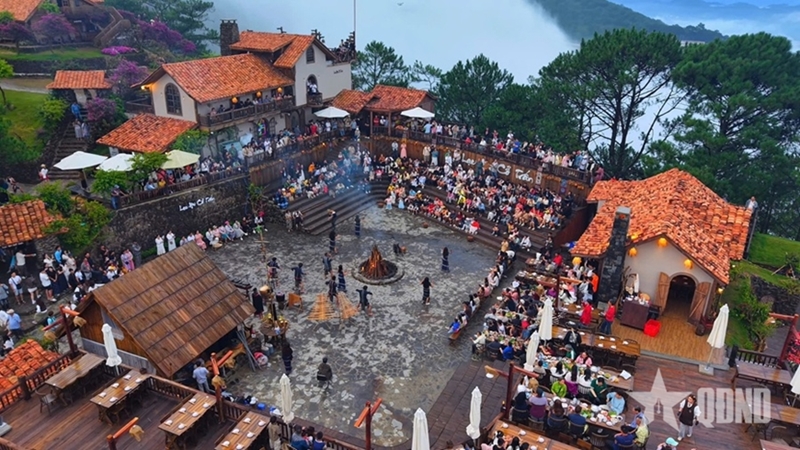
A tourist attraction in Xuan Huong - Da Lat ward welcomes visitors for evening sightseeing and experiences. |
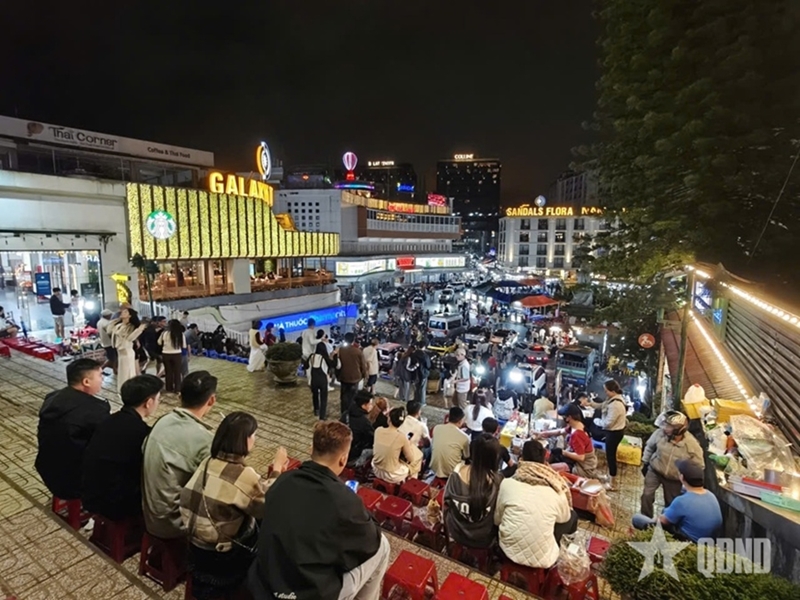
Along a 100-meter stretch of Nguyen Thi Minh Khai Street in front of Da Lat Market, around 500 stalls operate nightly, catering to dining, sightseeing, and shopping needs.
Nguyen Thanh Mai, 36, a tourist from Ho Chi Minh City, shared that she enjoys Da Lat's crisp air, cozy cafés, and regional dishes like hot soy milk and grilled rice paper. She noted that fresh highland flowers and farm produce give the night market a unique identity that draws her back.
Following administrative boundary restructuring, Lam Dong has expanded its development space and tourism assets. Da Lat stands out for its climate, scenery, heritage architecture, flowers, cuisine, and music, while Phan Thiet and Mui Ne excel in coastal tourism, entertainment, dining, and festivals. Meanwhile, Gia Nghia and Ta Dung attract visitors with volcanic geological heritage and indigenous culture, while Bao Loc and Di Linh offer strengths in tea, coffee, silk, and traditional craft villages. These contrasts establish a solid foundation for varied nighttime economic models province-wide.
|
|
 |
|
Large numbers of tourists visit Da Lat Night Market. |
In the first 10 months of 2026, Lam Dong welcomed nearly 20.7 million arrivals, including 1.2 million foreign travelers, generating VND 57.514 trillion in revenue. With 4,318 lodging establishments totaling 69,040 rooms, 111 travel agencies, and 99 tourist sites, the province offers an ample market for expanding post-6 p.m. commerce.
Lam Dong piloted nighttime economic activities in Da Lat in 2023 to offer fresh sightseeing, entertainment, and shopping opportunities. However, the lack of an overarching strategy hampered performance. Several experimental models, including Tran Quoc Toan Pedestrian Street, Hung Vuong Night Market, and the Mui Ne night food street, were forced to close or operate at a minimum.
Building a nighttime economy ecosystem
Lam Dong is finalizing its master plan for nighttime economic development through 2030. According to Dinh Van Tuan, Vice Chairman of the Lam Dong Provincial People's Committee, the province plans to launch pilot models across five key zones by late 2027: Da Lat, Bao Loc, Gia Nghia, Phan Thiet, and Mui Ne.
The initiative aims to build tailored products for each destination, extend tourist stays, boost average spending, and create sustainable livelihoods for locals.
To finalize the proposal, the provincial administration requested clear spatial boundaries, product lineups, infrastructure investment plans, and management responsibilities. Each designated zone must appoint a coordinating body to connect operators. The Department of Culture, Sports and Tourism will partner with consultants and local authorities to review planning alignment, finalize timelines, establish operational mechanisms, and identify funding before submitting the draft to the provincial People's Committee.
|
|
 |
|
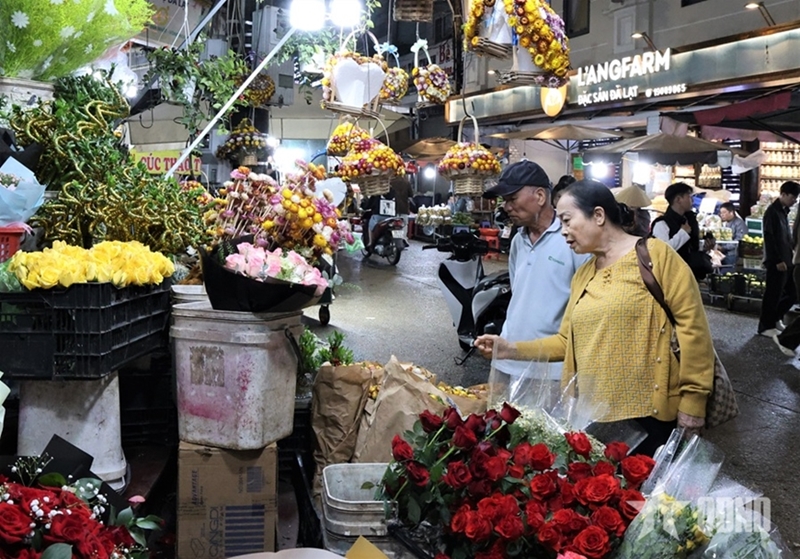
Tourists visit a flower stall at Da Lat Night Market. |
Addressing a scientific symposium in early October 2026, Dinh Van Tuan stressed that nighttime economic development must integrate into the broader expansion of tourism, commerce, and services. The primary goal is not merely extending service hours, but tapping untapped potential, delivering novel experiences, prolonging visitor stays, lifting expenditures, generating employment, and boosting public revenues.
According to Dr. Phan Bao Giang, Vice President of Ho Chi Minh City University of Economics and Finance, cultivating a nighttime economy requires comprehensive spatial organization, curated experiences, community livelihoods, and joined-up governance.
"Lam Dong could develop along three geographical corridors, the highlands, vast forests, and coast, to create a chain of distinctive tourism products while strengthening coordination among government authorities, businesses, and communities," he stated.
Experts advise the locality to capitalize on the unique identity of each area. Da Lat can develop into a nighttime city of music, arts, light shows, flowers, gastronomy, and architecture. Phan Thiet and Mui Ne could establish seaside nighttime hubs merging dining, sports, performance arts, and outdoor festivals. Bao Loc and Di Linh could design nighttime trails spotlighting tea, coffee, and silk, while Gia Nghia and Ta Dung highlight nature trails, community music, and geological heritage.
Developing signature offerings in each cluster will incentivize travelers to embark on multi-destination itineraries and prolong their vacations.
Realizing these visions requires resolving urban zoning hurdles and investing in transit infrastructure and nighttime public utilities, while maintaining strict rescue capabilities, medical readiness, fire prevention, and public order.
Another prerequisite is building an unbroken chain of nighttime offerings: beginning with evening culinary and cultural walking tours, progressing to theatrical productions and light spectacles, and culminating in dedicated late-night entertainment complexes.
Accelerating digital transformation will also prove critical to marketing destinations, integrating bookings, and linking attractions, thereby unlocking Lam Dong's night economy to drive sustainable local prosperity.
Translated by Tran Hoai