The year 2025 marked a significant breakthrough for Vietnamese seafood exports, reflecting Singapore’s growing demand and increasing confidence in the quality and branding of Vietnam’s seafood products.
    |
 |
|
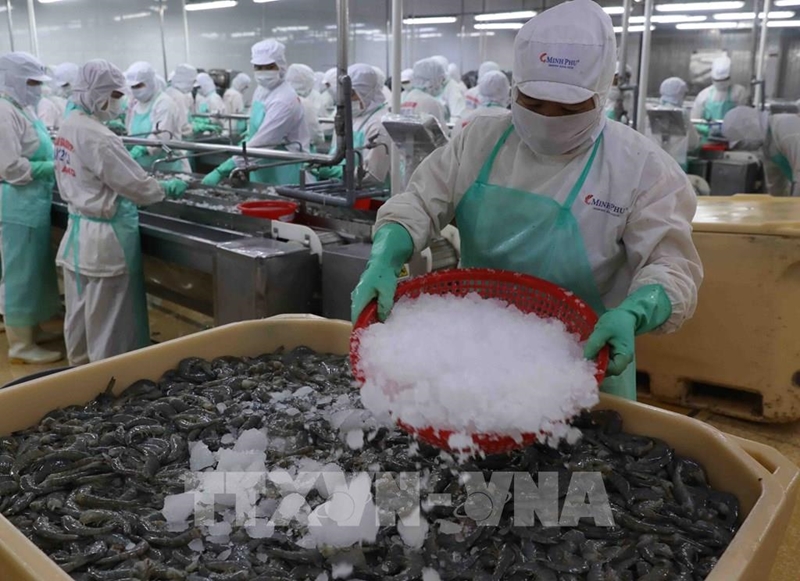
Vietnam’s seafood exports gain momentum in Singapore (Photo for illustration) |
Statistics from Singapore’s Accounting and Corporate Regulatory Authority show that in 2024, Vietnam climbed from sixth to fifth place among Singapore’s largest seafood exporters for the first time. The upward momentum continued into the first quarter of 2025, with Vietnam rising to fourth place. Over the first nine months of the year, Vietnam further advanced to become Singapore’s third-largest seafood supplier and maintained this position, underscoring the increasingly important role of Vietnamese seafood in the market.
Kenneth Chia, President of the Seafood Industries Association Singapore, noted that trade between Vietnam and Singapore has grown steadily for more than two decades. Many Singaporean companies regard Vietnam as a key seafood sourcing market, with several firms stationing staff in Vietnam to procure products directly. This has helped build strong relationships and mutual trust.
Singaporean consumers use and trust Vietnamese products. Many Vietnamese companies have met their requirements very well, Chia said.
Singapore produces little agricultural output and imports around 90% of its food supply. With its high per capita income, the city-state has strong demand for high-quality food products. Its relatively small but diverse population also makes it an ideal test market for new products before global rollout. As such, Vietnam’s seafood growth in Singapore reflects the combined success of effectively leveraging free trade agreements, implementing export promotion policies, close coordination among ministries, local authorities and industry associations, and the dynamism of Vietnamese seafood enterprises. The role of the Vietnam Trade Office in Singapore as a bridge for bilateral trade connectivity has also been significant.
Cao Xuan Thang, Trade Counsellor of Vietnam in Singapore, stressed that Singapore is an open market pursuing supply diversification to ensure food security. To remain competitive, he advised Vietnamese seafood firms to strengthen quality management across the entire value chain, from aquaculture and processing to traceability and sustainable farming, while adopting advanced technologies. He highlighted the importance of digital transformation, e-commerce, and modern payment solutions to boost productivity and reduce costs, alongside enhancing value chains, market diversification, and industry collaboration.
ASEAN remains a major partner and a global transshipment gateway for Vietnam. Within the bloc, Singapore serves as a key logistics and global seafood trading hub, offering strong advantages in ports, warehousing, logistics, and financial services.
Therefore, strengthening cooperation with Singapore can help Vietnam sustain stable export growth and expand its reach to regional and global markets.
Chia added that Vietnam should invest more in research and development to create value-added seafood products tailored to Singapore’s restaurant and food service sector, benefiting trade on both sides.
In reality, Vietnamese seafood products are increasingly sought after by Singaporean consumers, making the market a strategic springboard for Vietnam’s seafood industry to expand further into the region and beyond.
Source: VNA