The 2026 Japan Investment Promotion Conference was jointly organized by the municipal Investment and Trade Promotion Center (ITPC) and Japan’s Gunma Bank.
Fukai Akihiko, President and Representative Director at Gunma Bank and head of a business delegation from Japan’s Gunma prefecture, said cooperation between Gunma and Viet Nam has continued to expand in recent years. Around 15,000 Vietnamese people currently live in Gunma, forming the largest foreign community in the prefecture. Many skilled Vietnamese workers are contributing to local economic development in manufacturing, programming and other sectors, he noted.
    |
 |
|
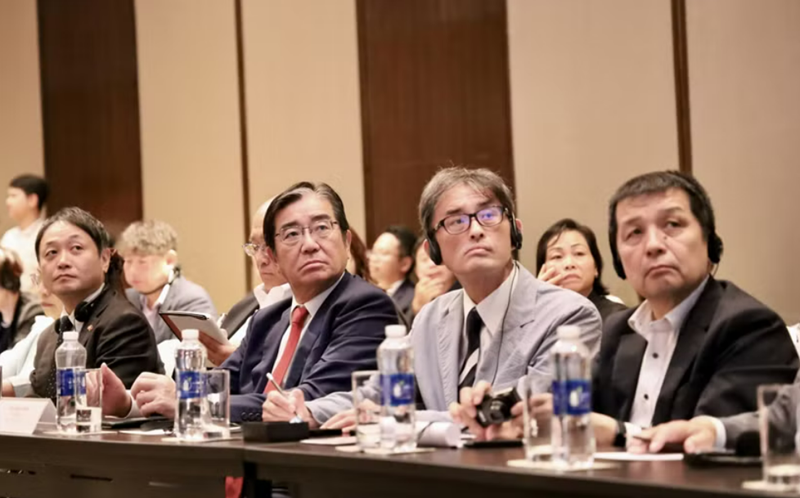
Japanese business representatives review Ho Chi Minh City’s investment project portfolio at the conference. |
About 60 businesses from Gunma have invested and operated in Viet Nam, with many planning to expand their operations and increase investment. Ho Chi Minh City, one of Viet Nam’s leading economic centers, has attracted particular interest thanks to its strong growth and connectivity advantages.
Fukai said Viet Nam is one of the most attractive economies in ASEAN for businesses seeking new investment opportunities. Its manufacturing sector is gaining ground, supported by an abundant workforce and its strategic location in the region. Foreign investors have established production facilities in various industries, including automobiles, electronics and garments.
Viet Nam’s growing pool of well-educated information technology professionals is another advantage. The rapid development of the IT sector has attracted international companies to software development and digital services. Meanwhile, expanding tourism, accommodation, hotel and business process outsourcing (BPO) services are creating further investment opportunities.
Yoshinori Wakatabi, Chairman and Representative Director of Yosen Kogyo, said his company has established a legal entity and opened its first food business outlet in Hanoi last month. It is now exploring further investment opportunities in Ho Chi Minh City.
Operating in sectors ranging from electronic components and food production to environmental services, construction and retail, the company is particularly interested in the southern metropolis’s infrastructure development, information technology and computer-related industries.
Wakatabi pointed out that Japanese businesses often struggle to understand Viet Nam's business environment and regulations. He called for more information-sharing seminars and practical investment incentives, particularly in land and taxation, to facilitate project implementation and factory construction.
Cao Thi Phi Van, ITPC Deputy Director, said Japan is among Ho Chi Minh City’s leading economic partners in investment, trade and development cooperation. Japanese investors have 84 newly licensed projects in the city, with total registered capital exceeding 43 million USD.
She highlighted potential cooperation in manufacturing, supporting industries, electronics and semiconductors, automobiles, green transport, new materials, garment and footwear production, food processing and the circular economy.
The city is also developing a new economic space connecting markets, manufacturing, logistics, infrastructure, human resources and services. For 2026–2030, it has identified around 250 projects calling for investment across nine sectors, including seaports and logistics, high technology, transport infrastructure, education, housing, healthcare, trade and services, and culture and sports.
Van affirmed that the city would continue improving its investment environment, reforming administrative procedures and expanding digital transformation in public management, while supporting investors throughout the process from initial market research to project implementation and expansion.
Both sides also called for regular exchanges of information on policy changes, investment opportunities, market demand and Japanese industry standards to encourage more technology-driven businesses to establish long-term operations in Viet Nam.
Source: VNA