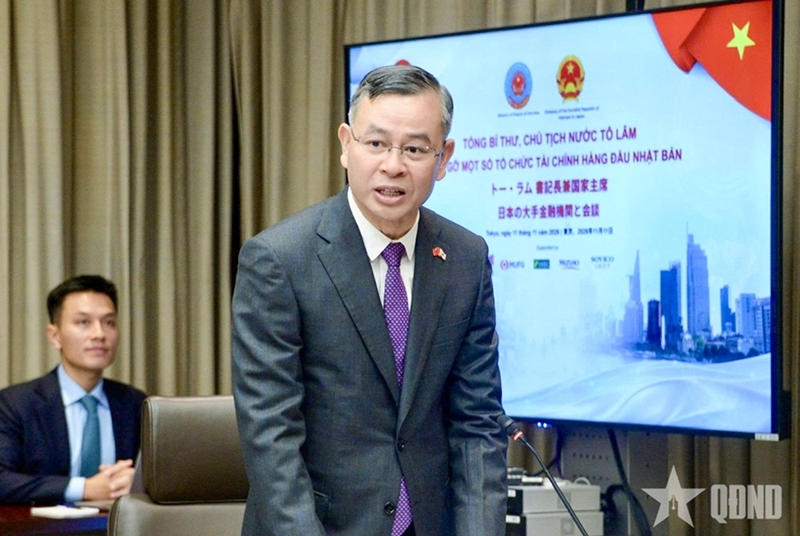
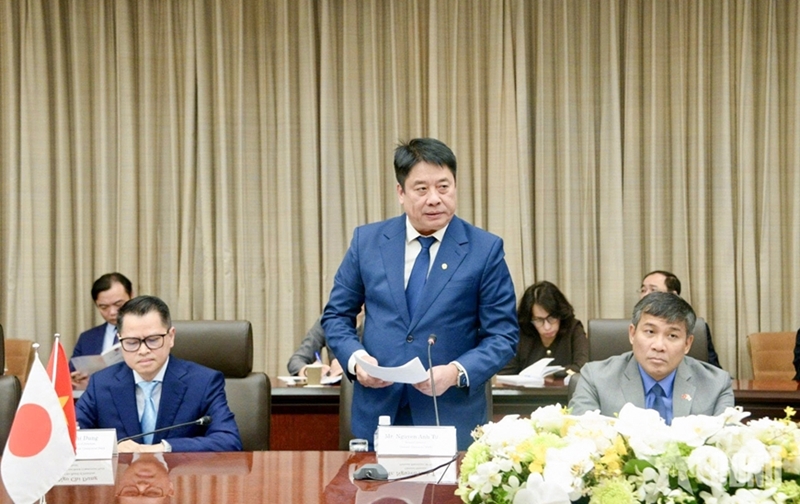
In his opening remarks, Vietnamese Minister of Finance Ngo Van Tuan said Viet Nam was entering a new phase of development that would require substantial investment in transport, energy, logistics, digital infrastructure and emerging sources of growth. He described Japan as an important partner for Viet Nam, citing its financial resources, experience in investment and management, and networks of international investors.
    |
 |
|
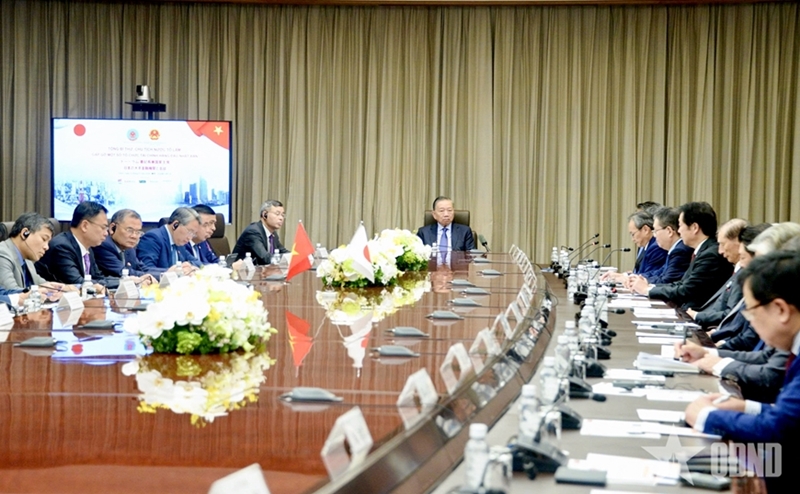
A view of the meeting between General Secretary and President To Lam and leaders of several leading Japanese financial institutions |
He said Viet Nam must use the funds it raises efficiently and manage the associated risks. Alongside public investment, official development assistance (ODA) and concessional financing, Viet Nam aims to attract more private capital, promote public-private partnerships (PPPs) and develop capital market instruments. The choice of financing should reflect the nature of each project, its capacity to repay and the need to ensure financial safety.
|
|
 |
|
Vietnamese Minister of Finance Ngo Van Tuan delivers the opening remarks at the meeting. |
The minister invited Japanese partners to submit specific proposals identifying areas for cooperation, the conditions needed to carry them out and ways for the two sides to coordinate. He said his ministry and the relevant agencies were ready to consider suitable recommendations within their respective mandates and in accordance with the law.
Representatives of leading Japanese financial institutions, investors and businesses offered candid, practical views. Their remarks reflected confidence in Viet Nam’s prospects and identified opportunities for long-term cooperation that matched the development priorities of both countries.
|
|
 |
|
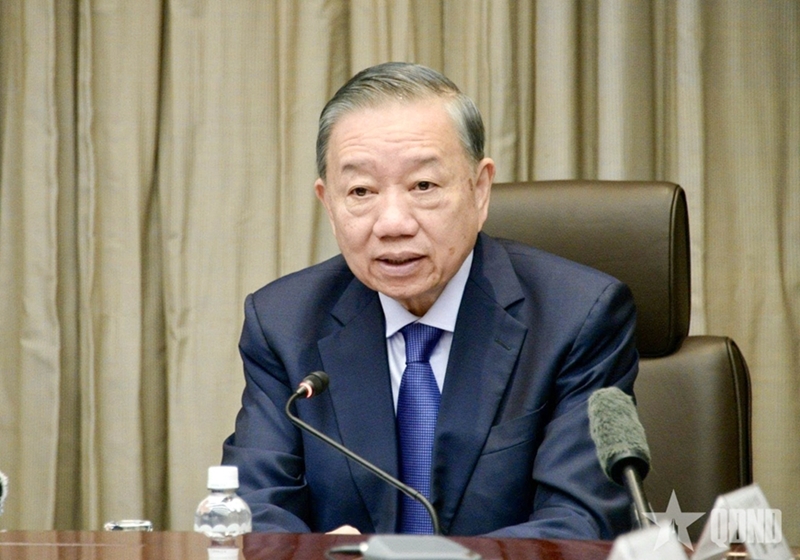
General Secretary and President To Lam addresses the meeting. |
The talks covered finance, capital markets, the International Financial Center and funding for strategic infrastructure. Participants discussed how to raise medium- and long-term capital, reach a wider range of international institutional investors and develop capital market instruments. They also considered the possibility of issuing bonds on international markets when market conditions, financing costs and risks are favorable.
Participants examined viable ways to finance transport and energy infrastructure and projects that support the green transition. They stressed the importance of preparing projects thoroughly, designing suitable capital structures, making effective use of public and private funds, and sharing risks in a balanced way to protect the interests of all parties.
Japanese financial institutions and investors also recommended ways to further develop Viet Nam’s capital market and International Financial Center, strengthen governance and improve the quality of financial services. They discussed how Japanese institutions and investors could connect with long-term investment opportunities in Viet Nam.
|
|
 |
|
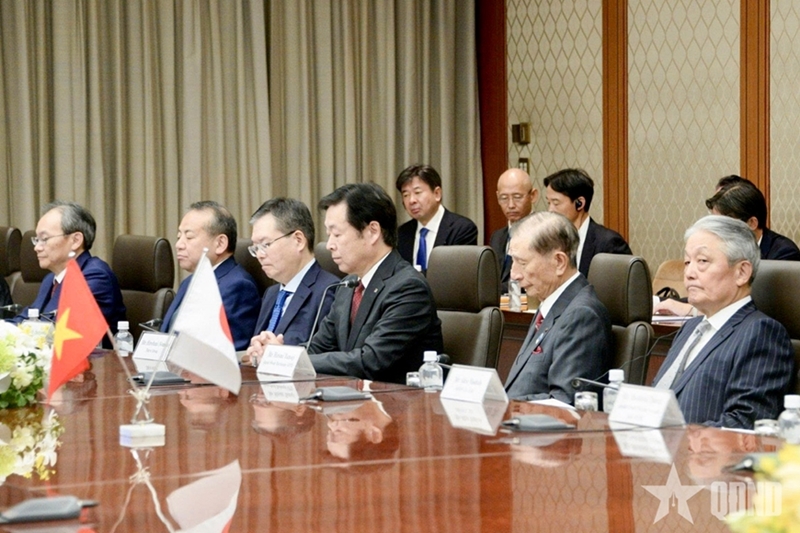
Leaders of several leading Japanese financial institutions attend the meeting. |
Vietnamese business representatives discussed working with Japanese financial institutions on power infrastructure projects in Viet Nam. They also spoke about helping private enterprises gain access to capital, management expertise and markets, and drawing on financing from both countries to develop strategic infrastructure.
|
|
 |
|
A representative of a Vietnamese business speaks at the meeting. |
Addressing the meeting, General Secretary and President To Lam said the Comprehensive Strategic Partnership between Viet Nam and Japan was opening up broader opportunities for cooperation. He noted that bilateral financial cooperation had helped build important infrastructure over the past several decades. In the years ahead, he said, the two countries should develop modern ways to raise capital, deliver strategic infrastructure projects and develop new competitive capabilities.
From 2026 to 2030 and in the years that follow, Viet Nam will prioritize high-speed and urban rail, airports, seaports, logistics, energy, digital infrastructure and strategic economic corridors. These plans will require substantial long-term investment from a range of sources. The State budget or any single financing channel would be insufficient to meet those needs on its own.
|
|
 |
|
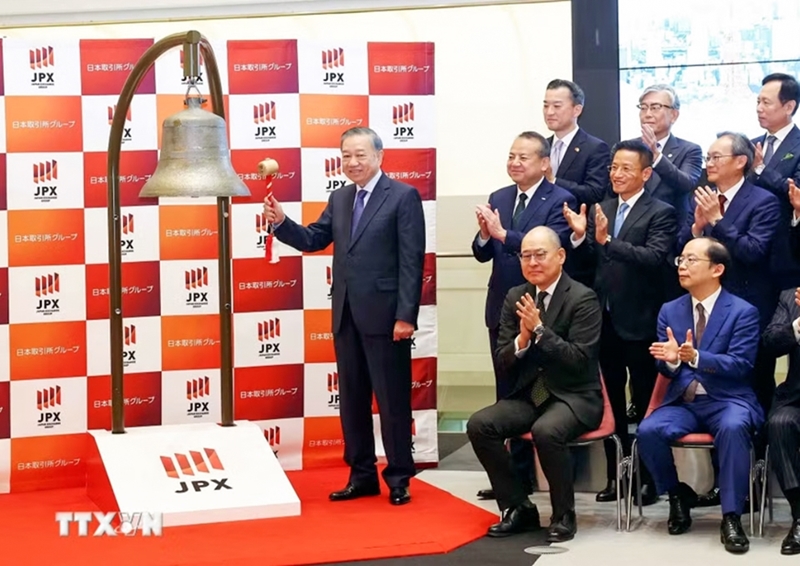
General Secretary and President To Lam rings the bell at the Tokyo Stock Exchange. (Photo: VNA) |
The Vietnamese leader said he hoped the two countries would move from a traditional provider-recipient relationship to a partnership in which they jointly develop financial markets, design effective ways to raise capital and invest in projects and sectors that strengthen long-term competitiveness.
|
|
 |
|
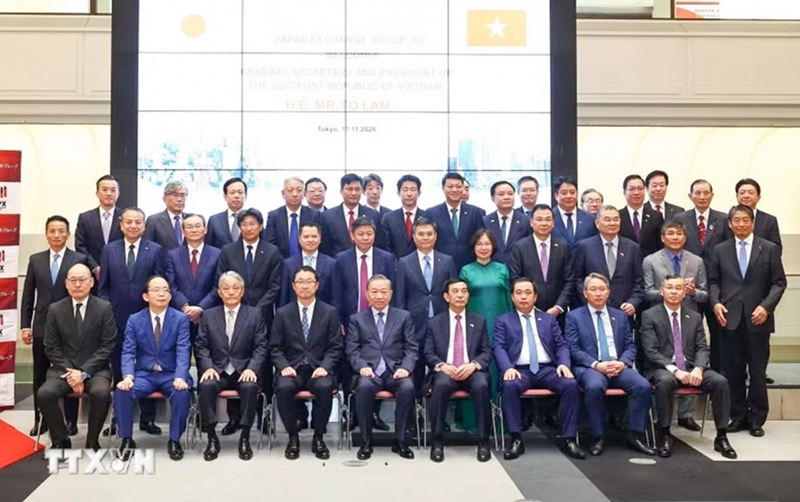
General Secretary and President To Lam with delegates from both countries at the Tokyo Stock Exchange. (Photo: VNA) |
Outlining priorities for cooperation, the top Vietnamese leader urged the two sides to develop modern, transparent and safe financial and capital markets so the economy could raise long-term funding more effectively.
He said Viet Nam wanted Japanese banks, brokerages, investment funds, insurers and financial institutions to work more closely with Vietnamese partners on market infrastructure, modern financial instruments, long-term investment products and risk management. He encouraged them to explore opportunities to advise on and invest in suitable instruments that the Vietnamese Government and firms could use to raise capital internationally.
He called for closer links between the financial markets of Viet Nam and Japan and with markets across the region. He said he wanted the Viet Nam International Financial Center to serve as a platform for connecting investment flows, developing financial products, encouraging innovation and helping the economy integrate more closely with international markets. Cooperation in trade finance, capital markets, asset management, green finance, financial technology and training highly skilled workers could help direct capital from Japan and global markets toward investment opportunities in Viet Nam and the region.
He also called for new approaches to raising and structuring capital so that opportunities for cooperation could lead to projects capable of securing financing and, ultimately, to completed infrastructure. Japanese banks, financial institutions and corporations should work more closely with Vietnamese partners to develop investment models and financing structures suited to each project. Public infrastructure that brings substantial economic and social benefits but offers limited scope for direct cost recovery should draw on public investment, ODA and concessional loans.
Projects that can operate commercially and generate steady revenue should draw on corporate capital, infrastructure investment funds, project finance and public-private partnerships. Where projects offer significant development benefits but are still insufficiently attractive to commercial investors, the two sides could explore blended finance models that combine public and private resources. Such arrangements should allocate and share risks appropriately, comply with the law and reflect available fiscal capacity.
He expressed hope that Japanese partners would work with Viet Nam to identify and select promising projects that draw on the complementary strengths of both countries. He said modern, efficient infrastructure could build on the landmark projects that have marked more than half a century of cooperation. He also called for broader cooperation in green and sustainable finance, a faster energy transition and upgrades to industrial value chains.
He said Viet Nam was committed to maintaining macroeconomic stability and fiscal discipline, strengthening its institutions and improving the business climate. It would also continue to develop a transparent, modern, safe and highly predictable financial market. He said Viet Nam would protect investors’ legitimate rights and interests and create conditions for international financial institutions and companies to invest and operate effectively over the long term, with due regard for legal compliance, fair competition and the interests of all parties.
The Vietnamese leader tasked the Government, the Ministry of Finance and relevant ministries, agencies and local authorities with taking the initiative in coordinating with Japanese agencies, financial institutions and companies. He asked them to make better use of existing cooperation mechanisms, focus on areas, projects and programs that can be put into practice, and clarify funding needs, investment methods, risk management arrangements and each side’s responsibilities. He urged them to follow up on investment promotion by preparing projects that can secure funding, turn broad discussions into specific cooperation plans, and implement signed agreements and assess them against actual results.
At the close of the meeting, General Secretary and President To Lam rang the bell at the Tokyo Stock Exchange.
Translated by Chung Anh