Favorable conditions for stronger cooperation
Singapore has extensive experience in science, technology and innovation, backed by long-term investment in research and development (R&D), an open innovation ecosystem linking research institutes, universities and businesses, and a transparent legal environment conducive to technology commercialization. The country is also a pioneer in smart cities, digital infrastructure and green technology, with strong capabilities in building and facilitating innovation ecosystems.
    |
 |
|
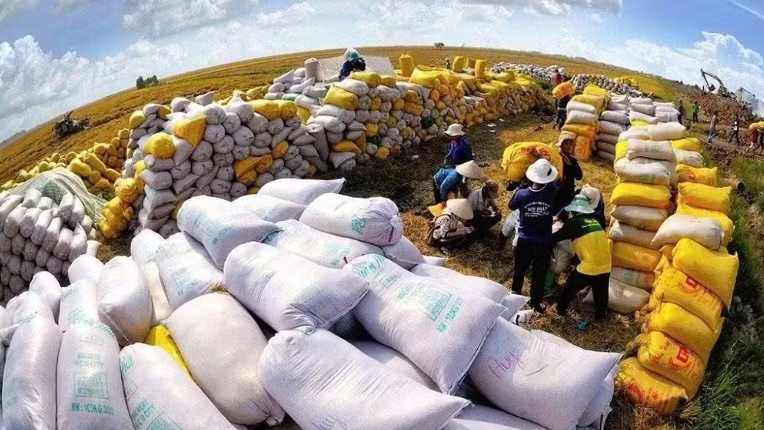
Vietnam's rice exports to Singapore have increased sharply |
Viet Nam, meanwhile, has a young population and a large pool of human resources in science, technology, engineering and mathematics (STEM), providing an important foundation for innovation. Its stable geopolitical position and abundant rare earth reserves also make it an attractive destination in supply chain diversification strategies.
These strengths create favorable conditions for expanded cooperation in science, technology and innovation.
Singapore was among the first Asian countries to develop strategic technology industries, launching its semiconductor industry in the 1970s. It has since pursued a next-generation semiconductor strategy to adapt to the rapid development of artificial intelligence (AI) and advanced technologies.
Dr. Ha Son Tung, Deputy Head of the Advanced Optical Technology Department at Singapore's Agency for Science, Technology and Research (A*STAR), said Singapore has practical experience that Viet Nam can draw on, particularly in technology governance, research ecosystem development and high-quality human resource training.
Given their geographical proximity, cultural similarities and increasingly close economic ties, the two countries have considerable potential to expand bilateral research cooperation, he said.
Building on the success of VSIP, Viet Nam and Singapore could broaden cooperation into high-tech fields through direct research projects between their science and technology agencies. Training high-quality human resources for AI and the semiconductor industry should also be a priority, he added.
Enhancing competitiveness and adaptability
Viet Nam also has significant opportunities to accelerate breakthroughs in science and technology by tapping the intellectual resources of the overseas Vietnamese community, particularly in Singapore.
As a regional technology and innovation hub, Singapore is home to many Vietnamese experts working in AI, big data, semiconductors, biotechnology and public policy. Some hold key positions at multinational technology companies, universities and research institutes.
Experts said this community could serve as a strategic bridge for promoting research cooperation, technology transfer and resource connectivity between the two countries.
Against the backdrop of intensifying global technological competition, stronger Viet Nam-Singapore cooperation in AI, semiconductors and innovation could not only bring economic benefits but also enhance both countries' competitiveness and ability to adapt to technological changes.
Assoc. Prof., Dr. Luu Anh Tuan of the College of Computing and Data Science at Nanyang Technological University (NTU) said there is significant potential for Viet Nam-Singapore cooperation in AI, digital transformation and technical governance.
Singapore has accumulated extensive experience in developing a national digital transformation ecosystem and applying AI, while Viet Nam has an advantage in its young, dynamic workforce and capacity to rapidly adopt new technologies, he noted.
If the two sides strengthen experience sharing and jointly develop practical AI products, cooperation could become an important driver of technological development in both countries and the wider region, Tuan said.
With bilateral ties growing increasingly robust and both sides committed to promoting innovation, cooperation in AI and high technology is expected to become a prominent pillar of Viet Nam-Singapore relations in the coming period.
Source: VNA