Without meeting non-tariff requirements, the agreement’s benefits will exist only on paper, while small and medium-sized enterprises (SMEs) face a high risk of being squeezed out of one of the world’s most affluent consumer markets.
    |
 |
|
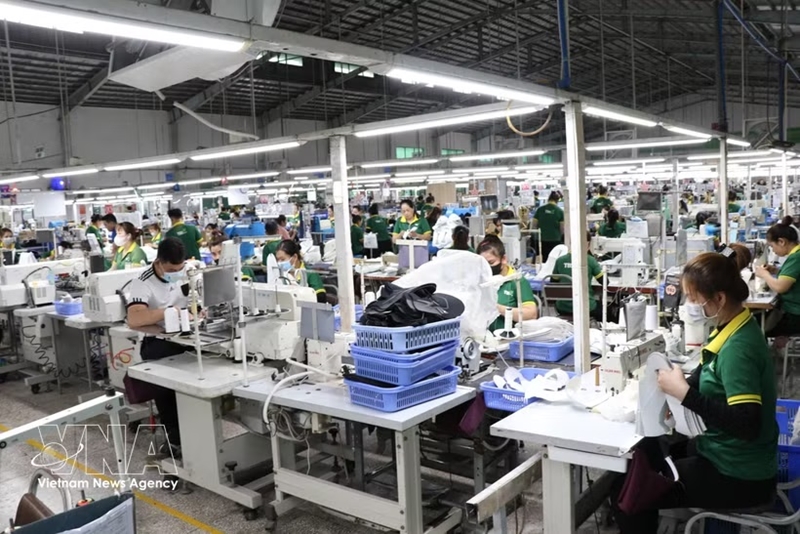
Production of footwear for export at Lefaso Tra Vinh Industrial Investment and Production Joint Stock Company, Tra Cu commune, Vinh Long province (Photo for illustration) |
Experience with new-generation free trade agreements (FTAs), including the Comprehensive and Progressive Agreement for Trans-Pacific Partnership (CPTPP) and the E.U.-Viet Nam Free Trade Agreement (EVFTA), to which Viet Nam is a party, shows that lower import tariffs often go hand in hand with more stringent technical barriers and sanitary and phytosanitary (SPS) measures.
The EFTA bloc, comprising Switzerland, Norway, Iceland and Liechtenstein, is not a market where competition is driven by low prices. It is a premium consumer market in which purchasing decisions are heavily influenced by sustainability, business ethics and manufacturers’ social responsibility.
Under VEFTA, tariff reductions to zero will be meaningless for Viet Nam’s key export sectors, including textiles and garments, footwear, and agricultural and aquatic products, if goods are found to contain banned chemicals, violate rules of origin or lack transparency regarding their carbon footprints. Fragmented supply chains, with raw materials largely imported from third countries, are exposing significant gaps. Customs control systems in Nordic countries are being automated using AI and can trace an entire product’s lifecycle, from farms or textile factories to dining tables and retail shelves.
Daniel Stork, Consul General of the Netherlands in Ho Chi Minh City, previously warned that stringent technical regulations, such as the Carbon Border Adjustment Mechanism (CBAM) and the European Green Deal, will play an increasingly decisive role in market access. Vietnamese businesses cannot avoid these requirements and must measure and reduce carbon emissions during domestic production.
The entry into force of VEFTA will provide a prime opportunity for SMEs to restructure their operations. Experts recommend that businesses immediately embark on a systematic three-step roadmap.
The first step is to digitize traceability processes. Businesses need to apply enterprise resource planning systems and blockchain technology to digitize all data throughout a product’s lifecycle. Information ranging from growing-area codes and recycled-material certifications to logistics routes must be transparently encoded and made available for real-time verification by customs authorities in destination markets.
The second step is to transition to cleaner energy and adopt circular economy practices. Businesses should proactively conduct energy audits and install rooftop solar power systems at their factories to reduce their carbon footprints. Textile, garment and footwear manufacturers need to seek suppliers of recycled materials while investing in closed-loop wastewater treatment systems to meet green standards.
The final step is to restructure raw material sourcing. VEFTA’s rules of origin allow for flexible cumulation mechanisms. Businesses need to move away from risky supply sources and step up efforts to find domestic, intra-ASEAN or EU suppliers to ensure that their products meet the required value-added thresholds for tariff preferences.
VEFTA has opened the door, but the European market leaves no room for fragmented or makeshift business practices. The survival and growth prospects of Vietnamese enterprises will depend on how quickly they digitize and green their supply chains. Higher technical standards will not weaken businesses through additional costs. On the contrary, they will serve as a strong shield and a passport to credibility and long-term competitiveness in the global trading arena.
Source: VNA