"Typhoons Wipha, Bualoi and Matmo left a devastating trail: Hundreds of people killed or injured, hundreds of thousands of houses damaged, and nearly 10,000 schools affected nationwide. In response, UNESCO is deploying targeted assistance to help national and local partners stabilize cultural heritage assets and restore learning continuity for children and youth," UNESCO said in its statement.
    |
 |
|
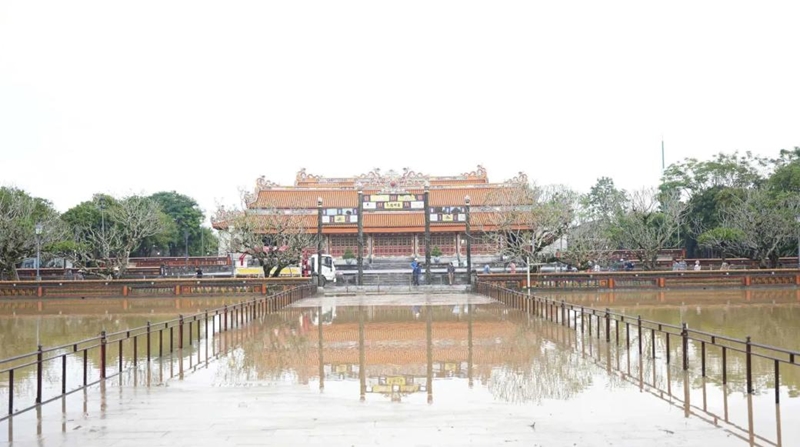
The Hue Imperial Citadel being flooded in late October 2025 (Photo: Kinh te & Do thi Newspaper) |
Commenting on the support program, UNESCO Director-General Khaled El-Enany stressed that natural disasters underscore the urgent need to strengthen resilience to climate-related risks. He reaffirmed UNESCO’s commitment to standing alongside the Government and people of Vietnam in safeguarding heritage, ensuring the continuity of education, and supporting recovery efforts grounded in knowledge, solidarity and sustainability, with a view to turning this hardship into opportunities to build safer and better prepared communities.
In the field of culture, in cooperation with Vietnam’s Ministry of Culture, Sports and Tourism and local authorities, UNESCO is currently conducting technical assessments and implementing emergency protection measures at World Heritage Sites in Hue and Hoi An, as well as at other cultural sites affected by storms and flooding. These activities are supported by the Heritage Emergency Fund and the World Heritage Fund, and are guided by an integrated, risk-informed approach aimed at strengthening preparedness and safeguarding both tangible and intangible heritage, including the preservation of local traditions and indigenous knowledge systems.
In the education sector, in the Northern provinces of Cao Bang and Lang Son, UNESCO is focusing on restoring safe learning and counselling spaces, replacing essential equipment, and offering psychosocial support to students and teachers. Particular attention is being given to vulnerable and ethnic communities, with the aim of enabling schools to resume learning safely and inclusively.
In addition, with funding from Japan, UNESCO will promote disaster risk reduction and mitigation activities in Nghe An province, including risk assessments, support for early warning systems, and measures to enhance school safety. These initiatives both complement immediate emergency responses and contribute to strengthening long-term resilience in disaster‑prone areas.
Beyond these immediate measures, UNESCO said it is working closely with its member states and partners to mobilize additional resources that will scale recovery and resilience efforts across culture and education in Vietnam.
Source: VNA