As green travel becomes increasingly popular, connecting natural and cultural assets is opening up new opportunities for the city to enhance its appeal, extend visitors’ stays and increase the value of tourism.
    |
 |
|
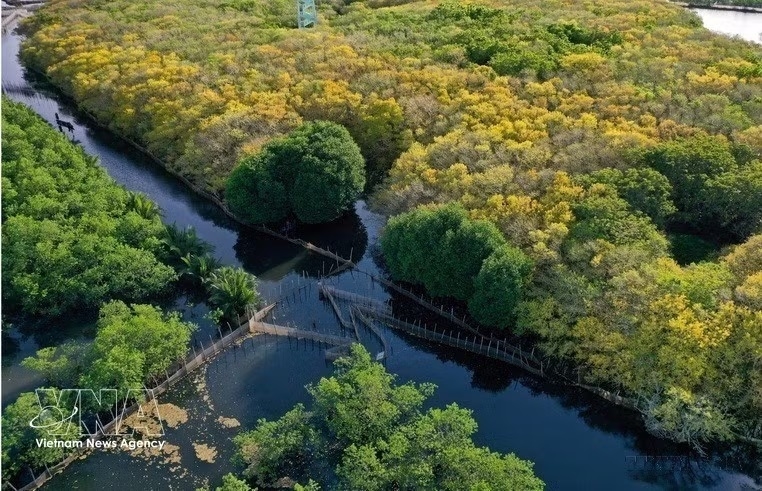
Ru Cha, the largest primeval mangrove forest on Tam Giang Lagoon |
Beyond its heritage sites, Hue boasts diverse ecosystems stretching from mountainous and midland areas to plains, lagoons and the sea. These include the Huong and Bo rivers, the Tam Giang-Cau Hai lagoon system – the largest of its kind in Southeast Asia – Lap An lagoon, and beaches such as Thuan An, Phu Thuan, Canh Duong and Lang Co.
The city also has forests, streams and waterfalls in its western mountainous areas, as well as rural villages, craft villages, gardens and fields interspersed with residential areas.
This diversity gives Hue strong advantages in developing green tourism. Visitors can combine heritage sightseeing with nature experiences, cycling, stand-up paddle-boarding, river cruises, lagoon tours, beach holidays, farm experiences and opportunities to learn about the local community's life.
Hoa Chau ward is home to Ru Cha, the largest primeval mangrove forest on Tam Giang lagoon. Nearby is Con Te, a wetland area along the lagoon and opposite Thuan An estuary.
During the recent National Day holiday, Hoa Chau piloted a community-based ecotourism model at Ru Cha. Visitors can explore trails through the mature mangrove forest, enjoy views of Tam Giang Lagoon and learn about the lifestyles and cultural traditions of local communities.
Ru Cha has become a popular green tourism destination, attracting large numbers of visitors, particularly at weekends and during holidays.
Le Uy Phuong, a visitor from Quang Tri province, said the cool, green surroundings and fresh air at Ru Cha, together with the peaceful setting of Con Te, make the area ideal for both nature exploration and relaxation.
Ngu My Thanh fishing village in Dan Dien commune is another distinctive green tourism destination on Tam Giang lagoon. Visitors can experience traditional fishing activities while exploring the mangrove ecosystem.
The protection and restoration of mangrove forests are considered crucial to sustainable ecotourism development. Dan Dien has more than 2,500ha of water surface on Tam Giang lagoon, with around 150ha of mangrove forest now being planted.
According to Pham Cong Phuoc, Vice Chairman of the Dan Dien Commune People’s Committee, the locality encourages residents to both sustainably use aquatic resources and protect and expand mangrove forests.
The Huong River is another valuable asset. Beyond creating Hue’s iconic landscape, it can serve as a “green axis” linking diverse tourism products, from river cruises and cultural performances to heritage sites, rural villages and riverside ecological areas.
Since early September, visitors have been able to take a combined sightseeing vehicle and electric boat tour connecting the Hue Imperial City with the Huong River, Dong Ba River and Ngu Ha River. The route offers a new way to explore the heritage complex through its waterways, landscapes and historic architecture.
During a recent inspection of infrastructure for inland waterway tourism along the Huong River, Chairman of the Hue City People’s Committee Le Tri Thanh said the river and its banks have strong potential for distinctive tourism products.
He stressed that development should be carefully planned with a long-term vision, creating new experiences and extending visitors’ stays while protecting the landscape, environment, culture and heritage. Authorities are studying ways to diversify river tourism products and develop piers, stops and service areas linked to attractions and historic sites.
Other potential destinations include Chuon lagoon, Lap An lagoon, Thuan An estuary, Bach Ma National Park, and waterfalls such as Mo, Kazan, Phuon and A Don, as well as Anor Waterfall in A Luoi.
A visitor could begin with the Hue Imperial City, continue with a cruise on the Huong River, cycle through rural villages, enjoy local food, explore Tam Giang-Cau Hai lagoon and finish the day at the beach. Such an itinerary could extend stays and spread tourism spending from the city center to rural, coastal and community areas.
For Hue, green tourism is therefore not merely a trend. It is a way to preserve the heritage of the former imperial capital while creating new growth, livelihoods and a greener, more livable and competitive heritage city.
Source: VNA