Extending tourists’ spending journeys
Outlet centers bring together stores from multiple brands offering products below regular retail prices. In many countries, they have developed into shopping and tourism destinations that combine retail with dining, entertainment, and other experiences.
    |
 |
|
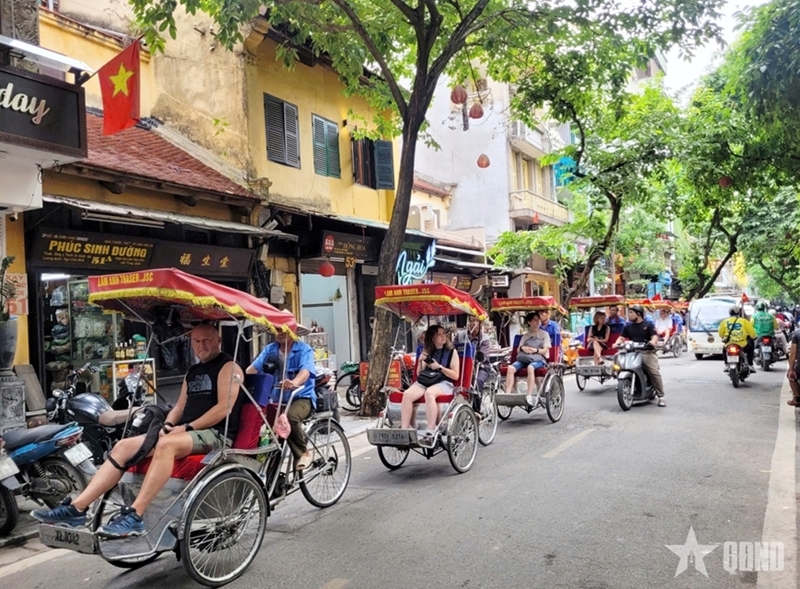
International tourists experience cyclo tourism in Ha Noi’s Old Quarter. |
In 2025, Viet Nam welcomed about 21.2 million international visitors and 135.5 million domestic tourists. However, average tourist spending remains lower than in some regional countries, while the retail system has yet to fully meet demand for high-end and specialized shopping.
To address this gap, the Ministry of Industry and Trade has approved a project to develop outlet models in Viet Nam through 2030, with a vision to 2045. The project aims to create shopping, tourism, and experiential destinations that stimulate consumption, develop trade and services, and strengthen the competitiveness of Viet Nam’s retail market.
The project calls for outlet development to ensure transparency and effective management while complying with international practices and maintaining market discipline, including measures against smuggling, trade fraud, and counterfeit goods.
By 2030, the project aims to establish at least one outlet model, gradually complete the relevant legal framework, and incorporate outlet development into the plans of localities with potential. From 2030 to 2045, outlet models are envisioned in the northern, central, and southern regions, with at least one in each region. The project also targets training at least 5,000 officials, civil servants, and businesses involved in outlet management, operation, and development by 2030.
|
|
 |
|
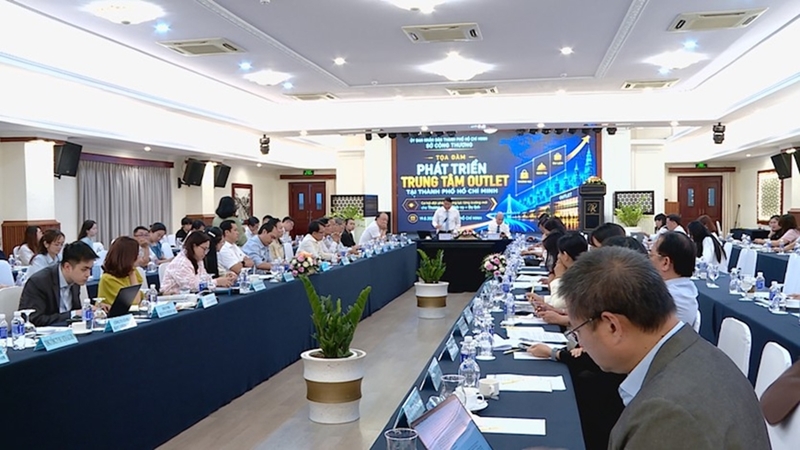
The Ministry of Industry and Trade has organized workshops and consulted experts and scientists to develop the outlet project in Viet Nam. |
Vietnamese goods and products are expected to account for at least 30-40 percent of merchandise at pilot outlets. By 2030, at least 10 groups of “national gift” products are expected to be developed for sale at outlets, prioritizing national-brand products, five-star OCOP products, outstanding rural industrial products, and leading Vietnamese products.
Project identifies three outlet models
A high-end outlet village would have 30,000-50,000 square meters of leasable space and combine shopping with restaurants, cafes, recreation, entertainment, and cultural and artistic activities. It would bring together mid-range, high-end, and luxury brands and be located near major cities, tourist destinations, and transportation hubs such as expressways and airports.
An urban/suburban outlet center would have 5,000-25,000 square meters of leasable space and could operate indoors or outdoors. It would focus on mainstream and mid-range brands, particularly fashion, sports, and household goods, serving local residents and tourists.
An integrated outlet would have 15,000-50,000 square meters of leasable space and be located within multifunctional complexes offering residential, office, entertainment, health care, and other services. It could be developed in urban areas, strategic locations, and localities with large populations and high tourist volumes.
Ha Noi, Ho Chi Minh City and other localities encouraged to pilot outlets
Outlet development is envisioned in areas with strong purchasing power, tourism potential, and transportation connectivity.
In Ha Noi, potential locations include the Ha Noi - Mong Cai, Ha Noi - Lao Cai, Nhat Tan - Noi Bai, and Ha Noi - Hai Phong expressway corridors. In Ho Chi Minh City, the focus is on the Ho Chi Minh City - Long Thanh - Dau Giay Expressway and areas near Long Thanh International Airport. In Da Nang, potential locations include the coastal corridor connecting Da Nang with Hoi An.
The project also calls for research into outlet development at major coastal and island tourism centers with large land reserves, integrated resorts, and free-trade zones.
Ha Noi, Ho Chi Minh City, Da Nang, Quang Ninh, and An Giang (Phu Quoc) are encouraged to study and attract investment in pilot outlet models. Localities are expected to assess their potential, select suitable locations, allocate land, and determine investment approaches based on planning, socioeconomic conditions, market demand, transportation connectivity, and tourism potential.
|
|
 |
|
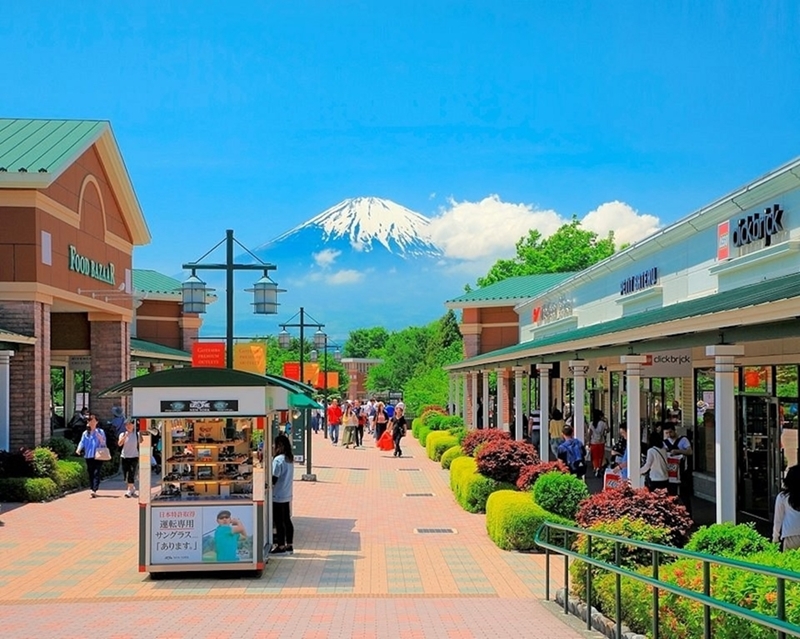
In Japan, Gotemba Premium Outlets combine shopping with scenery, dining, and tourism experiences. |
At the same time, the project calls for stronger market oversight at outlet centers, including inspections of goods, selling prices, and price displays, as well as measures against smuggling, trade fraud, and counterfeit goods.
If effectively implemented, outlets could open a new direction for Viet Nam’s retail and tourism sectors by making shopping part of the travel experience rather than merely a supporting activity. They could also provide a channel for Vietnamese goods, brands, and distinctive local products to reach domestic and international tourists directly.
Translated by Tran Hoai