Speaking to Vietnam News Agency (VNA) correspondents in China, Professor Zhu Chenming, Honorary Director of the Institute of South and Southeast Asian Studies under the Yunnan Academy of Social Sciences, said the direct attention and direction of Party General Secretary and State President To Lam towards the pilot program reflects the practical need to renew grassroots governance methods and provides an opportunity to draw lessons for future replication.
    |
 |
|
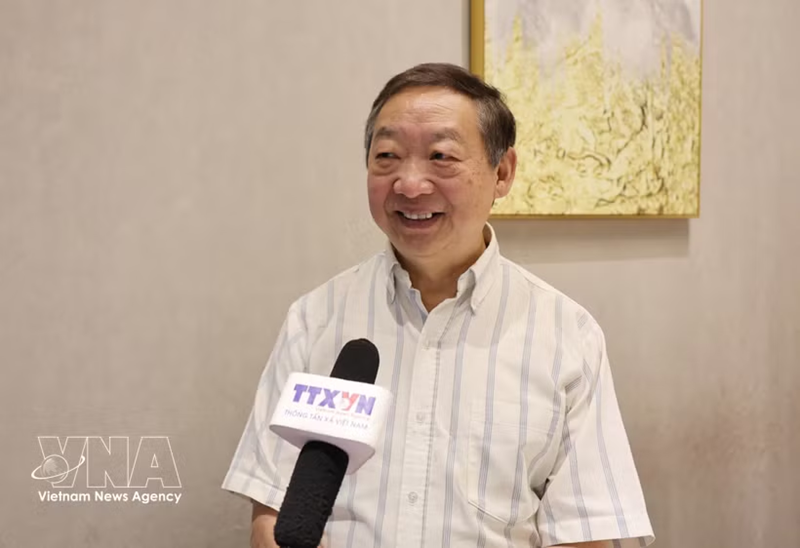
Professor Zhu Chenming, Honorary Director of the Institute of South and Southeast Asian Studies under the Yunnan Academy of Social Sciences, in an interview granted to the Vietnam News Agency |
According to Zhu, the term “socialist communes/wards” itself reflects the comprehensive nature of the model, which goes beyond economic development, tourism or cultural activities to encompass economic, political, social and cultural development as well as people’s living standards.
He highlighted the model’s relevance to Vietnam’s two-tier local administration. With the district level no longer serving as an intermediate administrative tier, communes and wards will assume greater responsibilities, requiring stronger management capacity and better policy implementation at the grassroots level. Zhu said the pilot could therefore serve as a testing ground for appropriate grassroots governance approaches, with improving the capacity of local officials being a key factor.
The model also stresses that people must remain at the center, with its success not be measured solely by economic growth or infrastructure development, but more importantly by improvements in people’s quality of life, satisfaction and sense of wellbeing, Zhu said, adding that development should ensure that people can see and benefit from tangible improvements in their daily lives.
He recommended that Vietnam treat the model as a comprehensive and systematic undertaking requiring coordination among different levels and sectors. In the initial phase, priority could be given to improving infrastructure, the living environment and landscapes, as visible improvements could strengthen people’s confidence and encourage their participation in development.
He also suggested that Vietnam consider piloting the model in additional localities with diverse socio-economic and geographical conditions. While Hanoi offers favorable conditions for the pilot, experience from mountainous, remote and disadvantaged areas will provide more diverse lessons for nationwide replication.
Poverty reduction, particularly sustainable poverty alleviation, should be a key priority, Zhu said, stressing that socialist-oriented development should aim for shared prosperity and ensure that development benefits are broadly distributed. No group should be left behind.
With a comprehensive approach combining stronger grassroots governance, socio-economic development, improved living conditions, sustainable poverty reduction and a people-centered orientation, the “socialist communes/wards” model could become a meaningful direction in Vietnam’s development process, the scholar concluded.
Source: VNA