Resources may be wasted when information comes too late
Under poverty reduction programs, local people may receive production supplies, breeding animals, capital, training, and social assistance. Yet the effectiveness of such support depends not simply on the amount of funding disbursed or the scale of a model, but on whether people can use those resources effectively in line with production conditions and market demand.
Providing cattle without ensuring adequate pasture or husbandry knowledge can still expose households to losses. Likewise, expanding a fruit-growing area without understanding the market or having adequate storage and preservation facilities does not necessarily translate into higher incomes. Information, therefore, needs to come before resources. Before providing support, it is necessary to assess poor households’ circumstances, land conditions, labor resources, production capacity, and market prospects. A successful model or standardized package of support cannot simply be applied mechanically to every household facing poverty for different reasons.
    |
 |
|
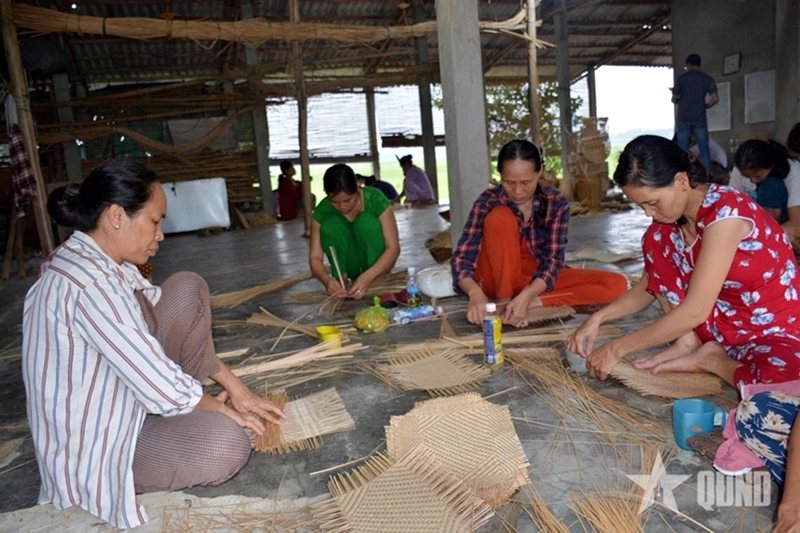
Bao La Bamboo and Rattan Cooperative in Dan Dien commune, Hue city |
Information empowers people to make informed choices
Information helps poor households understand policies and procedures while enabling producers to grasp market demand, product standards, costs, and potential risks. For people seeking to change their livelihoods, access to information about vocational training, skills development, and employment opportunities is equally important.
This is particularly urgent for ethnic minority communities in mountainous areas, where geographical isolation, language barriers, and limited Internet access can restrict access to information. Issuing policies or updating databases does not necessarily mean that local people can access or understand them. Digital platforms also cannot completely replace grassroots-level cadres, farmers’ associations, or reputable people in local communities. Cadres who stay close to the people and understand local conditions play an important role in turning policy information into practical opportunities.
Providing information means building capacity
Giving priority to information can help shift poverty reduction efforts from simply providing what poor households lack toward strengthening their capacity to generate income and become self-reliant. Social assistance remains essential for vulnerable groups, including people with disabilities and older people living alone. For those capable of working, however, access to information can empower them to identify and seize opportunities for themselves.
Livelihood support should, therefore, combine counseling, guidance, and long-term accompaniment. Capital should be provided alongside feasible production and business plans, while vocational training should be aligned with actual labor market demand. Socio-political organizations should further promote their role as bridges, helping local people understand and access opportunities suited to their abilities and circumstances.
Poverty reduction should also be assessed differently. In addition to disbursement figures and the number of beneficiaries, greater attention should be paid to actual income growth, livelihood sustainability, and households’ resilience to risks and economic shocks. The ultimate measure should be tangible improvements in people’s lives and their ability to become self-reliant, preventing them from falling back into poverty when difficulties arise.
In the digital era, failure to narrow the information gap pro-actively could widen inequality in access to opportunities. On the Day for the Poor in Viet Nam (October 17), it is worth emphasizing the responsibility to create conditions that enable poor people to improve their lives through their own efforts. Knowledge, information, and capacity are among the most solid foundations for a more sustainable future.
Translated by Minh Anh