Apart from emergency response and high-quality treatment, military doctors are always present in critical areas, supporting epidemic prevention and control, disaster relief and search-and-rescue operations.
All-out efforts to ensure good health of troops and people
    |
 |
|
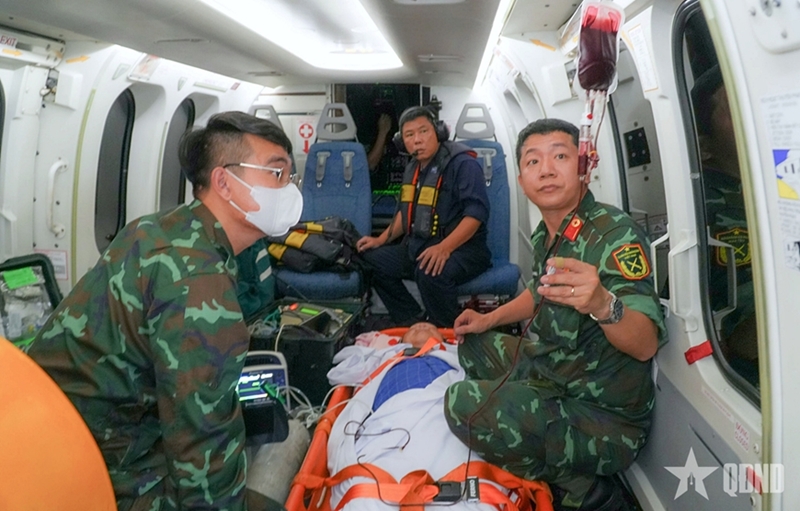
Air emergency evacuation team from Military Hospital 175 and helicopter crew of Corps 18 transport critically ill patients from Tho Chu Island to the mainland, November 2024. |
In recent years, Vietnam has faced severe disasters and epidemics, including the the COVID-19 pandemic, the historic floods in Central Vietnam in 2020, flash floods and landslides in Lai Chau and Dien Bien in 2022, and Typhoon Yagi in 2024. In those critical moments, military forces, Uncle Ho’s soldiers, with military medical units at the forefront, promptly responded in the most dangerous areas.
Over the past five years, the military medical sector has mobilized more than 12,000 personnel for rescue missions at over 300 disaster hotspots nationwide. During the Central floods 2020 alone, 85 mobile emergency teams provided medical care to more than 45,000 people, distributed free medicines worth over VND 8 billion, treated flooded environments in 120 residential areas and helped prevent post-flood epidemics. In the disasters in Lai Chau and Dien Bien in 2022, field medical stations were rapidly established, hundreds of injured victims were treated, and no deaths occurred due to lack of medical care.
The Military Medical Department under the General Department of Logistics and Technical Services has consolidated thousands of mobile emergency and epidemic prevention teams and hundreds of surgical units, identifying disaster and epidemic response as a peacetime combat mission. These efforts have saved lives, stabilized communities and strengthened national defense and security.
|
|
 |
|
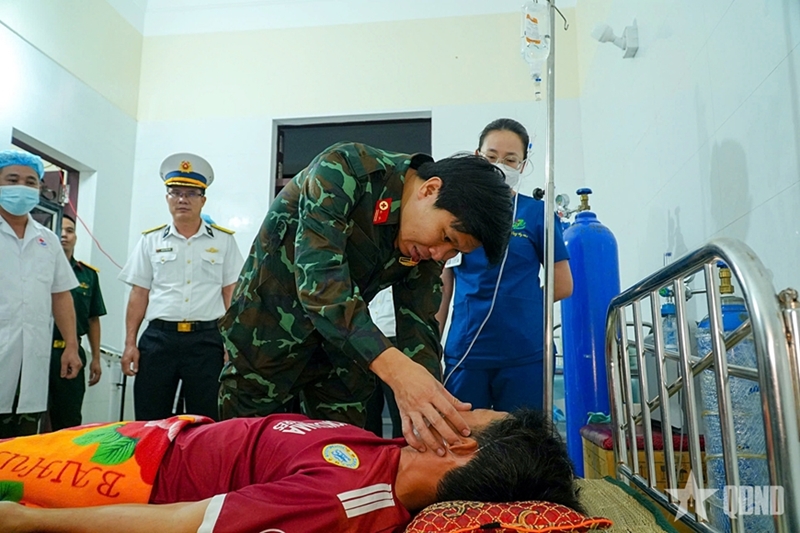
Doctor from Military Hospital 175 provides emergency stroke care at Son Ca Island Infirmary before helicopter evacuation, September 2024. |
In sea and island areas, the “Truong Sa emergency response” program has ensured timely treatment for troops and fishermen in remote waters. Hundreds of patients have been saved, including nearly 100 air evacuations and more than 150 sea transfers; nearly 15,000 fishermen have received medical examinations and medicines, and over 1,000 cases have been treated on the islands. Each successful rescue embodies the strong bond between the military and the people.
Protecting troops’ health remains the central political mission of the military medical sector. Between 2020 and 2025, besides combating COVID-19, military medical units effectively handled 15 dangerous outbreaks, including meningococcal disease and diphtheria, minimizing fatalities. The overall healthy troop rate has consistently remained above 98.5 percent.
Mastering advanced medicine, elevating military medical stature
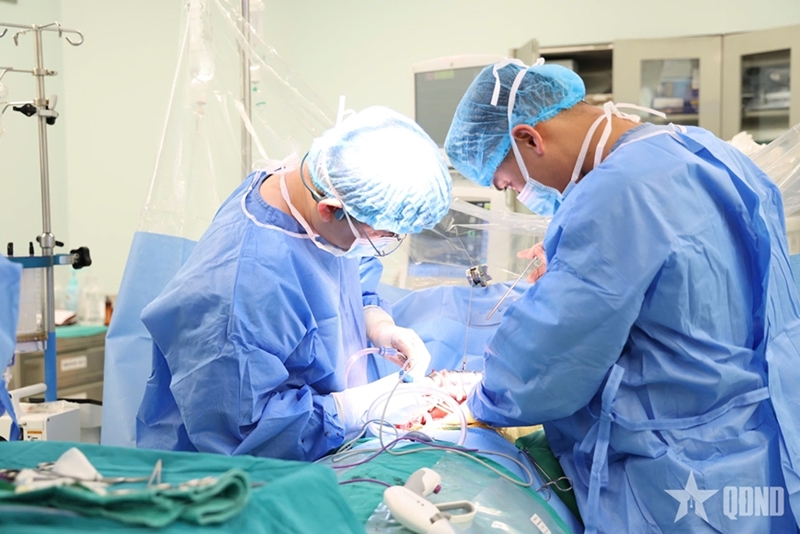
Just before Lunar New Year 2026, doctors of the Hepatobiliary and Pancreatic Surgery Department at Central Military Hospital 108 successfully performed an emergency liver transplant, saving a 65-year-old woman from Hai Phong city. Under the direction of Hospital Director Lt. Gen., Prof., Dr. Le Huu Song, hospital teams immediately activated the emergency transplant protocol, with many doctors returning from leave to participate. The six-hour surgery included laparoscopic donor liver retrieval, one of the most complex procedures in modern surgery, performed by only a few leading transplant centers worldwide.
|
|
 |
|
Doctors at Central Military Hospital 108 perform an emergency liver transplant on the 27th day of the last lunar month of 2025, saving the patient’s life. |
Central Military Hospital 108 has become a leading liver transplant center in Southeast Asia. In 2025, it performed 158 kidney transplants, 54 liver transplants, six corneal transplants and three heart transplants, including six multi-organ procurements from brain-dead donors. It also successfully conducted Vietnam’s first adult ABO-incompatible liver transplant and the country’s first third-generation partial artificial heart transplant, marking a major milestone in national medical advancement.
Other top-tier military hospitals, including Military Hospital 103, Military Hospital 175 and Le Huu Trac National Burn Hospital, have mastered advanced techniques comparable to those of leading regional healthcare systems. Military hospitals have become pillars of the national hospital network and trusted medical centers for the public. For instance, the Central Military Hospital 108 provided care to over 1.1 million patients and performed more than 52,600 surgeries in 2025; Military Hospital 103 receives 3,000 - 3,500 outpatient visits daily and conducts over five million laboratory tests annually.
In the coming period, disasters, epidemics and emerging infectious diseases such as Nipah virus and meningococcal infections are expected to remain unpredictable and severe, posing higher demands on response capacity. Strengthening rapid diagnostic capabilities at frontline levels is therefore a strategic and urgent priority as the military medical system continues its modernization.
Translated by Mai Huong