The provincial Department of Culture, Sports and Tourism, in collaboration with the Vietnam UNESCO Global Geoparks Network and relevant agencies, surveyed 41 geological, cultural and tourism sites across the geopark. The inspection identified a number of issues requiring urgent attention to safeguard the site's outstanding values.
    |
 |
|
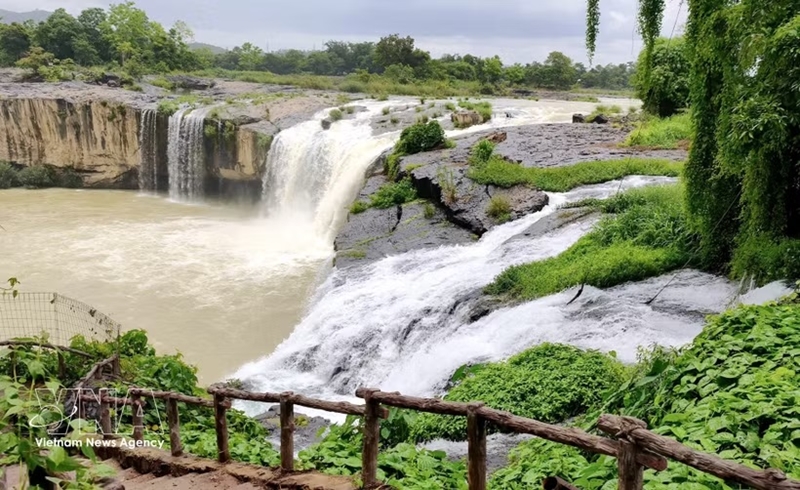
Dray Sap Waterfall is located within the UNESCO Dak Nong Global Geopark in Nam Da commune, Lam Dong province. |
The survey found that several key facilities, including Nam Kar Volcano, Sunrise Valley and the Krong No Information Centre, have completed basic construction but remain unequipped with exhibition facilities, interpretive displays and visitor services. Some projects have yet to be fully completed or handed over, while responsibility for their operation and maintenance remains unclear, leaving infrastructure underused and deteriorating.
Besides, most promotional billboards for the geopark have disappeared, except for a handful in Nam Da commune, while many directional signs, information boards and interpretation panels no longer meet UNESCO's branding and technical standards.
Waste accumulation, illegal dumping and inadequate maintenance were recorded at several heritage sites, contributing to their gradual deterioration.
The assessment highlighted persistent conservation challenges, with a number of sites affected by encroachment, inappropriate land use and unsustainable resource extraction. At Nam Kar Volcano in Quang Phu commune, illegal construction and quarrying activities were found within the geopark's core and buffer zones. In Dak Mil commune, natural erosion has also diminished the visibility and scientific value of several distinctive geological formations.
On June 30, Vice Chairman of the Lam Dong People's Committee Nguyen Ngoc Phuc directed the provincial Department of Culture, Sports and Tourism, relevant agencies and local authorities to strengthen the management, protection and sustainable development of the geopark. Authorities have been instructed to inspect all 41 heritage sites and submit proposals to improve conservation and enhance their value ahead of UNESCO's scheduled revalidation in July 2027.
Communal authorities have also been assigned direct responsibility for managing, protecting and promoting heritage sites and tourist attractions while addressing existing shortcomings.
Covering about 4,760 square kilometers across 22 communes and wards in western Lam Dong province, the UNESCO Dak Nong Global Geopark features nearly 50 basaltic volcanic caves, recognized as one of Southeast Asia's longest and most distinctive volcanic cave systems. The geopark is also home to ancient volcanoes, waterfalls, natural lakes and the rich cultural heritage of the M'nong, Ede, Ma and other ethnic communities.
UNESCO's Global Geoparks Council renewed Dak Nong's UNESCO Global Geopark designation for the 2024–2027 period in December 2024, recognizing the site as a model of the harmonious relationship between people and nature and Vietnam's commitment to sustainable development.
Source: VNA