Concluding the third National Forum on Digital Economy and Digital Society, the PM underlined the need to pioneer in institution-building, technology development, digital infrastructure, data development, and social responsibility in the digital environment.
    |
 |
|
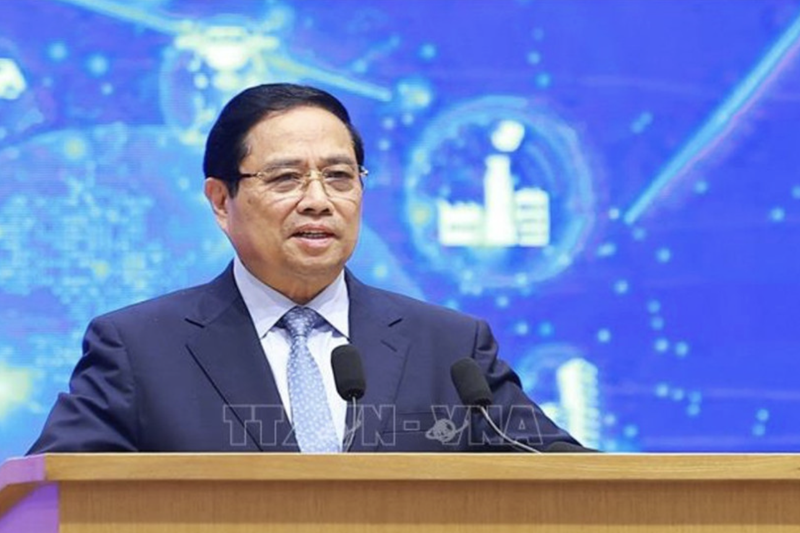
Prime Minister Pham Minh Chinh addressing the forum |
He set a goal for Vietnam to have modern and seamless digital infrastructure, high-quality, shared and standardized data, a skilled digital workforce with universal digital literacy, strong Vietnamese digital technology enterprises, and a safe, humane and civilized digital environment.
The Government leader pointed to the need to have a system with no paperwork, cash or administrative boundaries in transactions; no limits in development; no corruption, wastefulness or group interests; no fragmentation or isolation; and leaving no one behind.
He affirmed that digital transformation has brought about clear changes in both awareness and action, spreading to “every household and every citizen”, strengthening confidence among people and businesses, and creating momentum for rapid and sustainable socio-economic development.
The PM stressed that digital transformation aligns well with the strengths of the Vietnamese people, including creativity, diligence and a strong learning spirit.
A report at the forum showed that Vietnam’s digital economy has recorded rapid progress in recent years. Institutional frameworks and policies have been continuously reviewed and improved to remove bottlenecks and mobilize resources.
Digital infrastructure has made a significant leap in capacity and quality, with Vietnam’s mobile internet speed in 2025 ranking among the world’s top 20. National and sectoral data mobilize have come into operation, international connectivity has more than doubled compared with late 2020, and satellite internet services are being actively prepared.
The digital economy has increasingly asserted itself as a key growth engine. The number of digital technology enterprises rose from 58,000 in 2020 to around 80,000 in 2025. Exports of digital technology products were estimated at 172 billion USD in 2025, up more than 1.7 times from 2020, while e-commerce revenue reached approximately 36 billion USD, three times higher than five years earlier. Cashless payments have become widespread nationwide, alongside effective implementation of digital tax administration and e-invoicing.
Meanwhile, digital society development has seen digital technologies permeate daily life, improving connectivity, digital skills and access to public and private services.
The national population database has proven highly effective, while the VNeID platform has become widely used by citizens and businesses, integrating services in finance, banking, education and health care.
Although acknowledging the achievements, PM Pham Minh Chinh pointed to certain shortcomings, including bottlenecks in institutions, policies, infrastructure and human resources, as well as modest creativity, research and development capacity.
He reaffirmed that developing the digital economy and digital society is an inevitable trend and a strategic choice for Vietnam. It is also a decisive driver for restructuring the economy, boosting productivity and competitiveness, and achieving double-digit growth in the coming period.
He urged accelerated digital transformation across all sectors, stronger development of inclusive and humane digital society, rapid digitalization and restructuring in industry, high-tech agriculture and smart rural areas, and the building of modern digital service ecosystems, with finance, logistics and tourism as key breakthroughs.
|
|
 |
|
Prime Minister Pham Minh Chinh and delegates launch the "Learning from Practical Work" program based on cooperation among the State, educational institutions and businesses, aiming to develop high-quality human resources for the digital economy and support national digital transformation. |
The PM urged faster digital transformation to optimize public services, ensure inclusive digital social security and improve quality of life. He called for improved institutions, finalization of the 2026–2030 digital economy and society program, and development of a national data economy framework.
He stressed the need to strengthen digital infrastructure and skills, reskilling workers affected by AI, supporting digital enterprises, especially SMEs, and ensuring cybersecurity, digital sovereignty and inclusive digital literacy.
He expressed confidence that with renewed determination and concerted action by all stakeholders, Vietnam will develop a strong, inclusive, sustainable and equitable digital economy, digital society and digital citizenship, contributing to a prosperous, civilized and happy nation.
Source: VNA