The company, Hanoi Metro, reported at a year-end conference held on January 14 that passenger volume reached more than 20.68 million trips, up 7.13% from its annual plan.
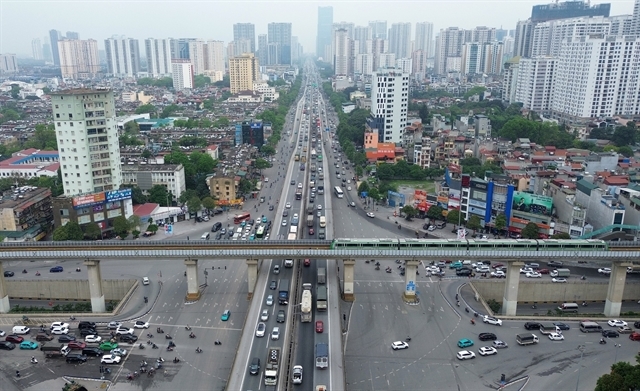
The Cat Linh–Ha Dong line (Metro Line 2), the first one to be up and running in the city, accounted for over 13.68 million passengers, beating its target by 7.4% and rising 15.3% from 2024 levels, according to the company.
    |
 |
|
Cat Linh–Ha Dong metro line |
Ticket revenue totaled more than 143 billion VND (about 5.4 million USD), surpassing the plan by 29.09% and helping reduce the city’s operating subsidy by over 31 billion VND. Revenue from the Cat Linh–Ha Dong line alone reached nearly 98 billion VND, up 26.6% from plan and almost 29% year on year.
Hanoi Metro said operations were maintained with “absolute safety,” with more than 161,600 train services running a combined distance of nearly 1.76 million kilometers over the year, without interruption across all 365 days. Scheduled maintenance and servicing were completed almost entirely as planned.
Average monthly income for employees rose to 13.5 million VND, an increase of 26% from 2024, the company said, citing improved living standards and motivation for staff.
In 2025, the operator identified three major breakthroughs: Strong growth in ridership and revenue, restructuring of its organizational apparatus, and implementation of Resolution 57-NQ/TW (on breakthroughs in science, technology, innovation, and national digital transformation) through the upgrade of its electronic ticketing system using biometric technology, digital identification and cashless payments.
The digital transformation included the successful rollout of electronic identification, authentication and biometric recognition on the Cat Linh–Ha Dong metro line from December 5, 2025. The technology has since been piloted on the Nhon–Hanoi Station line (Metro Line 3) from January 1, 2026, with the two lines expected to operate in an integrated manner from February 1.
Looking ahead to 2026, Hanoi Metro said its priorities include safe and efficient operation of existing lines, gradually mastering core technologies, streamlining its organizational model in tandem with digital transformation, and improving infrastructure utilization while preparing to receive new lines.
The company aims to increase passenger volume and ticket revenue by more than 11% this year, with service revenue expected to exceed 30 billion VND, as it works towards becoming a modern, professional and sustainable metro operator in the capital city.
Source: VNA