In his opening remarks, N.A. President Tran Thanh Man said the first extraordinary session of the 16th N.A. had completed its agenda, adopting 15 laws, six normative resolutions and seven resolutions on socio-economic development. He hailed agencies for their efforts to finalize the legislation while preparing documents for the N.A. Standing Committee’s regular session in September, urging them to maintain the same sense of responsibility in the run-up to the 16th N.A.’s second session.
    |
 |
|
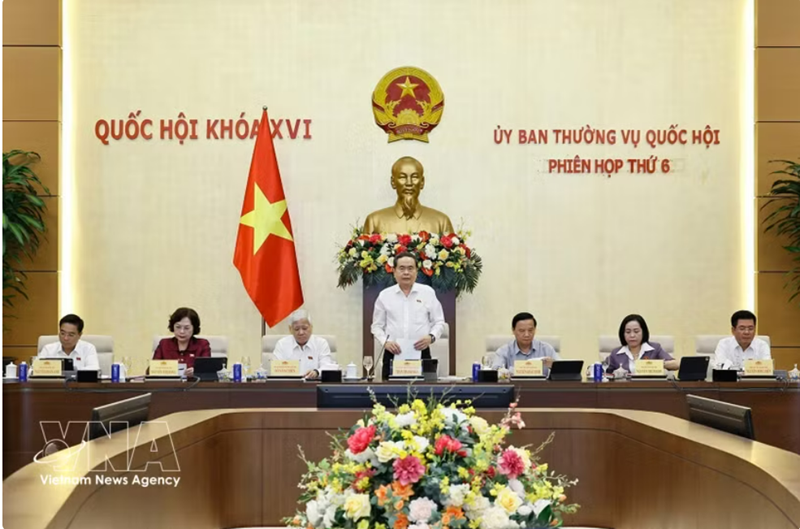
N.A. President Tran Thanh Man speaks at the sixth session of the National Assembly Standing Committee. |
The September session will be held in two phases and is described as a peak session for legislative work. Therefore, the top legislator asked the committee to focus on three major requirements.
First, legislative work must prioritize quality, feasibility and development needs. The N.A. Standing Committee is expected to review 31 of 41 draft laws and resolutions for the second session, N.A. President Man said.
Despite the tight schedule, quality must not be compromised. Drafting agencies should ensure sound and feasible policies that address practical needs, he stressed.
He also called for avoiding sectoral interests, unnecessary procedures and costs, and burdens on people and businesses, while urging reviewing agencies to take a more independent, proactive and solution-oriented approach.
The N.A. Standing Committee should focus on major and contentious issues, especially those capable of driving substantive changes. Laws must be clearer, and more consistent and practical, helping remove bottlenecks, unlock resources and support development, the top legislator said.
He asked for stricter legislative discipline and thorough preparations for the second session, which is expected to consider nearly 60 issues. The 2027 law-making program should focus on urgent matters, institutional bottlenecks and emerging areas requiring legal frameworks.
Preparations for the second session must begin early, with close coordination from the outset. Issues that qualify for the session should be included, while documents must be submitted on time so that deputies have sufficient information and time to make high-quality decisions on important issues with long-term impacts.
The N.A. President also called for stronger innovation in working methods and greater responsibility through to completion. He said that a review of the first extraordinary session should identify effective practices, while frankly addressing shortcomings, their causes and solutions.
He stressed that a heavier workload must not compromise quality, tight deadlines must not weaken discipline, and assigned responsibilities must be fulfilled to the end.
Source: VNA