Foreign Minister Le Hoai Trung said the draft aims to address practical shortcomings, institutionalize new Party and State policies, and enhance the professionalism and effectiveness of overseas missions in line with decentralization, delegation of power, and modern diplomacy goals.
    |
 |
|
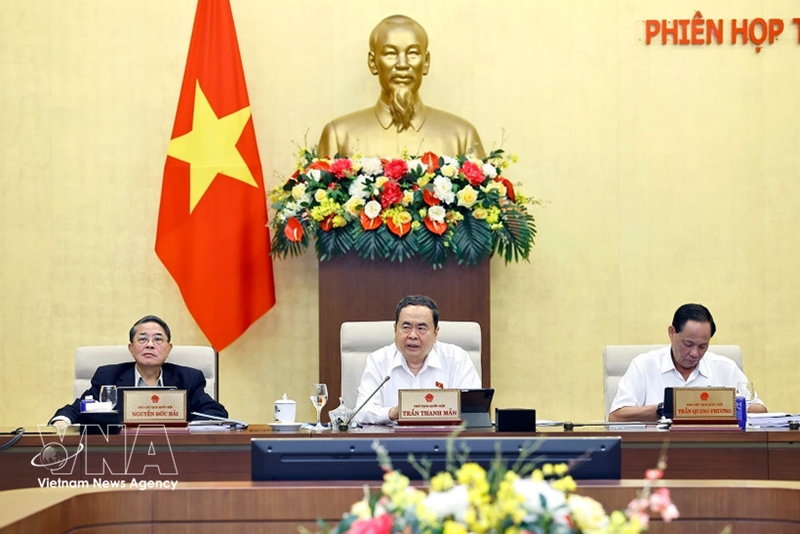
National Assembly Chairman Tran Thanh Man (middle) addresses the discussion on March 18. |
The two-article draft focuses on expanding missions’ functions to cover emerging cooperation areas, legal affairs, people-to-people exchanges, business support, monitoring international commitments, and promoting the Vietnamese language abroad. It also allows missions to sign cooperation documents with foreign partners, strengthen coordination mechanisms, and improve policies for staff and their families.
The draft introduces no new administrative procedures and removes several outdated provisions. Additional annual state budget spending is estimated at 179.6 billion VND (6.82 million USD), mainly to improve benefits for mission personnel.
A preliminary review by the N.A. Committee for National Defense, Security and External Affairs found the draft largely consistent with Party guidelines on international integration, administrative streamlining, decentralization, innovation, and digital transformation, while recommending further legal review for consistency.
Lawmakers supported expanding missions’ responsibilities but called for clearer regulations on cooperation areas, financial support mechanisms for promoting Vietnamese language and culture abroad, allowances for officials covering multiple jurisdictions, and tuition support policies for staff members’ children.
N.A. Chairman Tran Thanh Man stressed that overseas missions must strengthen economic and digital diplomacy, including providing early warnings on trade barriers and trade remedy cases to help Vietnamese businesses respond proactively.
He emphasized that missions should act “not only as information providers but as pathfinders” under new-generation free trade agreements, while citizen protection should shift toward proactive forecasting and rapid-response mechanisms.
The N.A. leader also stressed the need for clearer authority for ambassadors as overall coordinators of all officials seconded from different ministries to ensure unified operations. He proposed adjusting living allowances to reflect global inflation and adding provisions to modernize missions through digital transformation.
Deputy Prime Minister Bui Thanh Son noted that despite available funding, implementation of overseas mission infrastructure projects faces challenges due to limited specialized personnel, suggesting clearer legal provisions or a unified implementation mechanism.
Source: VNA