In the ongoing campaign, especially in the first six months of this year, affiliated agencies and units of the General Staff (GS) have carried out the work with a strong sense of political responsibility, contributing significantly to the fulfilment of the campaign’s objectives.
    |
 |
|
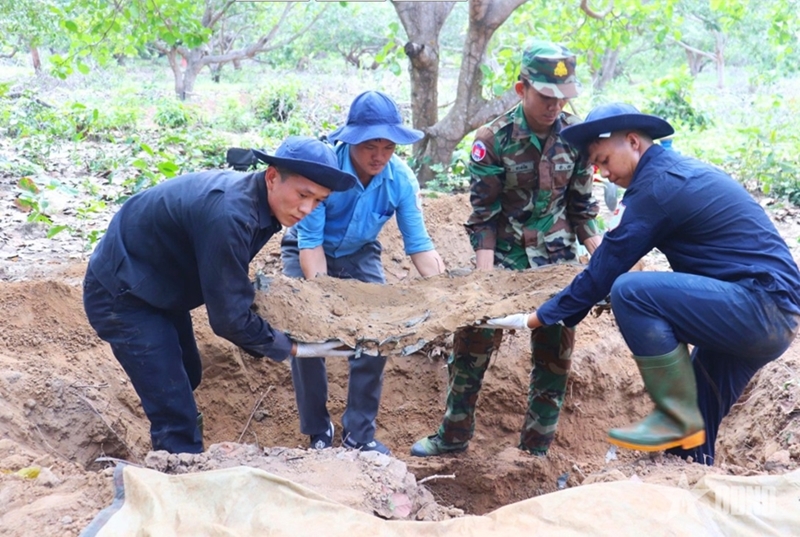
Search and Collection Team K72 of the Dong Nai City Military Command recovers martyrs' remains in Cambodia. |
In his July 27 article on the People’s Army Newspaper, Sr. Lt. Gen. Phung Si Tan, GS’s Deputy Chief and member of the National Steering Committee for the Search for, Collection and Identification of Martyrs’ Remains (National Steering Committee 515) emphasized that the work, as a politically important task, is a sacred responsibility of the Party, State, the military and the people and a profound expression of gratitude toward those who sacrificed their lives for national independence and national construction and defense.
Under the direction of the National Steering Committee 515, agencies and units have implemented a wide range of coordinated measures. The Department of Military Forces under the GS has advised the Ministry of National Defense on consolidating search and collection teams, ensuring adequate personnel, equipment and logistics supply while guiding units to adjust manpower as required. To date, the military has established 32 specialized search and collection teams.
The department has also intensified efforts to decode wartime unit designations and symbols (27 cases) to support the verification of information and the search for martyrs' graves (9 cases so far from January to July, 2026).
Meanwhile, the Department of Operations under the GS has upgraded the digital database and mapping system for the search and recovery of martyrs' remains. It has coordinated the verification of search areas, appraised dossiers identifying suspected collective burial sites, and worked with archival agencies to collect, analyze and utilize wartime records and documents in support of search operations.
According to Gen. Tan, the nationwide collection of biological samples from unidentified martyrs' remains for DNA analysis has been accelerated. All Military Region- and provincial-level steering committees 515 have completed surveys of war cemeteries, developed sampling plans and established 297 sampling teams with more than 3,600 personnel. A dedicated software system for managing biological sample information, developed by Viettel Group, has also been put into operation.
|
|
 |
|
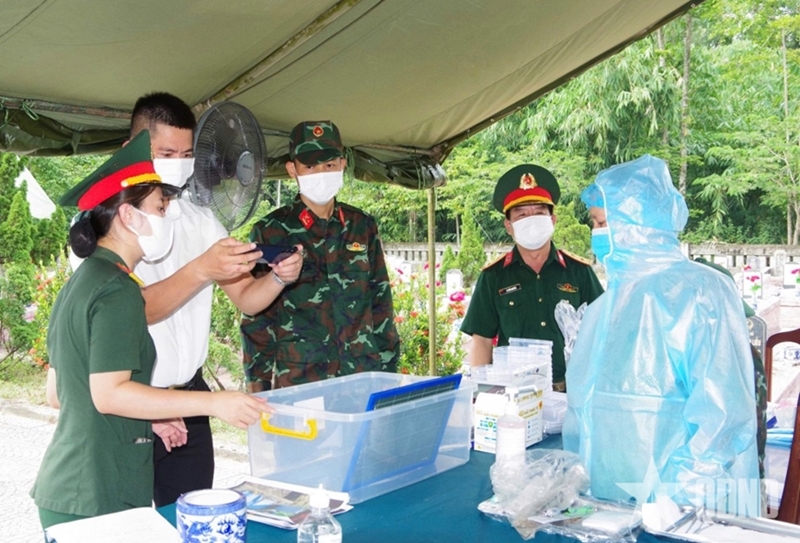
Collecting biological samples from martyrs' remains for DNA analysis at Huong Van war cemetery in Huong Tra ward, Hue city |
At the same time, mine and unexploded ordnance (UXO) clearance has been intensified in key areas, particularly those in Military Region 2, creating safer conditions for search and collection operations while contributing to local socio-economic development.
Despite these encouraging results, the mission continues to face significant challenges. Information on where many martyrs fell or were initially buried remains scarce. As time passes, witnesses become fewer, many wartime units have been reorganized or dissolved, archival records are incomplete, terrain has changed considerably, and numerous old battlefields remain contaminated with UXO. In many cases, biological samples have deteriorated after decades underground, making DNA identification more difficult.
To successfully accomplish the objectives of the 500-day campaign, Gen. Tan pointed out some priorities.
Accordingly, Steering Committees 515 at all levels continue to raise awareness of the significance of work, considering it a special political mission, an order from the heart, and deep gratitude to heroic martyrs. Search efforts at home and abroad should be intensified with priority given to domestic areas where information on individual and collective burial sites remains available.
Agencies and units directly responsible for the operations should continue to strengthen their personnel and resources. More search and collection teams should be formed when necessary while ensuring sufficient equipment and completing UXO clearance in key areas, particularly in Tuyen Quang province’s Vi Xuyen, Lao Cai and Lang Son provinces, by the end of 2026.
Other tasks include the completion of the standardization of the digital mapping database, continued verification of information on suspected collective burial sites and further collection of information on Vietnamese servicemen listed as missing in action from individuals and organizations at home and abroad, and organization of scientific workshops to verify historical records.
|
|
 |
|
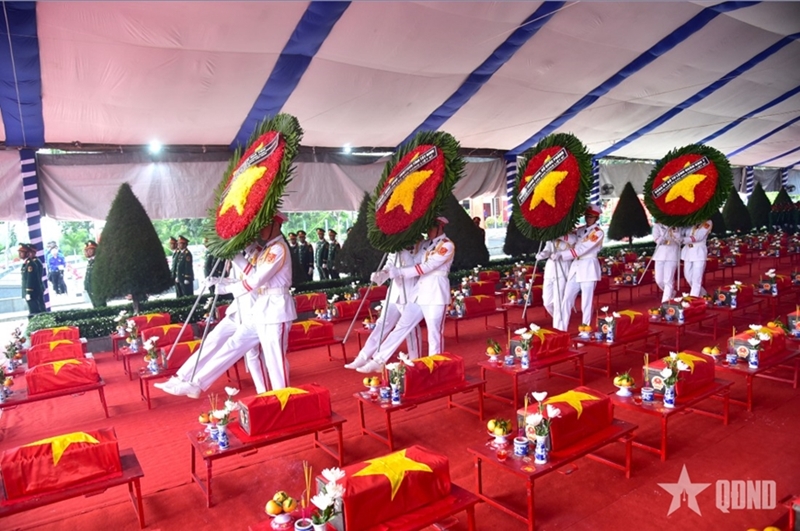
Burial service for martyrs whose remains were repatriated from Cambodia in the 2025-2026 dry season |
Large-scale biological sample collection should be carried out for unidentified graves in war cemeteries nationwide. The entire process, from dossier preparation, grave identification and excavation to sample collection, sealing, digitization, preservation, transportation and transfer for DNA analysis, should be conducted. Relevant data on graves, excavation sites and sample management must be fully digitized.
Priority will also be given to digitizing wartime documents, maps, aerial photographs and battle records currently preserved by the Department of Operations, the Ministry of National Defense Archives Center, and the State Records and Archives Department.
In addition, the development of information bank management software should be accelerated together with applying artificial intelligence (AI) to data retrieval and analysis in support of the identification of martyrs' remains.
|
|
 |
|
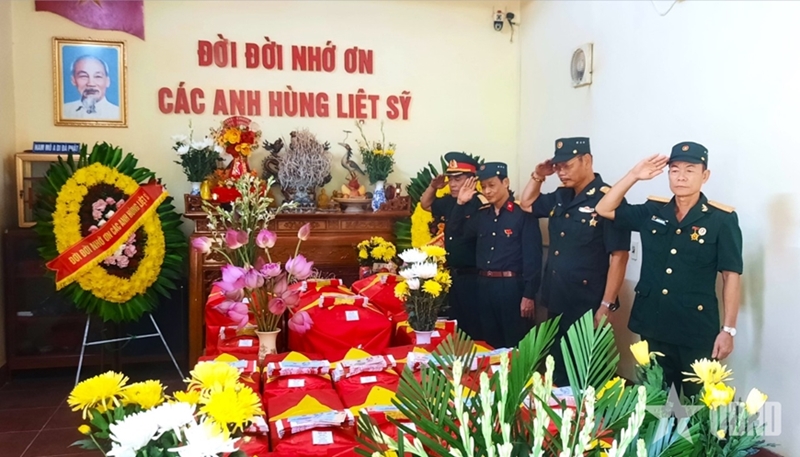
Veterans offer incense in tribute to fallen soldiers at the mortuary of the search and collection team under the Tuyen Quang Provincial Military Command. |
With deep gratitude and responsibility toward those who sacrificed their lives for the nation, authorities at all levels should mobilize resources and accelerate efforts. Each identified and returned set of remains helps heal war wounds and uphold the nation’s tradition of remembrance, humanity, and gratitude.
Translated by Mai Huong