Working in a confined space where the heat and damp earth create stifling conditions, no soldier allows haste or carelessness since they know that beneath each layer of soil rest eminent sons of the Fatherland who sacrificed their lives for the nation’s independence and freedom.
    |
 |
|
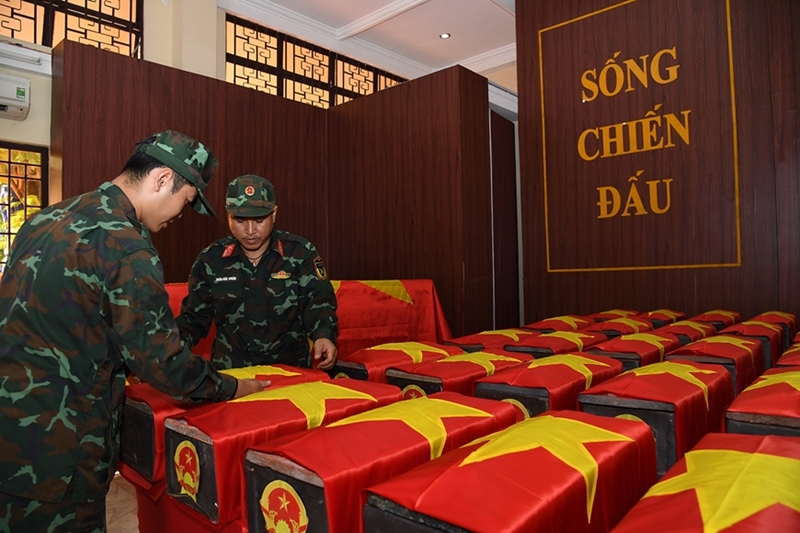
Officers and soldiers of the Ho Chi Minh City Command pay tribute to fallen soldiers at the memorial house in Le Thi Rieng Park. |
Sergeant Phan Van Hoang Anh, a member of Search and Collection Team K74 under the Ho Chi Minh City Command, shared emotionally: “This is my first time directly participating in the search for and collection of fallen soldiers' remains. I constantly remind myself to be extremely careful in every movement. When I finally helped lift the remains from the ground with my own hands, I truly understood the profound significance of this sacred duty.”
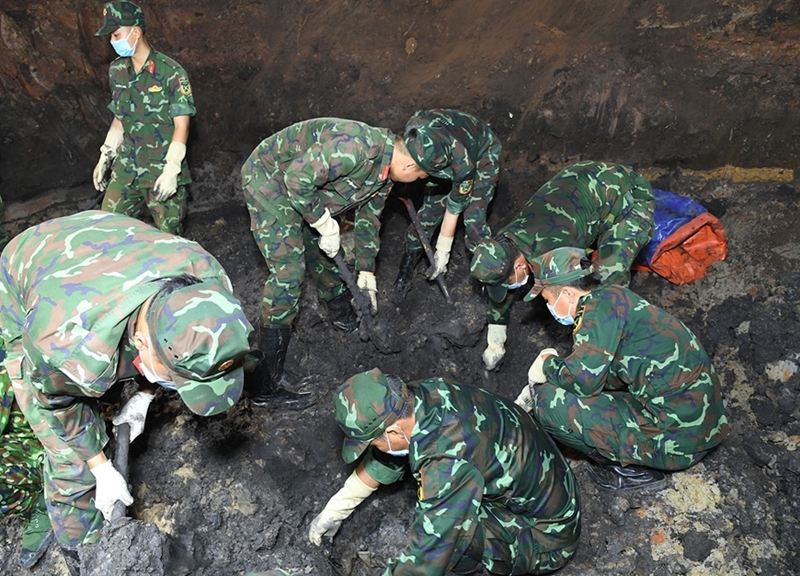
The soldiers carefully used small trowels to remove the soil layer by layer. Some excavation sessions lasted for hours, yet the work advanced only a few dozen centimeters. No one grew impatient, because every stroke must be calculated to avoid disturbing remains buried for nearly six decades.
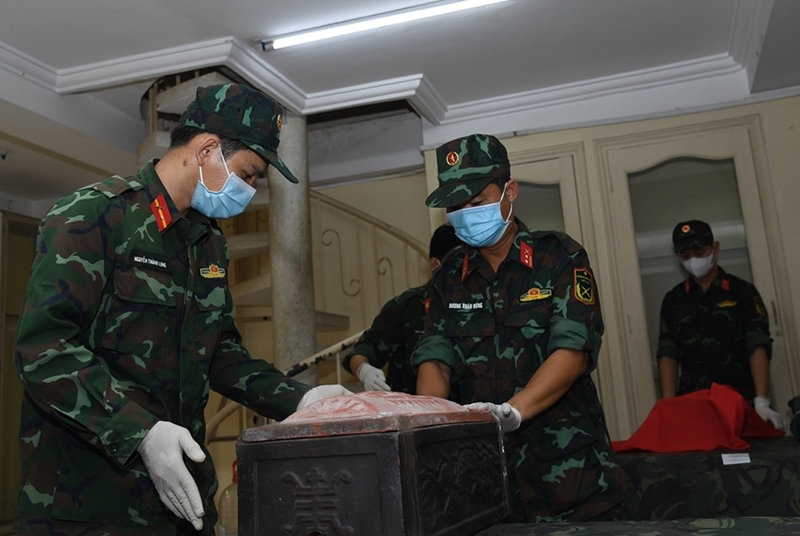
The task demanded extraordinary patience and precision. Soldiers would spend hours examining every layer of soil, every unusual trace, and every artifact buried beneath the earth. Communication was kept to a minimum, often limited to brief glances or nods. Once remains were uncovered, every movement became even more deliberate. A specialized stretcher was gently lowered, and several pairs of hands worked together to carefully lift the remains from the excavation site.
|
|
 |
|
Troops place the remains of fallen soldiers into ossuaries. |
Sergeant Vu Duc Tam, a member of Team K74, said with emotion: “Whenever I think that there are still fallen soldiers waiting beneath this ground to return home, I cannot help but feel deeply moved. They sacrificed their lives for the nation's liberation. I simply hope to contribute in some small way to bringing them back into the arms of their comrades and families. My teammates and I will carry out this mission with the greatest sense of responsibility and gratitude so that they will no longer lie alone beneath the earth.”
At the cleaning area, the work became even more meticulous. Soil was carefully removed from each bone fragment. Small bone pieces mixed with the earth were examined visually and located using specialized equipment. The remains were then arranged and matched according to the structure of the human body. Each set of remains was assigned an identification number, documented, and recorded together with all associated personal effects, artifacts, and distinguishing features to support the identification process.
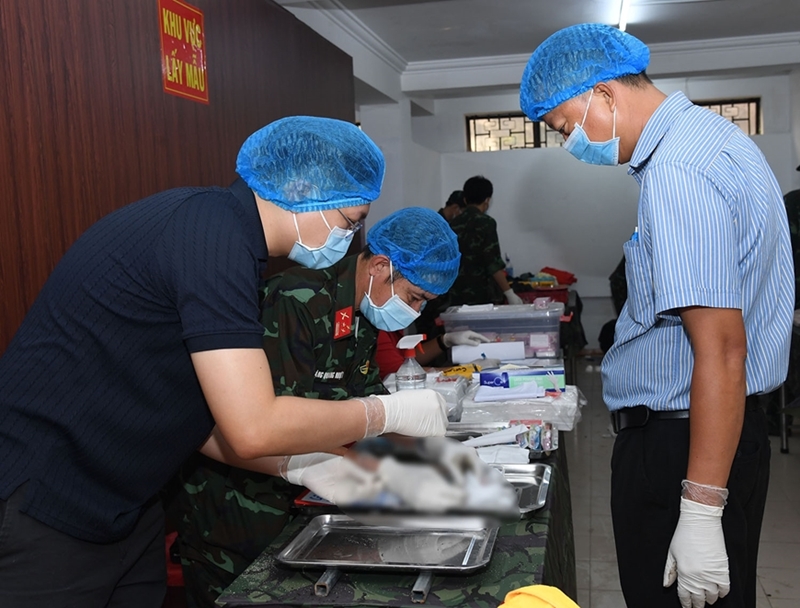
For the DNA sampling team, every procedure was performed with the highest level of care. Each sample was selected, labeled, sealed, and cross-checked against official records before being sent for forensic analysis. DNA testing serves as a crucial key to identifying fallen soldiers and completing the procedures necessary to return their remains to their families and hometowns.
|
|
 |
|
Collecting DNA samples from the recovered remains. |
Lieutenant Colonel Ly Minh Van, political commissar of Team K74, emphasized that immediately after the team was established, the unit built political determination among its members by requiring them to write commitment statements for the emulation campaign and watch documentaries on the search and collection of fallen soldiers' remains.
The officer added that training sessions were held to instruct personnel on every step of the operation. Within a short period of time, all team members fully recognized the sacred significance of the mission, their noble responsibility, and their determination to accomplish it successfully.
Joining the operation at Le Thi Rieng Park are members from Team K70 under the Division of Political Affairs of Military Region 7; Teams K71 and K73 under the Tay Ninh Provincial Military Command; and Team K72 under the Dong Nai City Military Command. Many members of these teams have spent years conducting search and collection missions in Cambodia. They are familiar with different soil conditions, can recognize subtle indicators of burial sites, and possess the expertise to handle complex recoveries involving overlapping or incomplete remains. Their extensive experience provides both technical guidance and confidence to the younger soldiers participating in the operation.
|
|
 |
|
Troops carry out the collection mission at Le Thi Rieng Park in Ho Chi Minh City. |
According to Colonel Tran Hung Cuong, political commissar of Team K73, once remains are located, they must accurately determine the position of the head and feet of each individual before marking the site and proceeding with the recovery. In the case of mass graves, the excavation must be carried out with exceptional care to preserve the integrity of each set of remains.
Inside the memorial house, each set of remains is laid to rest with dignity and respect. Young soldiers quietly take turns lighting incense, tending the memorial, and keeping watch over the peaceful rest of every fallen soldier with profound reverence and gratitude.
Translated by Mai Huong