Preserving traditional cultural values
In Giang Chau village, Quang Tan commune, Lam Dong province, traditional H’mong cultural values remain an integral part of family and community life despite ongoing social changes. The H’mong language, traditional costumes, customs, the sound of the khen (panpine), and folk dances create a distinctive cultural identity, enriching the spiritual life of the defense-economic zone.
    |
 |
|
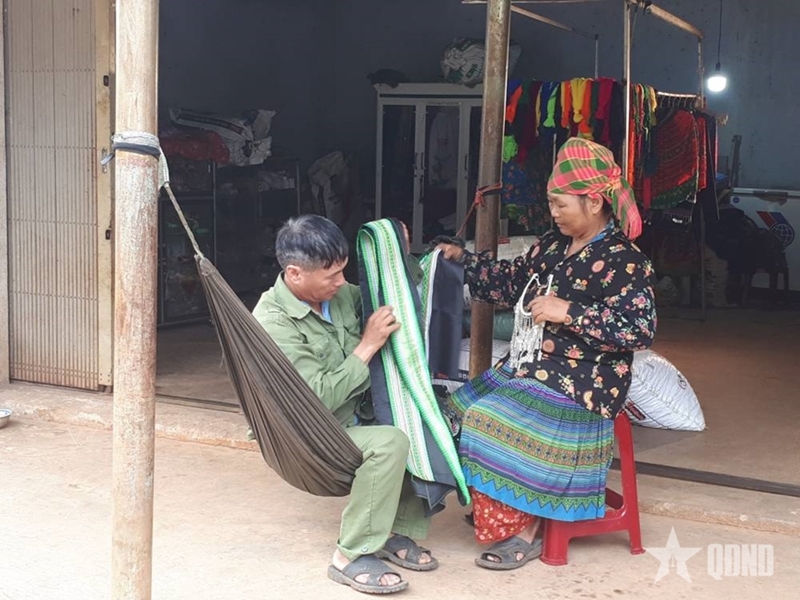
A H’mong couple choosing traditional brocade products |
In 2002, Regiment 720, now Defense-Economic Unit 720, was tasked with receiving and resettling 312 H’mong households who had migrated from Northern provinces to the Central Highlands. The mission, bearing political and social significance, linked population stabilization with economic development, social welfare, and the strengthening of defense and security. Despite initial difficulties, the unit's officers and soldiers helped residents secure housing, develop production, and gradually build new lives. More than two decades later, the H’mong community has become increasingly settled, while military-civilian ties have grown stronger.
Alongside economic development, the community places great importance on preserving its cultural heritage. Traditional costumes with intricate embroidery, the sound of the khen at festivals, folk dances, and long-standing customs are cherished and passed down through generations. Elderly people, village elders, and respected community members play an important role in encouraging younger generations to preserve their language and traditions.
|
|
 |
|
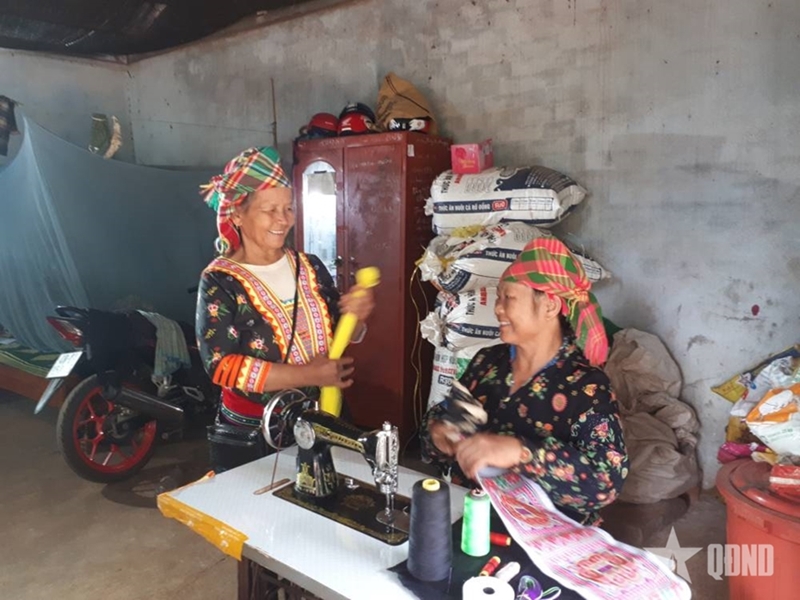
H’mong women in Giang Chau village preserve the traditional craft of sewing and embroidering. |
Giang A Lu, a village elder in Giang Chau village, said, “H’mong culture is a precious heritage passed down by our ancestors. We always remind our children and grandchildren to speak their ethnic language, understand their customs, and cherish traditional costumes, the khen, and the cultural values of our people. Although life has changed considerably, the good values handed down by our ancestors must be preserved and passed on to future generations.”
However, cultural exchange and integration also pose challenges to preserving traditional identity. Some young people have yet to show sufficient interest in traditional customs, while certain community cultural practices are at risk of fading away.
Against this backdrop, families, respected community members, and cultural activities play an increasingly important role. Festivals and cultural exchanges give residents opportunities to wear traditional costumes, perform folk songs and dances, and introduce their customs and traditions, helping keep their cultural heritage alive.
Soldiers help promote cultural diversity
Recognizing the importance of culture in building defense-economic zones, Defense-Economic Unit 720 regularly coordinates with local Party committees and authorities to organize festivals, cultural and artistic exchanges, sports competitions, and mass performances. These activities enrich spiritual life while creating opportunities for ethnic communities to meet, showcase their traditions, and strengthen solidarity.
|
|
 |
|
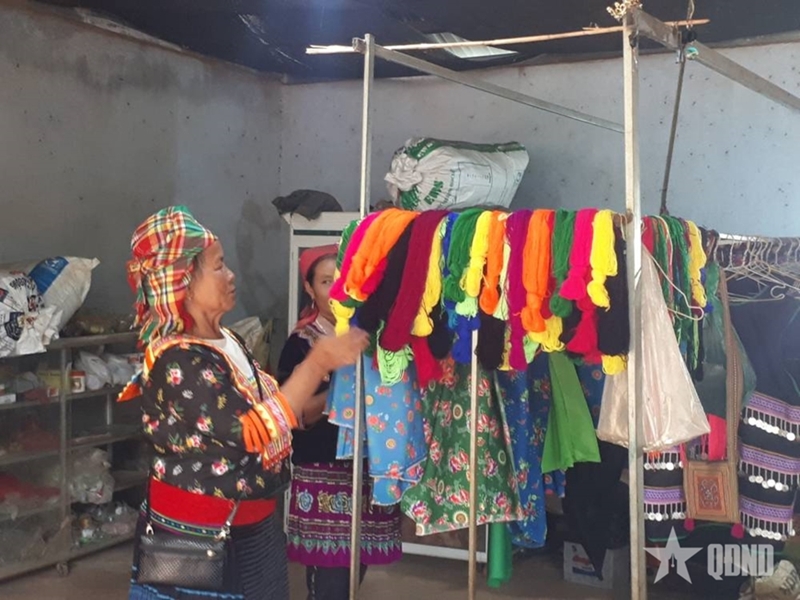
H’mong women visit a booth displaying traditional brocade products. |
The H’mong people and other ethnic communities actively participate in these events. Colorful traditional costumes, folk songs and dances, and performances featuring traditional musical instrument are carefully prepared. Sports competitions and cultural performances also allow residents to showcase their costumes, demonstrate their khen-playing skills, perform traditional dances, and participate in folk games.
Local residents are the main participants in these activities. Elderly people teach younger generations folk dances and songs, while young people, women, and children actively join cultural and sports groups. Exchanges among ethnic communities help enrich spiritual life and foster mutual understanding, respect, and solidarity.
Senior Colonel Doan Manh Nghia, Secretary of the Party Committee and Deputy Head of Defense-Economic Unit 720, said, “The unit considers preserving and promoting the cultural identity of ethnic groups an important part of its mission to build the defense-economic zone. We, therefore, regularly coordinate with local authorities to organize festivals, cultural and artistic exchanges, sports competitions, and mass performances, creating opportunities for the H’mong people and other ethnic communities to participate and showcase their traditional cultural values. These activities help improve spiritual life, strengthen military-civilian solidarity, and reinforce the great national unity bloc.”
|
|
 |
|
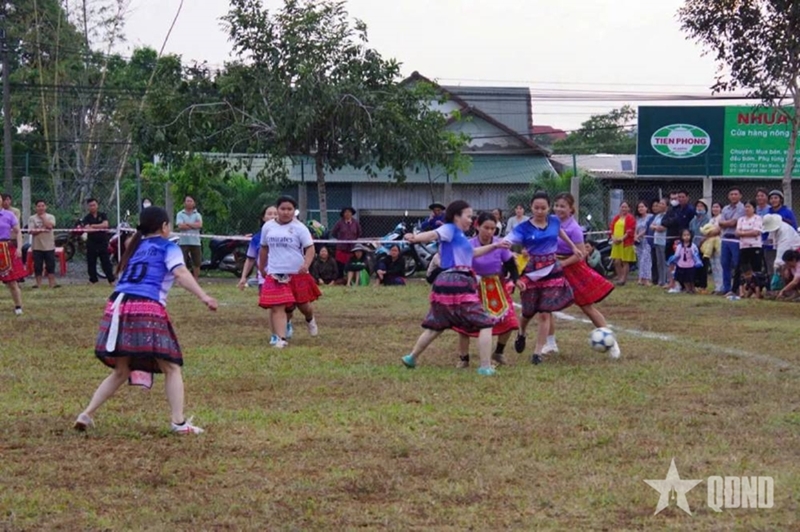
H’mong women take part in a football match organized by Defense-Economic Unit 720. |
Beyond cultural activities, the unit's officers and soldiers actively conduct mass mobilization work, encouraging residents to follow the Party's guidelines and the State's policies and laws, adopt civilized lifestyles, and support one another in economic development. Through production assistance, technical guidance on crop cultivation and livestock farming, support for poor households, and social welfare programs, the unit helps improve living conditions and creates a foundation for preserving traditional cultural values.
Particular attention is also given to younger generations. Cultural exchanges, performances, and sports competitions provide opportunities for young H’mong people to demonstrate their talents and ethnic pride while interacting with young people from other communities. These activities help foster a sense of responsibility toward the community and love for their homeland and country.
|
|
 |
|
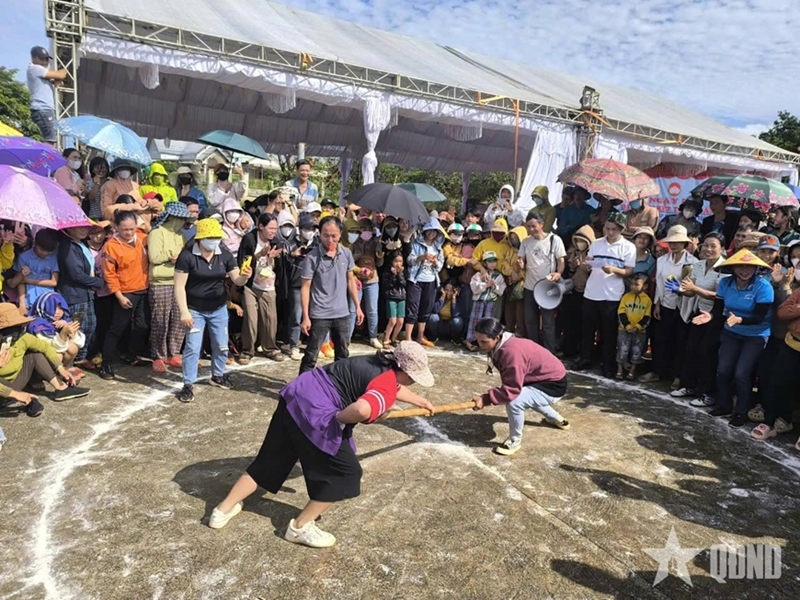
H’mong women participate in folk games organized by Defense-Economic Unit 720. |
Since receiving and resettling 312 H’mong households in 2002, the unit has consistently worked alongside local residents to build their new homeland. Practical cultural, artistic, and sporting activities have helped preserve and promote ethnic cultural identities while strengthening military-civilian solidarity. These efforts contribute to building a stable and developing area, reinforcing the people's support for national defense, and helping Corps 16 fulfill its mission of linking economic development with the strengthening of national defense and security.
Translated by Tran Hoai