A new initiative in response to practical needs
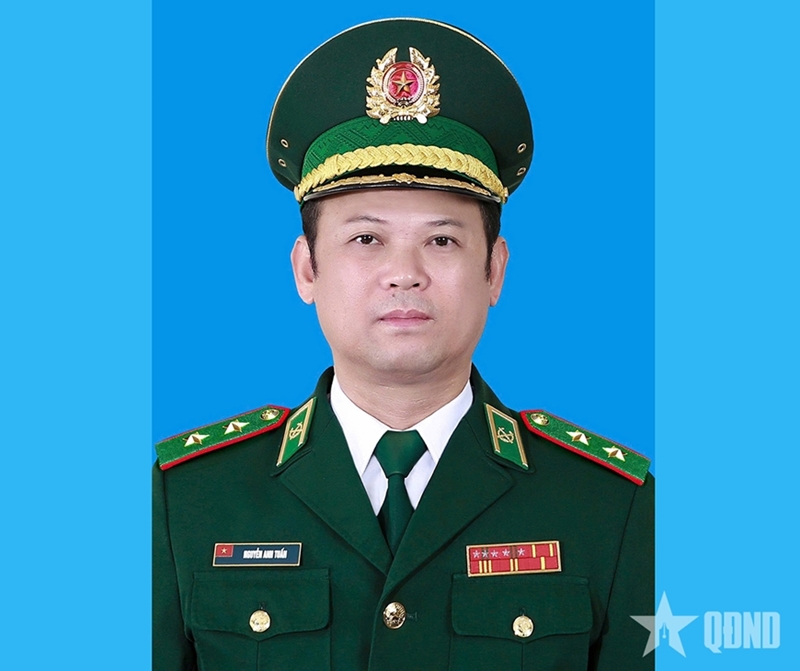
According to Lieutenant General Nguyen Anh Tuan, Political Commissar of the Viet Nam Border Guard Command, the initiative stems from the Politburo’s policy on investing in multi-level boarding schools in 248 communes along the land border.
Following this policy, the Viet Nam Border Guard directed the whole force to participate in site surveys, planning, and location selection, as well as public information campaigns and efforts to encourage local people to support the projects and facilitate their timely implementation. Officers and soldiers also directly transported construction materials and contributed nearly 11,000 working days, helping complete 108 schools before the 2026-2027 school year. They are continuing to support the construction of the remaining schools.
    |
 |
|
Lieutenant General Nguyen Anh Tuan |
However, building schools is only the first step. More importantly, students need a comprehensive, stable, and sustainable educational environment in which they can adapt to their new surroundings and establish good routines in both their studies and daily lives.
Therefore, immediately after the school year opening ceremonies, at the request of several schools, the Viet Nam Border Guard directed units to coordinate with schools in setting up working teams to provide support during the initial period. This led to the establishment of the “Border Landmark - Multi-level School” initiative, which aims to be implemented along the whole mainland border, making cooperation and support for education in border areas more systematic and effective.
|
|
 |
|
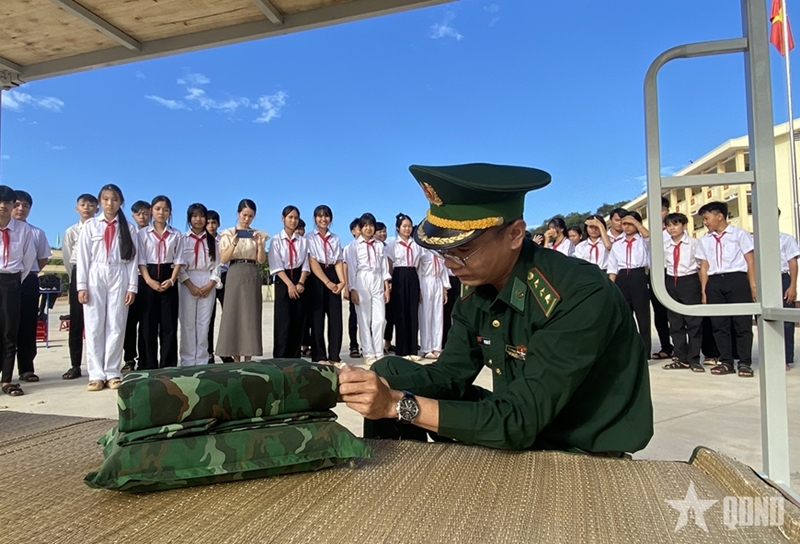
An officer from Ia Puch Border Post guides students at Ia Puch Primary and Secondary Boarding School in Ia Puch commune, Gia Lai province, in folding their bedding. |
The initiative translates some of the objectives of the policy on multi-level boarding schools into practical activities. The policy reflects strategic vision and humanitarian values, linking education and training, as well as ethnic and religious affairs, with the mission of safeguarding national territorial sovereignty and border security. The initiative’s most notable feature is its focus on helping schools establish orderly learning and living environments for students. Lieutenant General Nguyen Anh Tuan expressed hope that each school would give students the care and guidance to pursue their dreams and develop a desire to contribute.
The initiative focuses on three areas: providing students with knowledge of border affairs, traditions, and laws; helping them develop good habits and life skills to prevent risks and accidents; and encouraging age-appropriate production activities such as growing vegetables and raising livestock.
Building on tradition to improve effectiveness
According to Lieutenant General Nguyen Anh Tuan, the new initiative builds on experience gained through previous programs, including “Border guard teachers,” “Paving the way to school for children,” “Adopted children of border posts,” “Lessons in border areas,” “Border Guard haircuts,” and “Cultural hubs in border areas.” These programs have strengthened ties between troops, schools, and local communities while supporting education, raising education levels, and improving living conditions in border areas.
As the 25th initiative to support border-area development, the new program will build on these experiences while adopting approaches suited to multi-level boarding schools.
Under the implementation plan, schools will take the lead in educational activities, while border guard units will provide support based on actual needs. Border stations will establish twinning ties with schools and assign teams of three to five officers to provide direct assistance. Personnel will be selected based on their professional qualifications, experience in mass mobilization, understanding of local conditions, and ability to communicate in local languages.
Caring for younger generation and building public support for border defense
Lieutenant General Nguyen Anh Tuan stressed that close, long-term coordination and tangible improvements in students' development would determine the initiative's effectiveness.
The Viet Nam Border Guard will initially implement pilot programs at selected schools, evaluate the results, and refine its implementation before expanding it. Working teams are expected to provide direct support through the end of the 2026-2027 school year, with further assistance maintained as needed.
The initiative aims to help students improve their academic performance, develop independence, and gain a stronger sense of responsibility toward their homeland.
Lieutenant General Nguyen Anh Tuan emphasized that investing in education and improving living conditions in border areas would help establish a solid social foundation for border protection. By making schools welcoming places for learning and personal development, the initiative is expected to nurture patriotism among younger generations and strengthen public support for safeguarding national sovereignty and border security.
Translated by Quynh Oanh