Speaking to the Viet Nam News Agency (VNA) after attending events during General Secretary of the Communist Party of Viet Nam Central Committee and President To Lam’s visit, Minh, who is also Vice Chairman of the Vietnamese Knowledge Network in New Zealand (VietKnowledge NZ) and a member of the AUT Academic Board, called it a special and deeply moving experience.
    |
 |
|
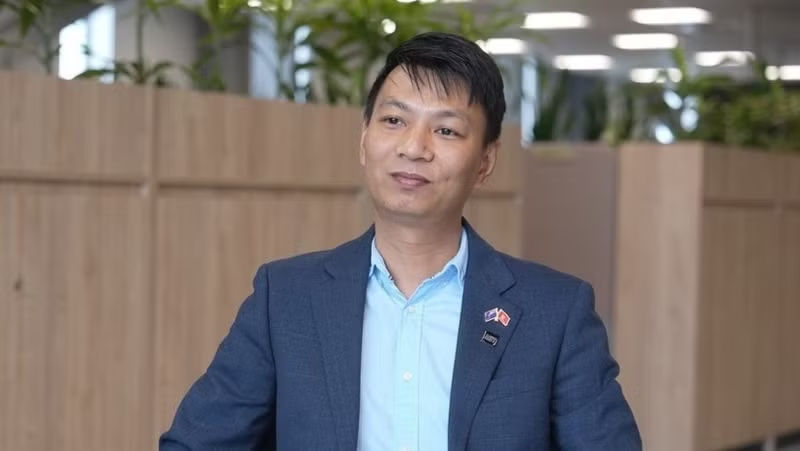
Prof., Dr. Nguyen Hoang Minh, a computer science expert at Auckland University of Technology. |
After 25 years of living, studying, and working in New Zealand, he said he remains deeply attached to Viet Nam, and the top leader’s presence among the Vietnamese community in New Zealand brought pride, closeness, and a heightened sense of responsibility among Vietnamese intellectuals there.
According to Minh, the state visit is not merely a diplomatic ritual. More importantly, it fostered political trust and raised ambitions for cooperation.
He said Viet Nam has a young workforce, a dynamic market, and ample demand for innovation while New Zealand brings strengths in education, science, high-tech agriculture, and sustainable development. The two economies are highly complementary. The visit has opened the door to cooperation, and the key task now is turning that opportunity into a pathway for people, students, scientists, and businesses to move forward together.
The expert flagged three priority cooperation areas. First, both sides should tackle real-world challenges by directing joint work into smart agriculture, climate change response, environmental protection, digital education, and responsible artificial intelligence. Combining New Zealand’s research and commercialization ecosystem with Viet Nam’s large-scale resources, rich datasets, and dynamic young workforce would translate research into practice, moving it beyond the lab and directly into orchards, classrooms, hospitals, and enterprises.
Second, the two countries should build and maintain an effective two-way flow of knowledge. Viet Nam should continue sending students and researchers to New Zealand to study, conduct research, and work. New Zealand scientists and experts should spend more time in Viet Nam to tap data, markets, and field conditions.
Third, scientific cooperation should place the younger generation at the center of all development strategies. Minh said around 20-30% of the students he supervises are Vietnamese. Education should go beyond university or postgraduate degrees, and the core goal is equipping young people to solve practical problems and build international networks as human resources form the most valuable asset determining long-term success.
Minh stressed that every initiative should spell out who is responsible, when it starts, and how results will be measured.
Innovation, he said, needs a mechanism to connect the “right people at the right time,” matching problems at Vietnamese universities with New Zealand technology and business capacity, with knowledge networks serving as a bridge. Success should be measured by the number of people trained, technologies deployed, and partnerships that last.
Affirming that patriotism can be gauged by contributions to the homeland, he expressed confidence that Vietnamese intellectuals in New Zealand have the skills, networks, and ambition to work with counterparts and turn cooperation opportunities into concrete results.
Source: VNA