Organized by the Dak Lak provincial People's Committee in collaboration with UNESCO, Trung Nguyen Legend and partners, it featured 14 presentations focusing on four main topics: global coffee history, cultivation and production processes, global consumer culture and the evolution of coffee heritage, and good practices in protection and sustainable development.
    |
 |
|
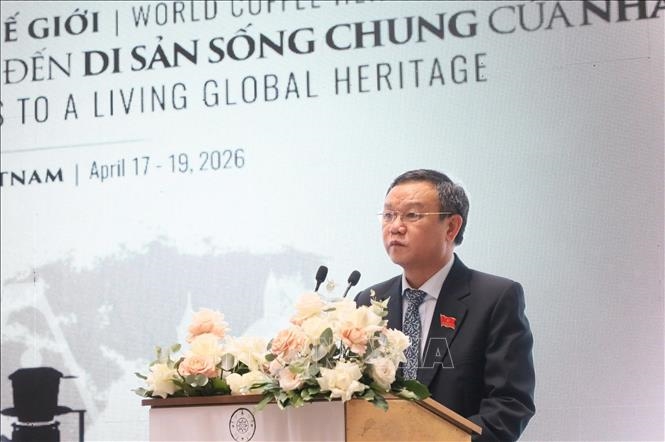
Dao My, Vice Chairman of the People's Committee of Dak Lak, speaks at the forum. |
According to Dao My, Vice Chairman of the People's Committee of Dak Lak, the province is known as the 'capital' of Vietnamese coffee, with rich, fertile basalt red soil ideal for agriculture.
The coffee provides livelihoods for thousands of locals and has developed a unique cultural space, closely tied to the socioeconomic life, customs and identity of local communities.
The recognition of "The knowledge of coffee cultivation and processing in Dak Lak” as a National Intangible Cultural Heritage marks an important milestone.
It affirms the value of indigenous knowledge, creative labor, and the harmonious connection between local livelihoods, culture and nature in the Central Highlands.
The event provided an opportunity to support the province in guiding the development of a UNESCO nomination dossier for the region's coffee cultivation and processing knowledge, fostering cross-sector cooperation and promoting the development of a coffee brand with a distinct local identity.
Dang Ha Viet, director of the Science, Technology, Training and Environment Department, said that in the current context of globalization, identifying and positioning coffee as a living cultural heritage would not just be an academic issue but a long-term development policy orientation.
He emphasized that this approach would align with Vietnam’s international commitments in the heritage sector while closely linking cultural preservation with sustainable development, innovation and international integration.
|
|
 |
|
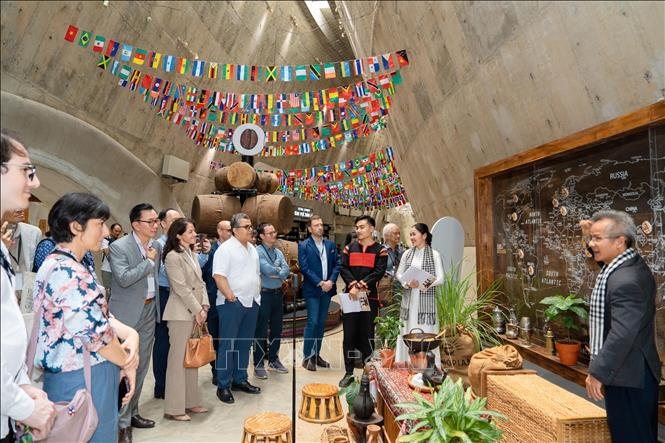
Domestic and international delegates visit the World Coffee Museum. |
At the event, the rich global history of coffee was highlighted through international presentations from nations with iconic coffee cultures, such as Palestine, Colombia, Turkey and Italy.
Furthermore, the event featured specific models of good coffee practices from Thailand, alongside the Food and Agriculture Organization's approach to sustainable coffee systems that harmonize community livelihoods with environmental protection.
The event further spotlighted the coffee ecosystem as a unified blend of indigenous knowledge, cultural landscapes and local livelihoods, establishing coffee's role as a center for social interaction and cultural exchange.
Source: VNA