The plan lays out how roads will be built over the next three decades as the country moves to keep pace with rising traffic, faster urbanization and growing freight demand.
By mid-century, the expressway system is expected to include 43 routes, stretching about 8,920km in total.
    |
 |
|
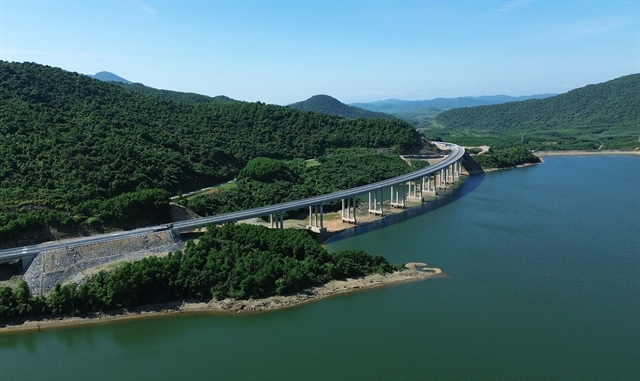
A section of the Vung Ang - Bung Expressway running along the coast, part of the larger North–South Expressway. |
At the center of the network is the north-south spine, which will run on two parallel tracks - an eastern coastal expressway of about 2,065km and a western inland route extending roughly 1,205km.
Regionally, northern Vietnam is set to host 14 expressway routes, adding up to around 2,242km.
The central region and the Central Highlands will account for 11 routes, or about 1,353km, while the south will have a similar number of routes covering roughly 1,342km.
Large cities will see major ring-road expansions. Hanoi plans to operate three ring roads by 2050, with a combined length of about 417km. Ho Chi Minh City will have two, totaling nearly 299km.
The blueprint also looks beyond expressways. By 2050, the national highway system is expected to include 172 routes with a combined length of more than 28,600km. The main North–South arteries will comprise National Highway 1, which runs about 2,218km, and the Ho Chi Minh Road, at roughly 1,894km.
In the north, the core highway network will consist of 21 major arterial routes spanning about 6,530km, supported by 34 secondary connecting roads.
The central region and the Central Highlands will have 24 arterial routes and 47 secondary ones, while the south will operate 17 arterial highways and 27 connecting routes.
The Ministry of Construction estimates the road program will require more than 200,000ha of land. Funding is expected to come from a mix of state spending, government bonds, official development assistance, private investment and some other sources.
Under the plan, expressways will be widened or expanded in line with long-term design standards, while upgrades to national highways and the construction of bypasses will be decided on a case-by-case basis, based on traffic forecasts and available funding.
Vietnam has already accelerated construction in recent years. By the end of 2025, the country had 3,803km of expressways in operation, including main routes and access roads - comfortably surpassing an earlier target of 3,000km.
Source: VNA