The seminar, titled “Export prospects to the Middle East and Turkey – Opportunities and challenges for Vietnamese enterprises,” was organized by the Investment and Trade Promotion Centre of Ho Chi Minh City (ITPC) in coordination with the Ministry of Foreign Affairs’ Department of Middle East - Africa and the HCM City Food and Foodstuff Association.
    |
 |
|
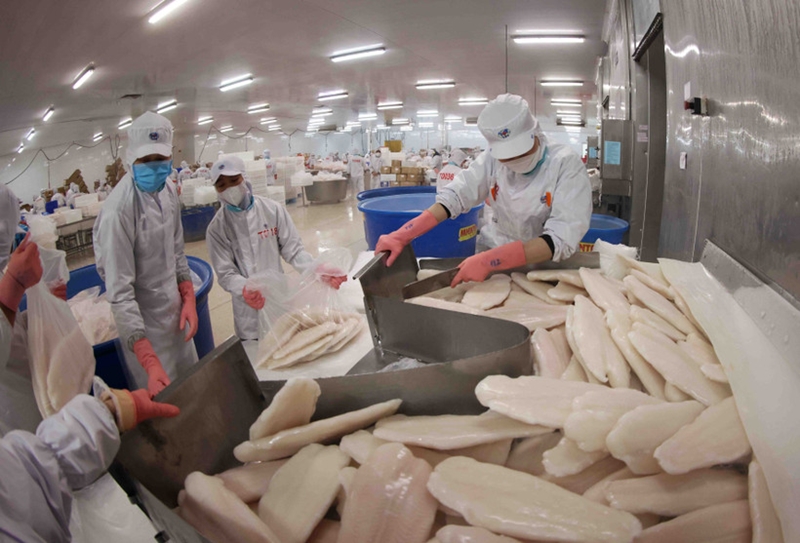
The Middle Eastern market favors Vietnamese pangasius exports that meet Halal standards. |
Tran Phu Lu, Director of ITPC, said that amid mounting global economic uncertainties and rising trade protectionism, diversifying export markets has become essential for Vietnamese businesses, with the Middle East’s Halal market offering a particularly effective avenue.
The region is a dynamic import market, with annual goods imports estimated at more than 1.2 trillion USD and GDP growth of 5% - 6%. In the first 11 months of 2025, Vietnam’s exports to the UAE, Saudi Arabia and Turkey reached 5.4 billion USD, 1.9 billion USD and 1.6 billion USD, respectively.
Exports from HCM City to these three markets have all recorded double-digit growth, with key items including mobile phones and components, electronics, footwear, and agricultural products such as cashew nuts, rice and pepper.
Nguyen Phuong Tra, Director General of the Department of Middle East - Africa, highlighted the scale of the Halal economy, which serves around 25% of the global population and is forecast to reach 10 trillion USD before 2028. The Halal food segment alone is expected to grow from 2.7 trillion USD in 2024 to nearly 5.9 trillion USD by 2033, at an annual rate of about 9%.
With a population of around 500 million and a combined GDP of 3.6 trillion USD, the Middle East has particularly strong purchasing power. Gulf Cooperation Council (GCC) countries import roughly 85% of their food needs, driving strong demand for dairy products, meat, rice, processed foods and beverages.
However, Tra cautioned that Vietnamese enterprises face significant challenges, particularly the complexity of Halal certification systems. High certification costs, short validity periods and intense competition from established exporters remain major barriers. She also warned of trade fraud risks, including opaque certification fees and payment delays, stressing the need for careful partner verification and secure payment terms.
To better tap the market, HCM City was encouraged to strengthen cooperation with major regional hubs such as Dubai and Riyadh, establish a Halal business association, and introduce tax and credit incentives. Enterprises were also advised to participate in reputable trade fairs, including Saudi Food Expo, Halal Trade Expo Dubai and the Malaysia International Halal Showcase (MIHAS).
Ramlan Bin Osman, Director of the National Halal Certification Center (HALCERT) under the Ministry of Science and Technology, said firms entering the Halal market must meet strict requirements, including the involvement of Muslim personnel in production or supervision and full transparency across the supply chain.
Sharing practical experience, Thi Hong Uytun, founder of HM Dragon Logistics and Consulting, said Turkey plays a dual role as both a consumer market and a gateway to the Middle East and the European Union. While Vietnam’s exports to Turkey continue to grow, they still account for only about 0.5% of the country’s total imports, indicating substantial untapped potential.
Experts recommended that Vietnamese firms prioritize irrevocable letters of credit confirmed by reputable banks and strengthen financial due diligence to mitigate risks when entering Middle Eastern and Turkish markets.
Source: VNA