The meetings took place during the leader's visit to China to attend the 33rd APEC Economic Leaders' Week and conduct bilateral activities.
    |
 |
|
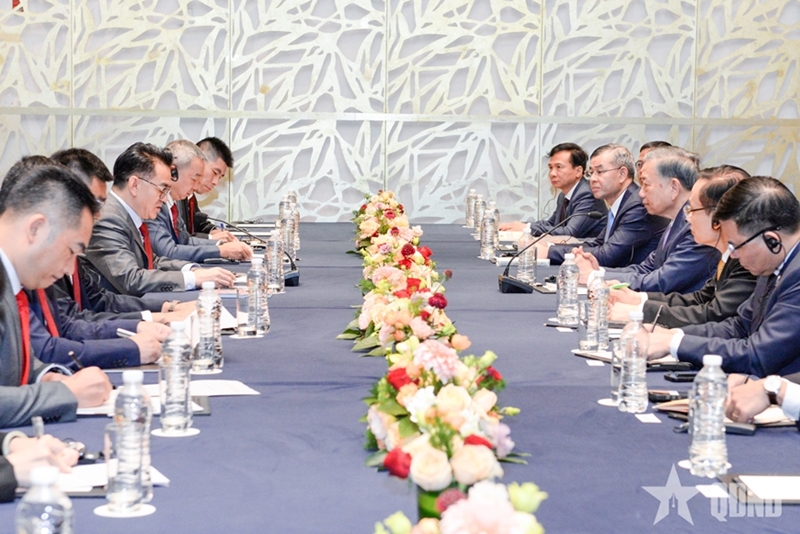
General Secretary and President To Lam receives Wang Cheng, CEO of TCL Group. |
Meeting with Wang Cheng, CEO of TCL Group, General Secretary and President To Lam praised the group's decision to choose Viet Nam as its first destination in its internationalization strategy in 1999. He noted that TCL had maintained production and business operations in Viet Nam for more than 27 years, creating jobs for many workers.
The top Vietnamese leader affirmed that Viet Nam consistently attaches importance to its friendly neighborliness and comprehensive strategic cooperative partnership with China, as well as building a Viet Nam-China Community with a shared future that carries strategic significance. He called for more substantive and effective economic, scientific and technological cooperation between the two nations.
TCL Group CEO Wang Cheng said TCL, an internationally operating technology and electronics manufacturer, had maintained a long-term presence in Viet Nam, helping create jobs, boost exports and develop the electronics ecosystem. He affirmed that the firm would continue to expand investment, train human resources, broaden cooperation and involve Vietnamese businesses in its supply chains.
He proposed stronger policy support for workforce training and development in manufacturing to address skilled labor shortages, closer cooperation in supporting industries and the early implementation of new projects in Viet Nam.
General Secretary and President To Lam said Viet Nam had entered a new phase of development, identifying science, technology, innovation, digital transformation and high-quality human resources as key drivers. He noted that Viet Nam prioritizes quality investment featuring advanced technologies, high added value and stronger links with domestic businesses.
With these priorities in mind, he encouraged the group to expand investment in display technology, smart electronics, research and development (R&D), supporting industries and other high-value-added activities in line with Viet Nam’s development orientations.
Acknowledging the group's proposals, he also called on TCL to work with Vietnamese universities, vocational training institutions and research institutes to develop demand-driven training programs, expand internships and workplace training, and build a skilled Vietnamese workforce of engineers, experts and managers.
The Vietnamese leader affirmed that the Vietnamese Party and State value investors with long-term strategies, effective operations, respect for the law and a contribution to socio-economic development. He emphasized that Viet Nam would continue to improve its institutional framework and investment climate and protect investors' legitimate rights and interests.
He expressed his hope that TCL will build on its cooperation achievements, undertake more high-quality projects, and accompany Viet Nam in developing a modern industrial sector and strengthening its self-reliance.
|
|
 |
|
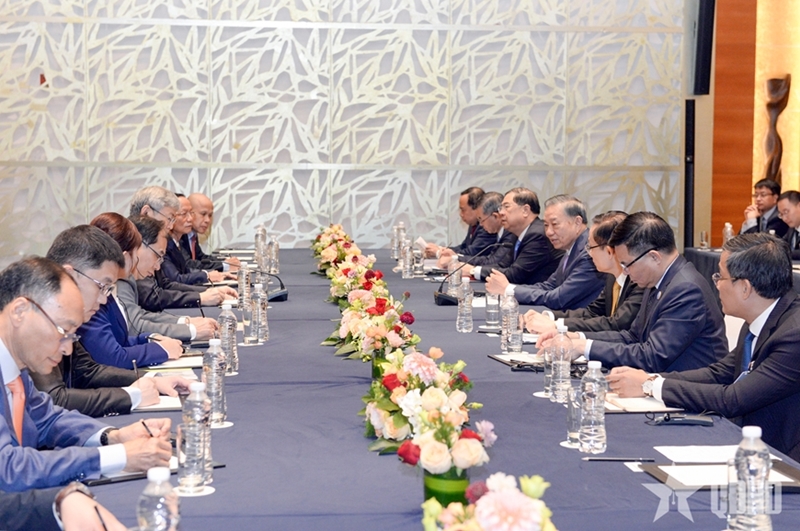
General Secretary and President To Lam receives Yin Tongyue, Chairman of Chery Holdings. |
At his meeting with Yin Tongyue, Chairman of Chery Holdings, General Secretary and President To Lam welcomed the group's view of Viet Nam as a strategic investment destination and its cooperation with Vietnamese businesses in industrial and high-tech manufacturing.
General Secretary and President To Lam noted that Viet Nam was striving to become a developed, high-income country by 2045. Viet Nam prioritizes projects featuring advanced technologies, high added value, the potential to develop new industries, technology transfer and linkages with domestic businesses, he said, expressing the hope that Chery would use its strengths in research, manufacturing, management and market networks to cooperate with Viet Nam in developing a modern, green and smart automotive industry and supporting industries.
Chery Holdings Chairman Yin Tongyue introduced Chery as a multi-sector group centered on the automotive industry, with operations spanning passenger and commercial vehicles, components, automotive technology, finance and related services.
Chery considers Viet Nam a strategic location in Southeast Asia and wishes to step up cooperation to help develop the country's automotive industry, supporting industries and supply chains, while expanding its investment in Viet Nam, he said.
General Secretary and President To Lam expressed his hope that Chery would expand beyond manufacturing to R&D, technology transfer, and cooperation with Vietnamese universities, research institutes and businesses. He called for training Vietnamese engineers, experts and managers to gradually master technology.
Welcoming the comprehensive strategic cooperation agreement between Chery Holdings and Viet Nam’s Geleximco Group and acknowledging plans to study proposed projects, he asked the two sides to prioritize projects in automobile and new energy vehicle manufacturing, components and high technology that could be effectively implemented. He expressed confidence that their partnership could serve as an effective model linking an international technology group with a Vietnamese business and help enhance domestic industrial capacity. General Secretary and President To Lam emphasized that Viet Nam would continue to build a transparent, stable and equitable investment environment. He expressed his hope that Chery and Geleximco would carry out practical cooperation to help develop Viet Nam's modern industrial sector and deepen Viet Nam - China ties.
|
|
 |
|
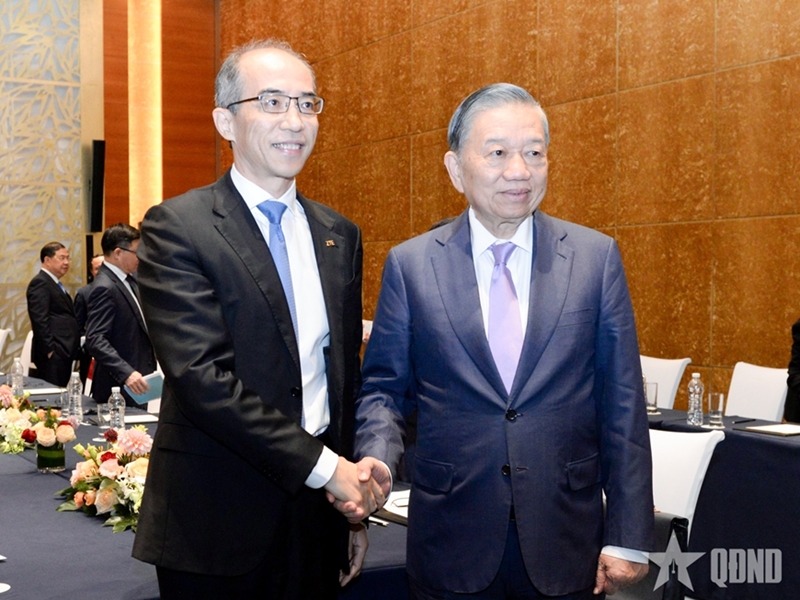
General Secretary and President To Lam receives Xu Ziyang, CEO of ZTE Corporation. |
Meeting Xu Ziyang, CEO of ZTE Corporation, General Secretary and President To Lam acknowledged the group's effective cooperation in developing telecommunications infrastructure and training information technology personnel in Viet Nam, expressing his hope for sustained and effective partnerships with Vietnamese counterparts.
ZTE CEO Xu Ziyang said ZTE has strengths in optical transmission, fixed network access, artificial intelligence (AI) servers, storage systems, computing networks and digital applications in industry, providing opportunities to cooperate with Viet Nam in digital infrastructure development and digital transformation.
ZTE has worked with the Posts and Telecommunications Institute of Technology, Viet Nam National University, Ha Noi, and other training institutions to develop human resources in information and communications technology (ICT).
The Vietnamese leader encouraged ZTE to work with Vietnamese businesses, industrial parks and relevant agencies to select pilot projects. He also called for closer cooperation with Vietnamese universities, research institutes and enterprises to develop engineer training programs, exchange experts, and explore establishing laboratories and joint practical projects. He emphasized developing Vietnamese experts and engineers capable of researching, operating and developing technology.
He asked ZTE to turn these directions into concrete cooperation programs and projects with Vietnamese partners, with clear objectives, technologies, resources and expected outcomes.
Translated by Chung Anh