March 02, 2026 | 23:26 (GMT+7)
Dong Ho folk paintings imbued with Vietnamese spirit
PANO - Expressive lines with distinct bold and light strokes, simple but lively shapes, and harmonious layouts guided by enduring folk rules altogether forge the distinctive identity of the Dong Ho folk painting craft in Thuan Thanh ward, Bac Ninh province.
Artisan Nguyen Huu Hoa, the sole craft village representative at UNESCO’s 20th session in New Delhi in December 2025, remains moved by the inscription of Dong Ho folk painting on the List of Intangible Cultural Heritage in Need of Urgent Safeguarding. He recalled the Vietnamese delegation’s pride and gratitude toward ancestors for this 500-year-old craft.
    |
 |
|
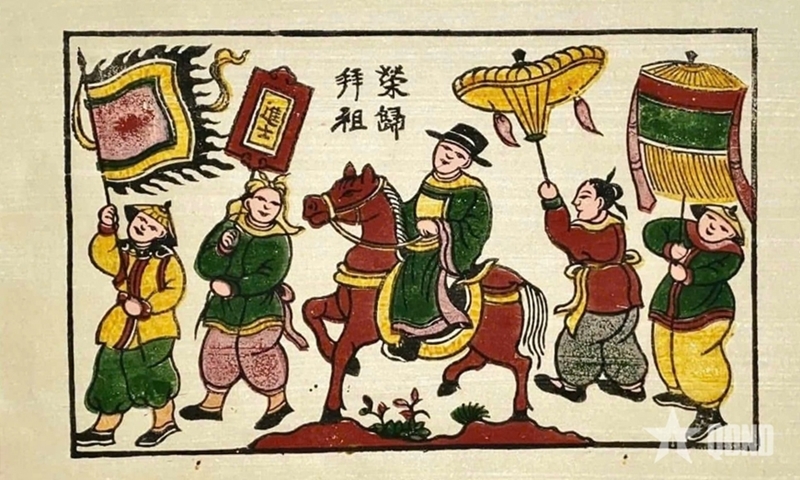
A work of the Dong Ho folk painting craft named “Returning home to pay tribute to ancestors” (Vinh quy bai to). Photo: qdnd.vn |
Artisan Nguyen Huu Hoa emphasized that this honor entails the responsibility to preserve traditional values and promote the craft to younger generations and tourists. He urged artisans to improve product quality and create welcoming exhibition spaces to leave lasting impressions of the Kinh Bac region.
A spiritual staple of the Lunar New Year (Tet), Dong Ho paintings utilize unique woodblock printing and natural colors from scallop shells and bamboo charcoal. The ongoing sounds of chiseling in the village affirm Bac Ninh province’s commitment to UNESCO’s urgent preservation measures.
According to Meritorious Artisan Nguyen Dang Che, the core uniqueness of Dong Ho folk painting craft lies in their joyful and innocent imagery, which embodies the eternal dreams of working people for a harmonious, prosperous, and happy family life, as well as a fair society. Each painting carries a distinct message, reflecting deeply ordinary yet profound aspirations: The vibrant “Lion dance” (Mua lan) conveys wishes for prosperity; “Honor and wealth” (Vinh hoa - Phu quy) brings blessings for peace, abundance, and family reunions; while “Herding buffalo and playing flute” (Chan trau thoi sao) praises the peaceful rural life and aspirations for human maturity.
Despite this pride, artisans Nguyen Dang Che and Nguyen Huu Hoa worry that few families still maintain the craft, with knowledge transmission limited to kinship. Artisan Nguyen Dang Che hopes UNESCO’s recognition will catalyze state and community action to sustainably safeguard this Vietnamese heritage.
Translated by Minh Anh