Last year, Hanoi saw a surge in both quantity and quality of public art endeavors, a leap forward in the art of breathing new life into urban landscapes. On weekends, holidays, and during Tet festivities, it's now commonplace to spot local people and tourists alike lingering at these pieces, snapping photos, discussing them, and engaging directly.
    |
 |
|
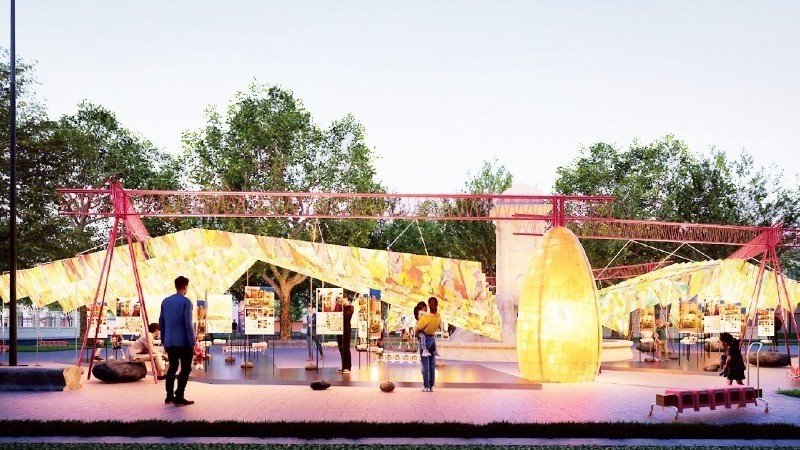
An exhibition on "do" paper and recycled materials at Dien Hong flower garden (Photo: nhandan.vn) |
According to architects and connoisseurs, for a metropolis aspiring to creativity, open art spaces where the public can access and enjoy art year-round are indispensable.
The standout project "What do birds tweet about?", launched in late September 2025, transformed overlooked green havens at Chuong Duong riverside forest park in Hanoi and Tao Dan park in Ho Chi Minh City. A collaboration between Vietnamese and foreign artists, this colorful "treehouse" structure weaves AI with an online archive of bird sounds, creating immersive "bird stations" where one can listen to hundreds of native species. What starts as a casual urban interlude becomes a profound, almost poetic reunion with nature right at the city's heart.
Earlier at Co Tan flower garden, fashion designer Tia-Thuy Nguyen dropped "Hoi sinh" (Rebirth), and it hit different. After Typhoon Yagi uprooted a century-old mahogany tree in 2024, she and her team salvaged it, then spent over 6,000 hours and more than six tons of metal meticulously rebuilding its majesty. Thousands of shimmering steel leaves and quartz blossoms recreate the canopy in a dazzling, resilient glow, a powerful statement on renewal and nature's quiet comeback after disaster.
Late October brought the debut of "Ket doan" (Solidarity) at August 19 Garden, affirming a welcome evolution: art is no longer confined to galleries or museums, but woven into the everyday pulse of the city, accessible and alive.
Dien Hong Garden, right next to the Hoan Kiem pedestrian zone, has also become a regular host for bold, high-impact displays.
Recent years have brought a wave of such projects to Hanoi. The Phuc Tan public art project, led by 16 volunteer artists, blends striking visuals with eco-messages by using recycled materials and pulling residents right into the process.
Over at the Tran Nhat Duat pedestrian bridge linking Phuc Tan with an arts and culture center at No.22 Hang Buom street, artistic lighting has transformed it into a glowing nighttime hotspot.
On Phung Hung street, forgotten railway arches now serve as massive mural canvases, reviving nostalgic slices of old Hanoi and bringing art straight into neighborhood life.
As part of UNESCO Creative Cities Network, Hanoi is set to build even more momentum through 2026. With a close-knit community of architects, artists, and cultural pioneers, along with evolving policies, public art is ready to energize the creative economy and refresh the capital’s charm on the global stage in its next chapter.
Source: VNA