Rather than pursuing mass tourism, local authorities and experts are calling for a shift towards premium and experience-driven travel where tranquillity, green architecture and historical depth define the province’s tourism identity.
Natural assets with enduring appeal
Located about 35km north of former Dong Ha city, Cua Tung beach was once considered one of the most beautiful seaside resorts in central Vietnam. Dubbed the “queen of beaches” during the early 20th century, it boasts fine white sand, gentle slopes and a pristine landscape.
    |
 |
|
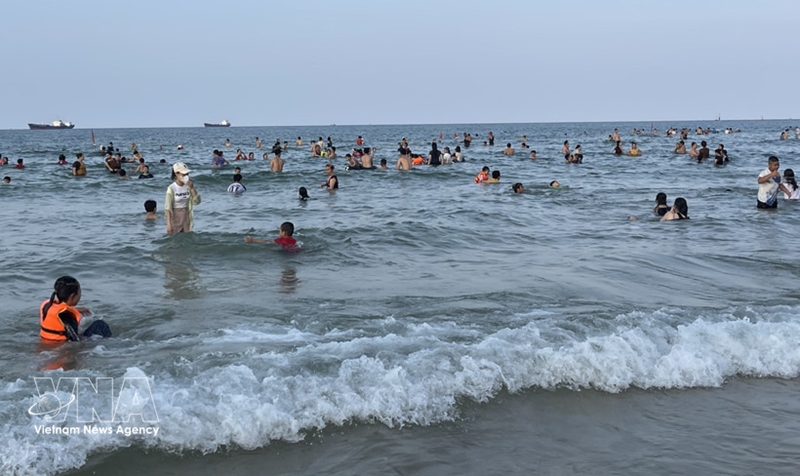
Cua Viet beach is a magnet for both locals and visitors during holidays. |
About 15km to the south lies Cua Viet beach, at the mouth of the Thach Han River. The interplay between river currents and ocean waves has formed distinctive stretches of smooth sand. Benefiting from its proximity to Dong Ha and its position at the starting point of the East–West Economic Corridor (EWEC) on the Vietnamese side, Cua Viet has gradually emerged as a gateway for tourism and investment.
Meanwhile, Con Co Island, designated as a special zone, is positioning tourism as its leading economic sector accounting for over 70% of its economic structure. The island is known for its rich marine biodiversity and commitment to environmental protection.
The ongoing construction of Quang Tri Airport, located between Cua Tung and Cua Viet and about 30km from Con Co, is expected to improve accessibility when it becomes operational in 2026.
Strategic vision needed for sustainable growth
Despite its advantages, Cua Tung has faced coastal erosion since the early 2000s due to changes in natural currents following infrastructure development. While restoration solutions are still under study, experts believe the beach retains its unique charm and can be repositioned through careful planning.
Director of the provincial Department of Culture, Sports and Tourism Le Minh Tuan said the resolution of the first Quang Tri Party Congress, for 2025–2030, identifies Cua Tung, Cua Viet and Con Co special zone as three key destinations of marine tourism. To transform this “tourism triangle” into premium and peaceful resorts, a new strategy is needed to enhance attractiveness to high-end travelers seeking private spaces as the strength of these places lies in their pristine and tranquil beauty.
Experts recommend that the three destinations embrace a low-density development approach focused on green architecture and open spaces. Rather than building high-rise hotels, boutique villas and eco-friendly bungalows tucked into casuarina forests or set along natural slopes would help preserve the scenery and attract high-end travelers looking for privacy.
Transport infrastructure should also be designed with sustainability in mind. Electric vehicles, bicycles and pedestrian pathways are recommended within resorts and on Con Co Island to minimize noise and emissions. The road linking Cua Tung and Cua Viet could be upgraded into a scenic coastal route rather than a mixed-use traffic corridor.
Product positioning is another key factor. Instead of focusing on mass entertainment, Quang Tri should develop high-end wellness tourism services, including spa therapies, outdoor yoga and meditation, leveraging the clean sea and fresh air. Controlled coral diving, sea turtle observation and forest conservation tours could attract environmentally conscious visitors.
Equally important is weaving in cultural and historical values. Once a battlefield with landmarks like the Vinh Moc Tunnels and the 17th Parallel, Quang Tri boasts unique heritage treasures. By blending storytelling with art spaces and curated experiences, its tranquility can be transformed into a rich narrative of remembrance and peace.
Source: VNA