The program, themed “Enhancing exchanges and cooperation in AI-powered cross-border tourism,” is jointly organized by the Department of Culture and Tourism of China’s Guangxi Zhuang Autonomous Region and cultural, sports and tourism agencies of Vietnam's Quang Ninh, Lang Son, Cao Bang, and Tuyen Quang provinces.
    |
 |
|
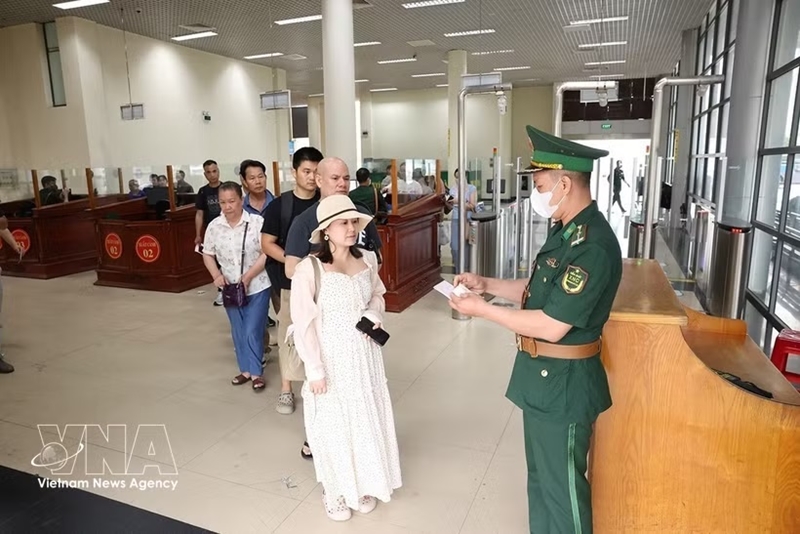
A border guard at Mong Cai International Border Gate processes exit procedures for passengers at the Bac Luan 1 border gate in Quang Ninh province. |
During the program, participants will attend intensive courses delivered by AI technology experts, China–ASEAN policy researchers, and tourism specialists. The curriculum focuses on the application of big data in tourism policy planning, the development of cross-border tourism products, and the building of joint tourism brands.
Leaders of the Guangxi Department of Culture and Tourism said the initiative aims to establish a platform for exchange and experience-sharing in smart tourism development, thereby strengthening mutual trust and promoting more substantive cooperation between localities of the two countries. The program is expected to help create distinctive tourism products, improve visitor experiences, and advance cross-border tourism in a smarter, more convenient and sustainable direction.
A representative from the Department of Culture, Sports and Tourism of Lang Son province noted that sharing experience in AI application would provide Vietnamese localities with practical foundations to design and implement digital transformation programs tailored to their conditions. The official also expressed hope for enhanced information-sharing, data connectivity, and coordinated development of smart tourism products between the two sides.
As part of the program, participants will conduct field trips to several localities in Guangxi, including Liuzhou, Guilin and Hechi. They will explore smart tourism models, engage in cultural experiences, and visit historical sites linked to Vietnam–China friendship, including locations associated with late President Ho Chi Minh during his time in China.
Source: VNA