Building elite, modern cybersecurity force
The project aims to strengthen overall capabilities and develop an elite and modern cybersecurity force able to proactively prevent and effectively respond to all cyber risks and threats, safeguarding national security, social order and safety, and the rights and lawful interests of organizations and individuals in cyberspace.
    |
 |
|
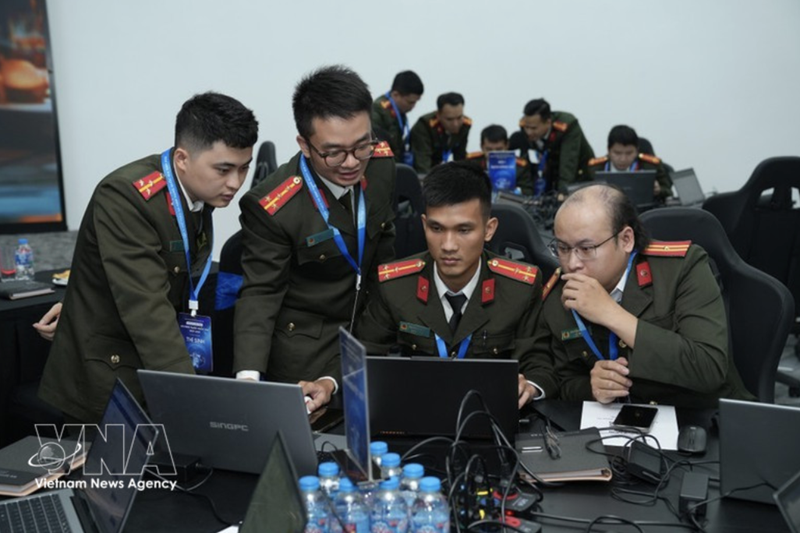
By 2030, Vietnam targets ranking among the world’s top 15 countries in the Global Cybersecurity Index. (Photo for illustration: baochinhphu.vn) |
By 2030, Vietnam targets ranking among the world’s top 15 countries in the Global Cybersecurity Index (ITU-GCI) and establishing a regional training centre for cybercrime prevention and cybersecurity to enhance its regional leadership role.
The country plans to develop at least 10,000 specialized cybersecurity experts, including 20% meeting international standards. All specialized cybersecurity personnel across ministries, sectors, localities and organizations managing critical national information systems must obtain certified advanced qualifications and receive annual professional updates.
The project also aims for 90% of internet users to access cybersecurity awareness programs, skills training and protection tools, while promoting research, development and gradual mastery of strategic cybersecurity technologies.
A domestic ecosystem of cybersecurity products and services based on Vietnamese-owned technologies will be developed, with at least two enterprises selected to lead technological mastery in each key product category. By 2030, 70% of ministries, sectors, localities and critical information systems are expected to adopt “Make in Vietnam” strategic technology products, and all cybersecurity products and services must undergo testing and evaluation before deployment.
Vision to 2045: regional cybersecurity leader
By 2045, Vietnam aims to become one of the leading cybersecurity nations in the Asia-Pacific region, with strong capabilities in cyber defense and combating cybercrime and hostile activities to firmly protect national digital sovereignty, as well as all activities of the State, enterprises and people in cyberspace.
The cybersecurity industry is expected to evolve into a key techno-economic sector, with at least three Vietnamese companies ranking among the world’s top 50 cybersecurity solution providers and exporting products and technologies globally.
Key measures include improving legal frameworks to ensure unified and effective cybersecurity governance, developing national technical standards and certification mechanisms, and establishing a national cybersecurity risk management framework aligned with international practices.
The organizational structure will be strengthened through the consolidation of the National Cybersecurity Steering Committee and specialized cybersecurity agencies, alongside guidance for ministries, sectors, localities, agencies and organizations in forming their cybersecurity protection forces.
Vietnam will develop networks linking domestic and international experts and cultivate high-level specialists in key technologies such as artificial intelligence, post-quantum cryptography and blockchain. Standardized training frameworks, certification systems and regular capacity-building programs will also be implemented nationwide.
Mastering core cybersecurity technologies
The project prioritizes research and mastery of core cybersecurity technologies through identifying key national products and promoting State-supported development and commercialization of domestic solutions.
Support policies will assist cybersecurity startups and enterprises while small and medium-sized businesses will receive training, consultancy and access to domestic cybersecurity solutions. Testing and evaluation centers will be developed to certify products under national and international standards.
International cooperation will be expanded with advanced partners, including the U.S., the European Union, Japan, the Republic of Korea, India, Israel, China, the U.K., France and Germany, focusing on information sharing, technical assistance and workforce training.
Vietnam will actively participate in international organizations such as ITU, FIRST, APCERT, GFCE, ISO and IEC; promote global cybersecurity norms through the U.N., ASEAN and APEC mechanisms; encourage other countries' signing and ratification of the U.N. Convention against Cybercrime so that it can take effect soon; attract foreign resources to research, application, innovation, startup and technology transfer in cybersecurity safeguarding; send domestic experts and organizations to global cybersecurity activities and conferences like RSAC Conference, Black Hat, DEFCON, CyberTech and Hack in the Box; and support businesses and research institutes to achieve international cybersecurity certificates and awards.
Source: VNA