Under the program, total funding to be mobilized for the 2026–2030 period is estimated at 1.044 quadrillion VND (40.2 billion USD). Of this amount, the central budget will provide 100 trillion VND (9.6%), local budgets around 300 trillion VND (28.7%), integrated funding from other programs and projects about 360 trillion VND (34.5%), policy credit approximately 23 trillion VND (2.2%), and contributions from enterprises and communities an estimated 261 trillion VND (25%).
    |
 |
|
Total funding to be mobilized for the program implementation in the 2026–2030 period is estimated at about 1.044 quadrillion VND. |
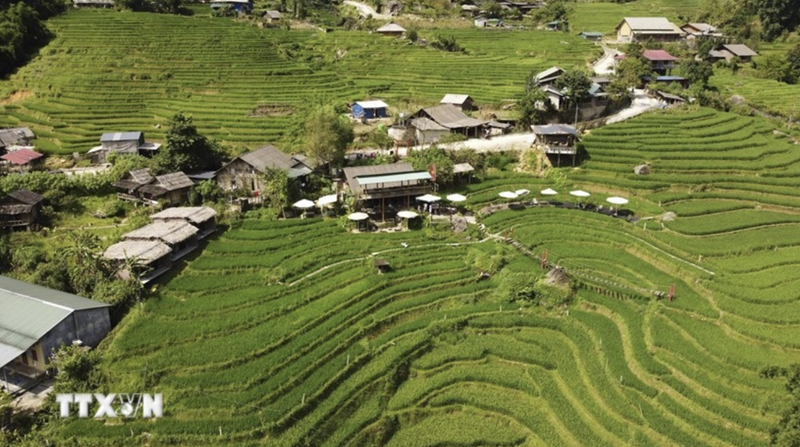
The program aims to build modern, sustainable and culturally rich new-style rural areas while promoting comprehensive development in ethnic minority and mountainous areas. It also targets inclusive and multidimensional poverty reduction, gender equality and social security; and at the same time, advancing a green, circular and ecological rural economy linked with agricultural restructuring to raise incomes, improve living standards and narrow regional development gaps.
By 2030, the program looks to increase average rural incomes by 2.5–3 times compared to 2020, with incomes of ethnic minority people reaching about half of the national average. Multidimensional poverty is expected to decline by 1–1.5% annually, reducing the household poverty rate in ethnic minority and mountainous areas to below 10%, and basically eliminating extremely disadvantaged communes and villages.
Nationwide, around 65% of communes are expected to meet new-style countryside standards, including 10% recognized as modern new-style rural areas. Meanwhile, five provinces and cities are hoped to complete rural development tasks.
Among the new-style rural area criteria, Criterion No. 1 on planning will be developed and managed on a geographic information system (GIS) platform, integrated into the national planning database and shared with relevant organizations and individuals.
To promote an ecological, modern and multi-value rural economy responsive to market demand, the program will prioritize economic development, fast poverty reduction and sustainable income improvement. Concurrently, it will narrow living-standard gaps between the targeted areas and the national average while boosting gender equality and enhancing the role of women. It targets 80% of ethnic minority farming households participating in commodity-oriented agricultural and forestry production.
Key measures include restructuring agriculture and the rural economy towards an ecological and modern orientation, prioritizing low-emission production models, organic and circular agriculture, good agricultural practices such as VietGAP and GlobalGAP, safe input use and traceability.
The program also seeks to strengthen and develop the collective economy and cooperatives linked with value chains and sustainable livelihoods, support the development of concentrated raw material and large-scale commodity production zones, and enhance linkages between production, processing and consumption.
In addition, it will promote the development of OCOP (One Commune, One Product) items in a quality-oriented, distinctive, multi-value and environmentally friendly manner, while boosting technology application to processing, branding, market expansion and green OCOP development.
The program will build and replicate diverse livelihood models aligned with local ecological and cultural conditions, particularly in extremely disadvantaged communes and villages, ethnic minority and mountainous areas, border regions and islands. It will also encourage the application of science and technology, the digital and green economy, innovative start-ups and market connectivity. Microcredit schemes and climate-resilient agricultural insurance will be piloted as well.
Notably, the program will also provide support for residents in extremely disadvantaged communes and villages, or ethnic minority and mountainous areas to seek employment abroad.
Source: VNA