Of the total, about 100 trillion VND will come from the central budget, 300 trillion VND from local budgets, and roughly 23 trillion VND from state-funded policy credit sources, according to Resolution No.257/2025/QH15, freshly certified by National Assembly Chairman Tran Thanh Man.
    |
 |
|
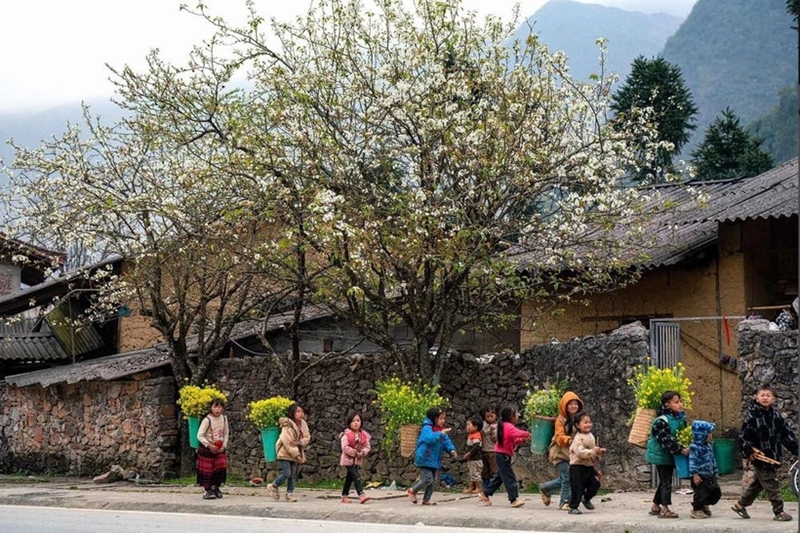
By 2030, Vietnam strives to raise average income of ethnic minority people to at least half of the national average. |
During the program implementation, the Government will prioritize balancing the central budget to provide additional funding, including social policy credit capital, to ensure sufficient resources to meet program goals and assigned tasks. Based on implementation outcomes during 2026–2030, the Government will submit plans on financial resources for the 2031–2035 phase to the National Assembly.
The program aims to build modern, prosperous, identity-rich, and sustainable rural areas linked with urbanization and climate change adaptation; promote comprehensive development in ethnic minority and mountainous regions; advance inclusive, multi-dimensional and sustainable poverty reduction; and ensure gender equality and social security. It seeks to foster a green, circular and ecological rural economy connected with restructuring agriculture, improving incomes, raising living standards and narrowing development gaps among regions. It also looks to preserves cultural identity of ethnic minority groups, strengthening national solidarity, and ensuring national defense, security and social order, particularly in strategic, border and island areas.
By 2030, Vietnam strives to increase per capita income of rural residents to 2.5–3 times the 2020 level, and raise average income of ethnic minority people to at least half of the national average. The national multi-dimensional poverty rate is expected to fall 1–1.5% annually, while household poverty among ethnic minority and mountainous communities is targeted to drop to below 10%. Around 65% of communes nationwide are hoped to meet new-style rural area standards, including about 10% achieving advanced modern criteria, and at least five provinces/cities are expected to complete new-style rural area development.
By 2035, per capita income of rural residents is hoped to rise at least 1.6 times from the 2030 level, with ethnic minority income equivalent to at least half of the national average. Vietnam also aims to cut by at least 50% the number of disadvantaged communes and villages in ethnic minority and mountainous areas, and have five provinces/cities in such regions free from disadvantaged communes an villages. About 85% of communes nationwide are expected to meet new-style rural area standards, including 30% satisfying modern criteria, and at least 10 provinces/cities completing new-style countryside development, five of which will reach modern standards.
Separately, the top legislator also certified Resolution No.261/2025/QH15, introducing some special mechanisms and policies for making breakthroughs in public health protection, care, and improvement, including expanding health insurance benefits, increasing reimbursement rates, and gradually applying basic hospital fee exemptions within coverage limits for eligible groups such as the near-poor, vulnerable people and the elderly.
Meanwhile, Resolution No.250/2025/QH15 establishes some special mechanisms and policies to strengthen international integration, ensuring national interests, enhancing Vietnam’s global standing, and promoting transparency, efficiency and anti-corruption in external affairs and integration activities.
Source: VNA