As of March, electronic health records linked to the VNeID application have been deployed across the 34 provinces and cities, covering around 30 million digital health records. However, most of the current data comes from examinations and treatment funded through the national health insurance system. Information from routine health check-ups and screening programs has yet to be fully connected or integrated into the platform.
    |
 |
|
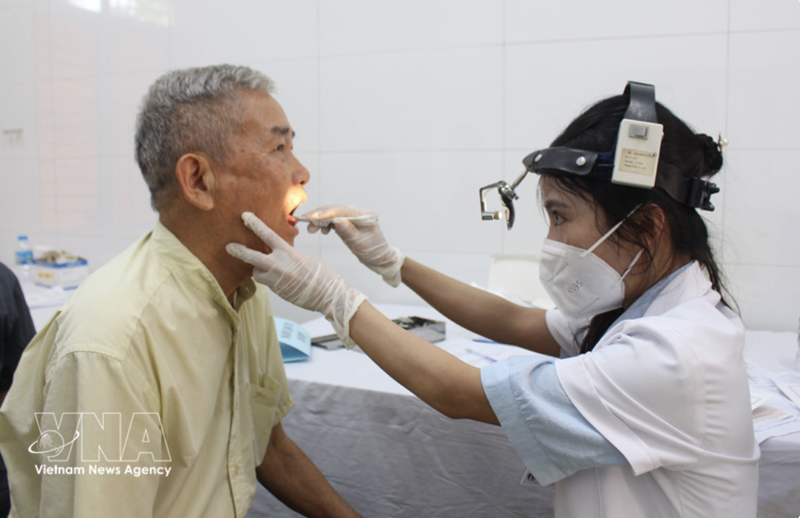
An elderly receives health check-ups. |
The National Health Information Center is proposing solutions to connect periodic health check-up data from medical establishments, commune health stations, and mobile check-up campaigns conducted at offices, schools, and enterprises, aiming to update information in the MoH’s health examination database and synchronize it with the national population database for display on the VNeID app.
Regarding plans for periodic health check-ups, the MoH said implementing facilities must meet existing regulations. Priority will be given to organizing check-ups at commune-level health stations or at medical facilities where citizens initially register for care, as well as other qualified facilities located near residential areas, regardless of whether they are public or private. In cases where commune health stations lack sufficient capacity, local hospitals or medical centers will be requested to provide support or organize mobile check-ups at these stations.
Free health check-up packages are expected to include age-appropriate clinical examinations in line with standardized health certificate forms. For those aged 0–18, laboratory and diagnostic imaging tests will be conducted only when prescribed by doctors. For adults aged 18 and above, basic tests are expected to include blood tests, urinalysis, chest X-rays, and abdominal ultrasound scans, with additional tests carried out based on medical indications.
The MoH noted that, based on international experience, implementing periodic health check-ups and community-based screening is an effective measure to detect diseases early, reduce premature mortality, and lower long-term healthcare costs. Many countries have adopted nationwide periodic health check-up programs, with frequency and content tailored to different age groups.
Vietnam is currently facing a dual burden of disease, having to control emerging and re-emerging infectious diseases while coping with the rapid rise of non-communicable diseases (NCDs). Conditions such as hypertension, diabetes, cancer, lipid disorders, and cardiovascular diseases account for over 70% of the total disease burden and mortality. Late detection remains common, leading to high treatment costs, overburdened healthcare systems, and negative impacts on population health.
|
|
 |
|
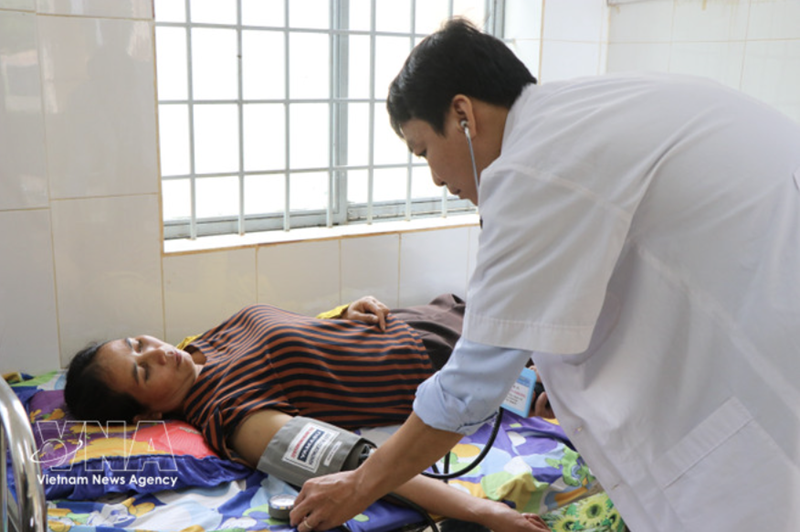
A local resident seeks medical examination at the health station of Cuor Dang commune, Dak Lak province. |
Notably, NCDs are increasingly affecting younger populations, with rising cases of hypertension, diabetes, lipid disorders, and cancer among people of working age. At the same time, Vietnam is entering a period of population aging, with the proportion of people aged 60 and above projected to reach around 20% by 2035.
Rapid aging is expected to drive up healthcare demand, particularly as older people often suffer from multiple conditions, including cardiovascular diseases, hypertension, diabetes, cancer, musculoskeletal disorders, and mental and behavioral disorders. Strengthening early detection, risk management, prevention, and screening based on gender, age, and risk factors is therefore essential to reduce premature deaths, cut treatment costs, and ensure social welfare.
The MoH stressed that prioritizing prevention over treatment is an urgent requirement, as the cost of treating NCDs, especially cardiovascular diseases, cancer, diabetes, and metabolic disorders, is several times higher than the cost of prevention.
Source: VNA