The visit, made at the invitation of Russian PM Mikhail Mishustin, takes place as Vietnam–Russia relations continue to be strengthened across multiple fields. The two countries recently celebrated the 75th anniversary of diplomatic relations in 2025.
Over seven decades of trusted traditional friendship
The former Soviet Union was among the first countries in the world to recognize and establish diplomatic relations with Vietnam on January 30, 1950, laying the groundwork for the enduring friendship and strong cooperation between Vietnam and Russia today. Over more than seven decades, both countries can take pride in the achievements made, as their relationship has grown increasingly comprehensive in both width and depth.
    |
 |
|
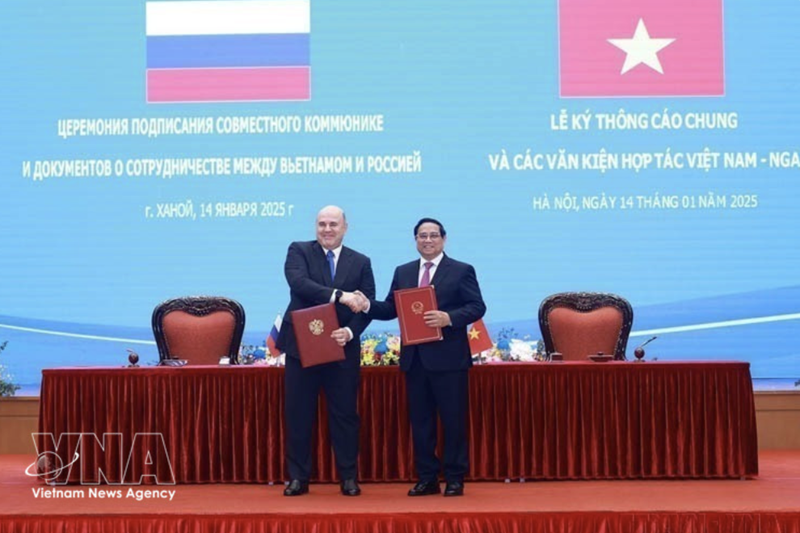
Prime Minister Pham Minh Chinh and his Russian counterpart Mikhail Vladimirovich Mishustin sign a Joint Communiqué on the outcomes of the official visit to Vietnam by the Russian Prime Minister |
Throughout Vietnam’s struggle for independence and national development, the Party, State, and people of Vietnam have always received valuable support and sincere assistance from the Soviet Union in the past and from Russia today.
On June 16, 1994, the two countries signed the Treaty on Basic Principles of Friendly Relations between the Socialist Republic of Vietnam and the Russian Federation, establishing a legal foundation for relations in a new stage of development. After more than 30 years, leaders of both countries always affirm the treaty’s historic significance as a symbol marking a new phase in multifaceted cooperation, paving the way for upgrading relations to a Comprehensive Strategic Partnership.
The two countries established a Strategic Partnership in 2001 and elevated it to a Comprehensive Strategic Partnership in 2012. In 2021, they issued a Joint Statement on the Vision of the Comprehensive Strategic Partnership through 2030. These were important milestones marking a new stage in bilateral relations. Within this framework, Vietnam–Russia cooperation has expanded strongly across all sectors. With a solid foundation of goodwill between leaders and peoples, political ties are characterized by high trust, with frequent high-level exchanges providing strong momentum for comprehensive cooperation.
|
|
 |
|
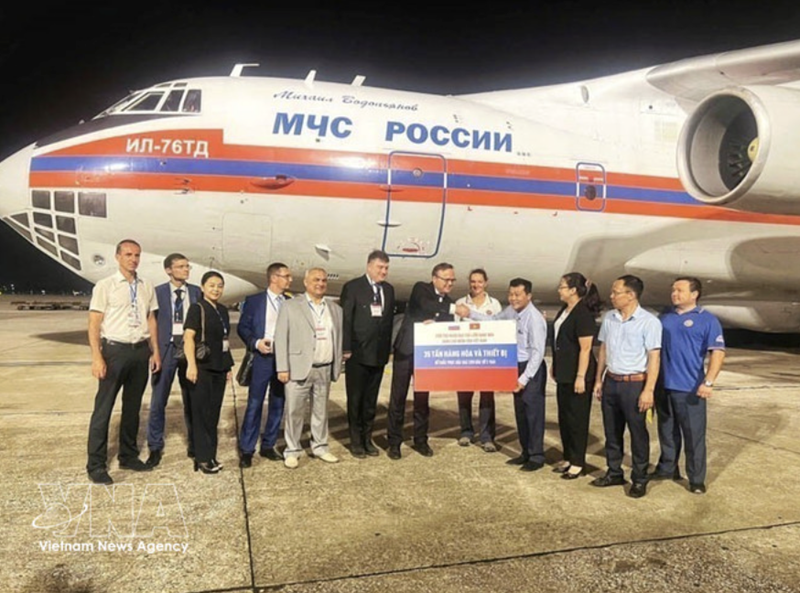
A special flight of the Russian Ministry of Emergency Situations carrying 35 tons of humanitarian aid to support the Vietnamese people in overcoming the consequences of Typhoon No.3 (Yagi) arrives at Hanoi's Noi Bai International Airport on the evening of September 20, 2024. |
Most recently, during the state visit to Vietnam in June 2024 by Russian President Vladimir Vladimirovich Putin, the two sides issued a joint statement on deepening the Comprehensive Strategic Partnership based on 30 years of implementing the 1994 treaty. This reflects the determination of both nations to make bilateral cooperation more effective and substantive across all fields, contributing to peace, cooperation, and development regionally and globally.
In 2025, the two countries celebrated the 75th anniversary of diplomatic relations (1950–2025) with numerous significant events and exchanges, including high-level visits and meetings between their high-ranking leaders. A highlight was General Secretary of the Communist Party of Vietnam Central Committee To Lam’s official visit to Russia and participation in the 80th anniversary of Victory Day in May 2025, coinciding with major historical milestones for both nations.
Beyond high-level visits and meetings, the two countries have maintained mechanisms such as the Intergovernmental Committee on Economic-Trade and Scientific-Technical Cooperation (established in 1992 and upgraded to deputy prime minister level in 2011), which meets annually. They have also coordinated closely in multilateral forums such as the United Nations, Asia-Pacific Economic Cooperation (APEC), Asia-Europe Meeting (ASEM), ASEAN Regional Forum (ARF), and Conference on Interaction and Confidence-Building Measures in Asia (CICA).
Effective cooperation across multiple fields
Economic and trade cooperation has continued to grow steadily, especially since the Free Trade Agreement between Vietnam and the Eurasian Economic Union took effect in October 2016. Bilateral trade reached 3.63 billion USD in 2023, 4.58 billion USD in 2024, and 4.77 billion USD in 2025. Vietnam’s key exports to Russia include electronics, garments, footwear, and agricultural and seafood products, while imports from Russia comprise coal, wheat, steel, fertilizers, automobiles, and machinery.
Russia currently has 199 investment projects in Vietnam with total registered capital of 990 million USD, ranking 26th among 147 countries and territories investing in the Southeast Asian nation. Meanwhile, Vietnam had injected 1.6 billion USD into 16 projects in Russia (as of December 2025).
|
|
 |
|
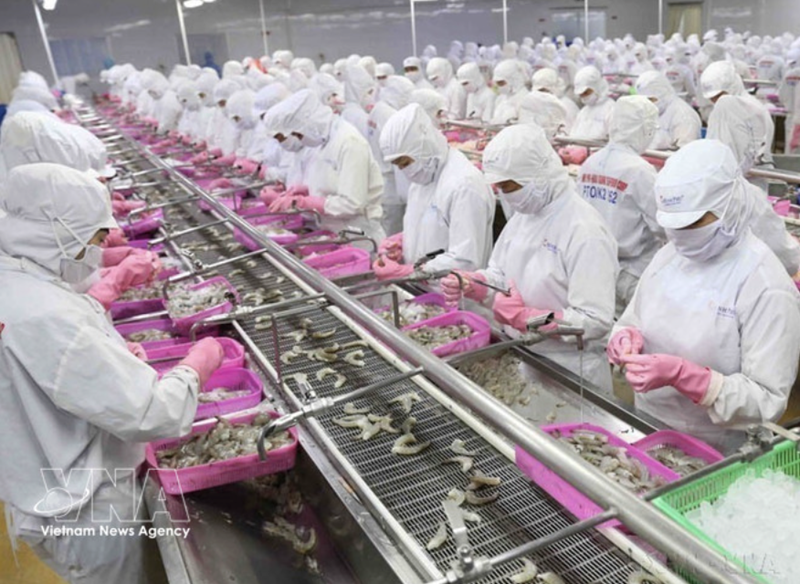
Vietnam exports seafood to Russia. (In the photo: a shrimp processing line for export at a factory of Minh Phu Seafood Corporation in Ca Mau province) |
Oil and gas remain a key pillar of bilateral cooperation. Both sides have signed and implemented protocols and agreements to extend and expand the operations of joint ventures such as Vietsovpetro and Rusvietpetro.
Cooperation in science-technology and education-training has expanded significantly and reached a strategic level. Russia has become an attractive destination for Vietnamese students thanks to high-quality training programs and scholarships, particularly in key industries such as energy and fundamental sciences.
Tens of thousands of Vietnamese professionals trained in Russia have contributed effectively to Vietnam’s economy and serve as a bridge of friendship between the two nations. Since 2019, Russia has increased scholarships for Vietnam to about 1,000 per year, with over 5,000 Vietnamese students currently studying in Russia.
Cultural, sports, and tourism cooperation has also been actively promoted with the annual and rotating organization of Cultural Days in each country. The Vietnamese community in Russia remains stable, united, and well-integrated while maintaining strong connections with their homeland.
Promoting a long-term vision for bilateral cooperation
With more than 75 years of strong relations as a foundation, Prime Minister Pham Minh Chinh’s official visit to Russia on March 22-25 is a significant event. It is the first high-level visit by a Vietnamese leader to Russia in 2026, opening a series of important events and high-level exchanges during the year.
According to Vietnamese Ambassador to Russia Dang Minh Khoi, the visit takes place shortly after Vietnam successfully held the 14th National Party Congress and the election of deputies to the 16th National Assembly. Vietnam is setting ambitious development goals to become a high-income developed country by 2045.
In this context, the visit aims to further strengthen Vietnam-Russia relations, especially in politics, and expand cooperation in key areas such as economy, trade, investment, energy, and oil and gas, he said.
It is expected to outline major directions for future cooperation: enhancing political trust, maintaining the Comprehensive Strategic Partnership in security, defense, and foreign affairs, and boosting economic and trade collaboration to make it more effective and substantive, he added.
Overall, Prime Minister Pham Minh Chinh’s visit demonstrates the high priority both countries place on their Comprehensive Strategic Partnership for the benefit of their people and for regional and global peace, stability, cooperation, and development.
Source: VNA