March 22, 2026 | 22:15 (GMT+7)
Vietnamese language school in Japan opens new academic year
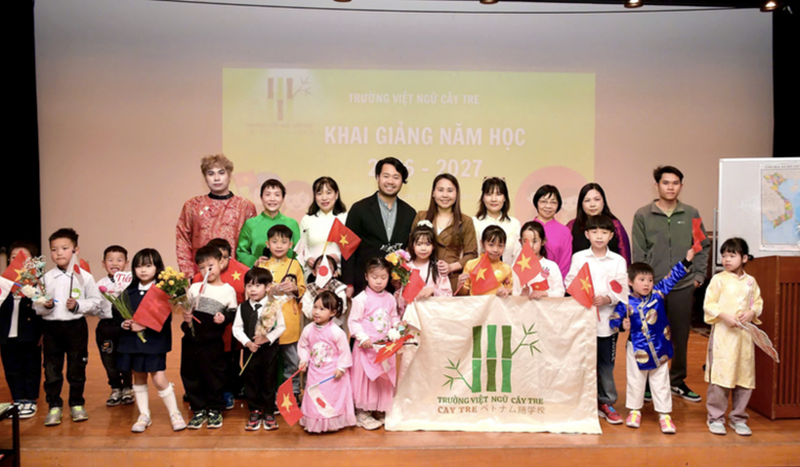
The Cay tre (Bamboo) Vietnamese Language School held an opening ceremony for its 2026 academic year at the Higashi Osaka Cultural Center on March 21, highlighting efforts to preserve the Vietnamese language among overseas communities.
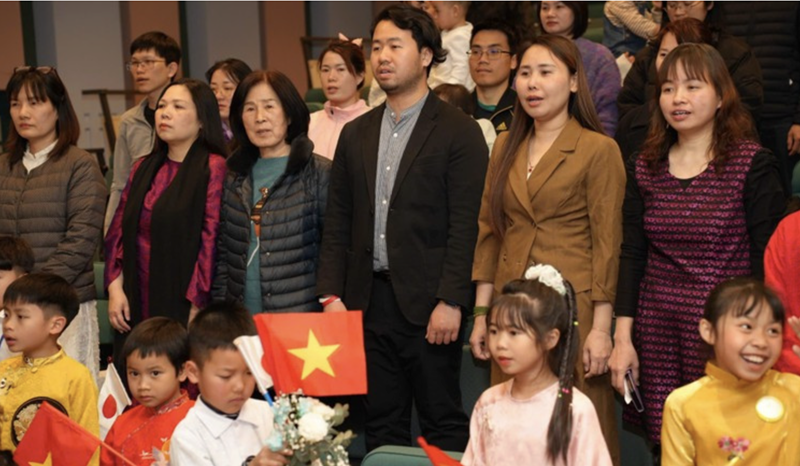
The event was attended by a representative from the Vietnamese Consulate General in Osaka, along with parents, students, and representatives from Vietnamese language classes in nearby localities, including Yao city.
    |
 |
|
Cay Tre Vietnamese Language School in Osaka, Japan, holds the opening ceremony for the 2026-2027 academic year. |
Speaking at the ceremony, the school principal Le Thuong outlined the school’s development and underscored the importance of the Vietnamese language in connecting generations of overseas Vietnamese. She noted that in the context of deepening global integration, maintaining the mother tongue helps younger generations better understand their roots, fostering family bonds and a sense of connection to their homeland.
She added that the 2026 school year is launched in line with Politburo Resolution No. 80-NQ/TW on developing Vietnamese culture. The school’s activities, she said, serve as a practical example of implementing this policy, contributing to building a united and sustainable Vietnamese community in Japan.
Currently, the school has around 80 students divided into three classes, including two in-person and one online. In addition to formal lessons, it organizes extracurricular activities and exchanges to strengthen bonds among students and create a dynamic learning environment.
|
|
 |
|
The presence of delegates reflected the community’s deep concern for preserving and promoting the Vietnamese language in the lives of overseas Vietnamese. |
The teaching staff comprises 12 members, including three professionally trained teachers and nine volunteers who support classroom activities.
The ceremony featured vibrant cultural performances by students, showcasing traditional Vietnamese songs and dances, and creating a lively atmosphere warmly received by parents and guests.
Source: VNA