In a recent document sent to the Ministry of Construction, the committee asked that passenger services on the national railway section between Hanoi Station and Gia Lam Station be adjusted.
    |
 |
|
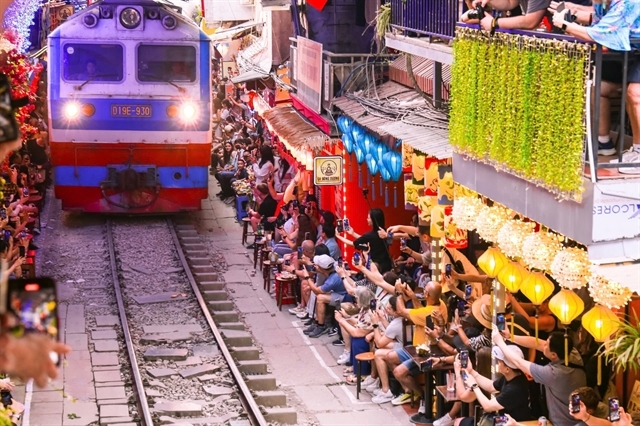
Tourists, mainly foreigners, take videos and photos of the passing trains along the 'railway café street' in Hanoi. |
Under the proposal, southbound passenger trains would terminate at Hanoi Station, while northbound services would stop at Gia Lam. Passenger transfers between the two stations would be handled by the city’s construction and transport authorities.
If implemented, the change would mean no passenger trains passing through the stretch of track between Hanoi Station and Long Bien Station, where the café-lined railway runs through densely populated neighborhoods in the inner city.
The city has also asked the Construction Ministry to hand over the management of national railway infrastructure on the Gia Lam – Hanoi section by the second quarter of 2026. This would allow the capital to carry out urban renewal and conservation projects on the western edge of the Old Quarter and the eastern area of the central heritage zone around the Imperial Citadel of Thang Long.
The railway café street, located mainly in the Kham Thien and Phung Hung areas of Hoan Kiem ward, has become one of Hanoi’s most photographed attractions in recent years – to the chagrin of local authorities. Videos and images of tourists sipping coffee just centimeters from rumbling trains have gone viral on social media platforms, drawing large numbers of foreign visitors.
Local authorities have repeatedly warned that this site poses serious safety risks. The cafés operate on land originally designated as a railway safety corridor, where construction and commercial activities are prohibited. During peak tourist hours, visitors often crowd onto the tracks to take photos, obstructing the railway and leaving little room for error when trains pass through.
Over the past few years, Hanoi has launched several enforcement campaigns, temporarily closing cafés and ordering tourists to leave the area when trains are due. Yet the measures have proved difficult to sustain, as businesses often reopen once inspections end and tourists continue to be drawn by the site’s online fame.
According to the city government, the proposal is part of a broader plan to preserve and enhance the historical and cultural value of the railway corridor, particularly around the iconic Long Bien Bridge, where there is also the train track. The city is working with the French Embassy’s economic agency on a technical assistance project to study renovation options for the bridge, focusing on traffic safety and heritage conservation.
Hanoi also plans to develop cultural, service and tourism spaces around the 131 stone railway arches beneath the elevated track running from Hanoi Station to Long Bien, along streets such as Phung Hung and Gam Cau. These arches have already been partially transformed into art spaces and cafés in recent years.
At the same time, the city says it will study architectural solutions for the planned urban railway Line No. 1 as it passes through the Old Quarter and the French Quarter, with the aim of avoiding damage to the area’s historic urban fabric.
Source: VNA