In the autumn of 1945, under the leadership of the Communist Party of Viet Nam (CPV) and President Ho Chi Minh, the Vietnamese people made a historic turning point. The success of the August Revolution culminated when President Ho Chi Minh read the Declaration of Independence at historic Ba Dinh Square in Hanoi on September 2, 1945, giving birth to the Democratic Republic of Viet Nam (now the Socialist Republic of Viet Nam) and opening an era of independence and freedom for the nation.
Steady economic growth with expanding scale
Viet Nam has gone through an 81-year journey marked by enormous challenges as well as glorious achievements. The Vietnamese people fought prolonged wars to defend national independence and reunify the country, overcame severe post-war difficulties, embarked on the Doi Moi (Renewal) process, and progressively integrated into the world.
From a poor, underdeveloped country, Viet Nam has become a large-scale economy with a high degree of openness and an active and responsible member of the international community.
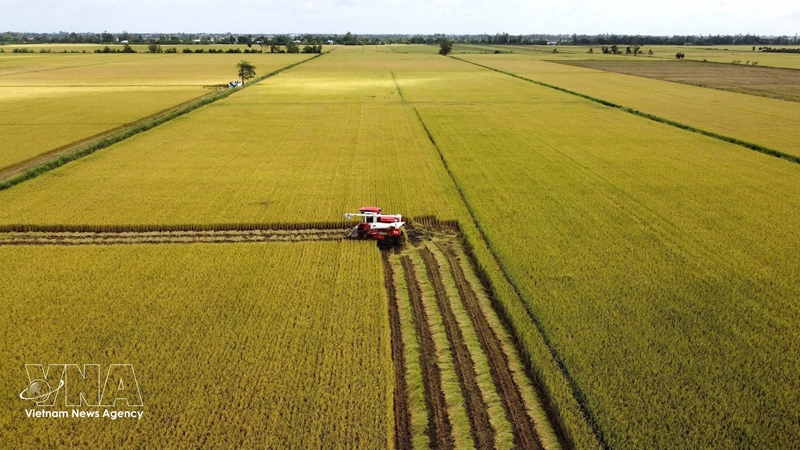
In particular, four decades of Doi Moi have demonstrated the vitality of a development path suited to Viet Nam's conditions. From a small economy, Viet Nam has emerged as one of the region's dynamic economies. In 2025, its GDP grew 8.02% year-on-year, placing Viet Nam among the high-growth economies in the region and the world.
    |
 |
|
Viet Nam has emerged as one of the region's most dynamic economies. |
The result was particularly significant amid continued volatility in the global economy. Growth momentum has continued in 2026, with GDP expanding 8.18% in the first six months year-on-year. This provides an important foundation for the economy to pursue its target of double-digit growth.
Alongside economic growth, Viet Nam's international trade has continued to expand. In 2025, total import-export turnover exceeded 930 billion USD, a record high, while the country posted a trade surplus of 20.03 billion USD, marking the 10th consecutive year of trade surplus. Key exports, including electronics, garments and textiles, machinery, agricultural products and seafood, have increasingly strengthened their presence in international markets.
In the first six months of 2026, total goods trade reached 549.69 billion USD, up 27% year-on-year. Exports stood at 266.52 billion USD, up 21%. Imports also increased sharply, reflecting strong demand for machinery, equipment and raw materials for production and investment.
Viet Nam has also become an increasingly attractive destination for foreign investors. At the end of 2025, the country had 45,416 valid FDI projects with total registered capital of about 529.6 billion USD. Cumulative disbursed capital was estimated at 350.22 billion USD, equivalent to about 66.1% of the total registered capital of valid projects. In the first half of 2026, total registered FDI capital in Viet Nam reached 34.65 billion USD, up 61% from the same period last year, while disbursed FDI stood at 13.03 billion USD, up 11.2%.
Viet Nam is gradually shifting from attracting investment based primarily on quantity toward prioritizing quality, technology, innovation, stronger linkages with domestic enterprises and sustainable development.
Tourism has also become an important economic sector, making an increasingly significant contribution to economic growth and promoting the country's image. In 2025, Viet Nam welcomed 21.2 million international visitors, the highest level ever recorded and more than 20% higher than in 2024. In the first six months of 2026, the number of foreign arrivals reached nearly 12.3 million, up 14.9% year-on-year. These figures demonstrate Viet Nam's growing appeal, while reflecting the strong recovery and rising position of its tourism industry on the global map.
Expanding infrastructure and development space
Alongside economic growth, the country's appearance has changed significantly. North-south expressways, major cross-river bridges, seaports, airports, new urban areas and strategic infrastructure projects have created an increasingly integrated connectivity network, shortening geographical distances and improving links among regions as well as between production centers and domestic and international markets.
By the end of 2025, Viet Nam had completed and put into operation 3,345 km of expressways and 1,711 km of coastal roads.
Modern bridges such as Nhat Tan, Can Tho, My Thuan and Vinh Tuy have not only made travel and trade more convenient but have also become symbols of Viet Nam's remarkable progress in transport infrastructure.
|
|
 |
|
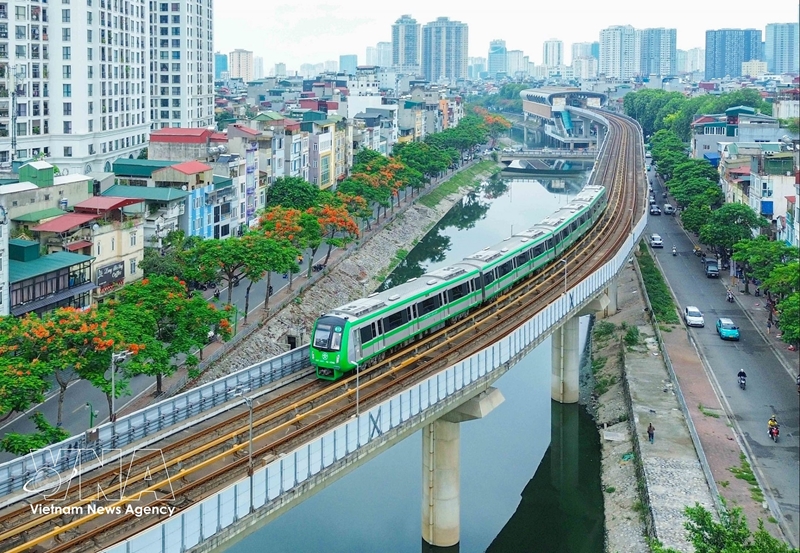
A view of the Cat Linh - Ha Dong urban railway line in Hanoi |
International airports, including Noi Bai, Tan Son Nhat and Da Nang, have also been expanded and upgraded. In particular, Long Thanh International Airport in Dong Nai city is expected to become an important regional aviation hub once it begins operations, enhancing Viet Nam's connectivity with major economic centers around the world.
Meanwhile, the operation of urban railway systems in Hanoi and Ho Chi Minh City has opened a new chapter in public transport development, helping ease pressure on road networks and improve the quality of urban life.
Alongside investment in physical infrastructure, 2025 marked an important shift in the organization of the country's development space, as the National Assembly officially approved a resolution on reorganize provincial-level administrative units, leaving the country with 34 provinces and cities.
The scheme was designed not just to simplify administrative units, but also to open up more space for development, boost regional connections, and make full use of local strengths and resources, enabling the formation of new growth hubs and drivers.
At the same time, from July 1, 2025, the Party and the entire political system officially shifted to a new organizational model and a two-tier local administration system. This was not merely a change in administrative boundaries, but a strategic reform aimed at streamlining the apparatus, strengthening decentralization and delegation of authority, and building an administration that better serves people and businesses.
After one year of operating under the new overall organizational model and two-tier local administration, the new apparatus is generally stable, affirming that the reform is correct, necessary and strategically significant to national development.
General Secretary of the Communist Party of Viet Nam (CPV) Central Committee and President To Lam has instructed that in the coming period, priority should be given to improving operational quality, thereby contributing to the development of a modern, integrity-based, facilitative, and people-centered national governance system.
These changes demonstrate that Viet Nam is not only developing in scale but is also renewing its governance methods, creating an institutional foundation for a new stage of development.
Development for the people – measure of progress
If economic growth is the driving force, people are the goal and the subject of the development process. Throughout 81 years of national construction and defense, particularly during the Doi Moi process, Viet Nam has pursued economic development hand in hand with social progress and equality, and improvement of people's living standards.
Poverty reduction is one of the country's outstanding achievements. By the end of 2025, the national multidimensional poverty rate (covering both poor and near-poor households) had fallen to 2.95%. This was the result of a range of policies to support poor and near-poor households, create sustainable livelihoods and improve people's incomes.
At the same time, social insurance and support policies for people with disabilities, women, children and the elderly have been strengthened, contributing to a more equitable society with development opportunities for all. The success of the nationwide program to eliminate makeshift and dilapidated houses in 2025 is a vivid testament to the spirit of “leaving no one behind.”
The healthcare sector has also made significant achievements. The rate of child malnutrition has declined sharply, while average life expectancy has increased considerably. The universal health insurance system has continued to expand, covering more than 95.2% of the population.
Viet Nam has mastered advanced medical techniques, including organ transplantation, cancer treatment through immunotherapy, and remote laparoscopic surgery. These advances have helped save and improve the lives of millions of patients while bringing Vietnamese healthcare closer to regional and global standards.
Education continues to be identified as a top national priority. Starting from the 2025-2026 academic year, the State has waived tuition fees for preschool children and general education students at public educational institutions nationwide. Starting in the 2026-2027 academic year, many areas will offer free textbooks to students. These initiatives help reduce the financial strain on families, broaden access to education, and show a strong commitment to creating a fairer and more inclusive education system.
Culture is increasingly seen as the spiritual backbone of society, as well as a key goal, resource, and driver for development. Viet Nam has enhanced its policies and laws on culture, placing more focus on preserving and promoting heritage values, fostering a healthy cultural environment, and developing cultural industries.
Many of Viet Nam's tangible and intangible cultural heritages have been recognized by UNESCO, helping affirm the identity, vitality and value of Vietnamese culture in the international arena.
|
|
 |
|
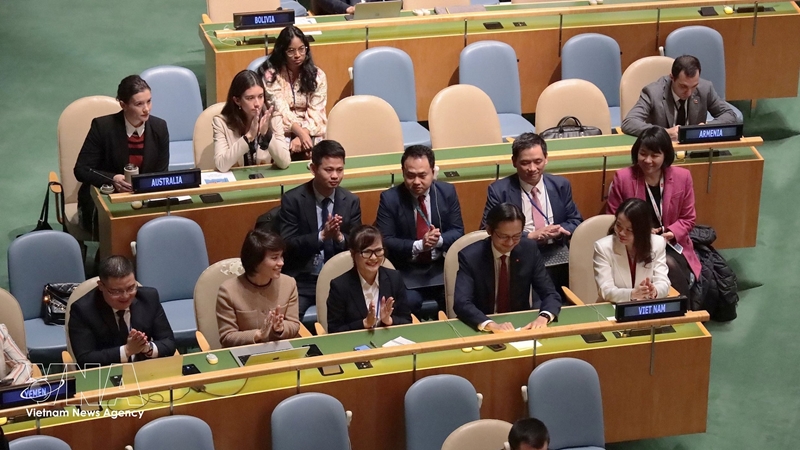
Viet Nam has become an active member of the international community, engaging deeply in multilateral cooperation mechanisms and assuming numerous international roles. |
Cultural and artistic activities have become increasingly diverse, while many Vietnamese cultural products have gradually reached international markets, creating additional resources for economic development and promoting the image of the country and its people.
The successful organization of large-scale cultural and artistic events, together with the strong development of cinema, music, publishing, fashion and creative industries, demonstrates that culture is becoming increasingly integrated into socio-economic life.
Science-technology, innovation and digital transformation – new development drivers
Throughout the 81-year journey of national construction and development, science-technology has increasingly affirmed its important role in raising productivity and competitiveness, and strengthening national potential.
In the years following the August Revolution, science-technology mainly served the resistance wars, national construction, production, and efforts to overcome post-war consequences. During the Doi Moi process, the sector gradually became a driving force for the country's industrialization and modernization.
In response to new development requirements, the Party has made a strong shift in its mindset, particularly through the Politburo's Resolution No.57-NQ/TW dated December 22, 2024, which identifies science and technology development, innovation and national digital transformation as top strategic breakthroughs and key driving forces for developing modern productive forces, renewing governance methods and promoting national development in the new era.
This spirit was reaffirmed in the documents of the 14th National Party Congress, which call for stronger development of science and technology, innovation and digital transformation to create new momentum for rapid and sustainable growth.
Viet Nam has gradually developed an innovation ecosystem and promoted new technology fields such as artificial intelligence, semiconductors, big data and biotechnology. Many Vietnamese tech firms have expanded their operations into international markets. The country's 2025 Global Innovation Index improved to 44th among 139 economies, keeping Viet Nam among the economies with high ranks in the region.
Digital transformation is increasingly reshaping production, business, management and social life. Digital platforms and national databases have been developed, connected and utilized across various sectors, contributing to more effective governance and better services for people and businesses.
Science-technology, innovation and digital transformation are therefore opening up new development space, creating conditions for Viet Nam to shorten its development process, strengthen technological self-reliance and gradually shift from resource-based advantages toward advantages based on knowledge and creativity. These are among the important drivers that will help Viet Nam realize its aspiration for rapid and sustainable development and build a strong and prosperous nation.
Viet Nam's international standing continues to rise
Viet Nam is now an active member of the international community, maintaining extensive diplomatic relations, engaging deeply in multilateral cooperation mechanisms, and assuming a growing number of international responsibilities.
It has established diplomatic relations with all 193 U.N. member states and comprehensive strategic partnerships with many major countries. It is also a member of more than 70 major international organizations and forums, while signing and implementing a number of new-generation free trade agreements.
Viet Nam's contributions at the U.N., ASEAN, APEC, ASEM and other multilateral forums demonstrate that the country is not only integrating into the international community for its own development, but is also taking an increasingly proactive role in addressing shared regional and global challenges. Its growing international position and prestige have been reflected through its increasingly active engagement in multilateral mechanisms.
|
|
 |
|
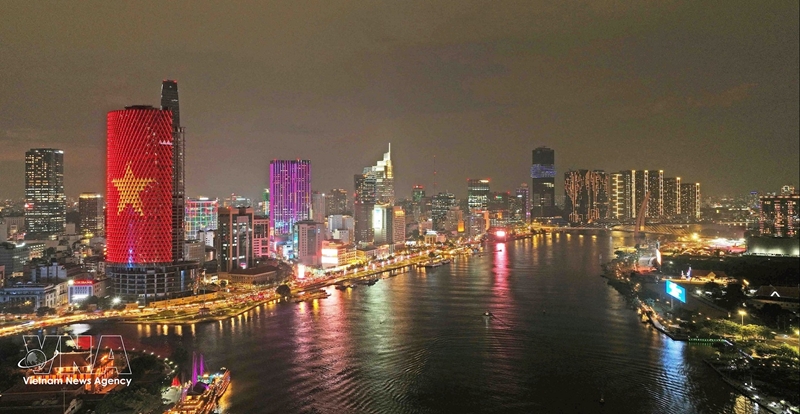
Viet Nam advances toward a strong and prosperous future. |
In October 2025, Viet Nam was re-elected to the U.N. Human Rights Council for the 2026-2028 term, with the highest number of votes among Asia-Pacific countries.
In particular, in 2026, Viet Nam’s image as a responsible member of the international community was highlighted via the deployment of 124 officers and personnel from the Viet Nam People’s Army and the People’s Public Security to Venezuela in June to assist with search and rescue efforts and post-earthquake recovery.
Viet Nam is increasingly shifting from participation to proactive contribution, and from deep integration to proactively shaping an environment of peace, cooperation and development, while effectively mobilizing external resources for national development. Political diplomacy, economic diplomacy, cultural diplomacy, and people-to-people diplomacy are becoming increasingly interconnected, helping expand markets, attract resources, enhance the country’s image and standing, and safeguard national interests.
Eighty-one years since the autumn of 1945 have marked a remarkable journey for Viet Nam. From a newly independent country facing immense difficulties and challenges, Viet Nam has gradually built a peaceful, unified, developing, and increasingly integrated nation.
The achievements recorded over the past 81 years are vivid evidence of the strength of the aspiration for independence, self-reliance and development shared by the entire Vietnamese people.
These achievements are a vivid testament to the strength of the nation’s will for independence, self-strengthening and development. Entering a new phase, with a solid foundation already in place, Viet Nam will continue to harness the strength of great national unity, promote innovation, proactively pursue international integration, and remain determined to build a powerful, prosperous, civilized and happy country.
Source: VNA