Fostering love for homeland
In early September, National Day events across Viet Nam are reinforcing a sense of pride among Vietnamese living abroad. For them, that attachment is reflected in holidays and homeland-focused events, as well as activities that preserve language, culture and traditions, and maintain connections to Viet Nam.
The bonds with their homeland, nurtured through generations, have become an important part of the journey to strengthen connections between Vietnamese communities abroad and their home country. This is also one of the areas receiving close attention from the Politburo, as clearly reflected in Resolution No. 23.
The resolution reaffirms the OV community’s role in national construction and defense, while laying out tasks and solutions to consolidate great national unity, strengthen bonds with Viet Nam, and pool the community’s resources, expertise and contributions for national development.
Vietnamese language – a sacred bond
Preserving the Vietnamese language and national cultural identity is seen as a key foundation for keeping generations of Vietnamese abroad connected to their roots.
Do Thi Bich Hang, President of BiziVietnam, an organization for Vietnamese culture, language and cooperation in Finland, said the resolution’s emphasis on language and national identity helps connect generations of overseas Vietnamese.
    |
 |
|
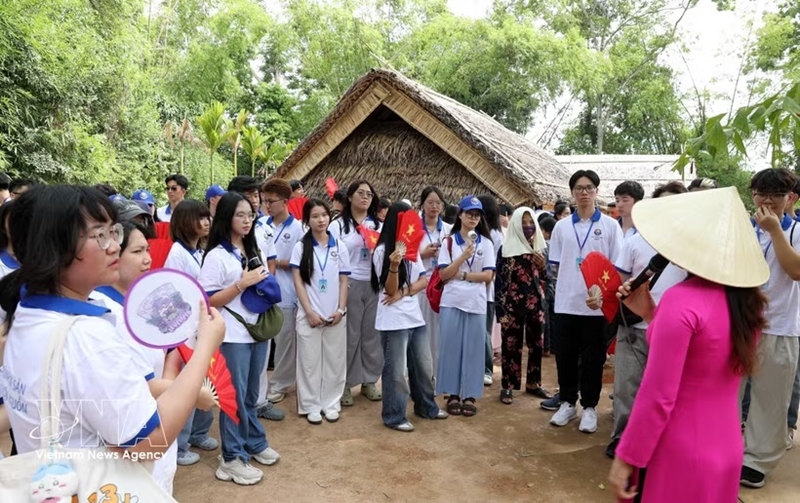
Young OVs visit Kim Lien special national relic site in Nghe An province, as part of the Viet Nam Summer Camp 2026 |
In Finland, Vietnamese language classes should move beyond basic listening, speaking, reading and writing to become cultural spaces where children learn Vietnamese music, literature, history, customs and traditional values, she said.
At BiziVietnam, Vietnamese lessons are mixed with stories of Vietnamese history, culture, geography and people. Children are encouraged to speak Vietnamese with grandparents and relatives and join competitions and homeland visits.
Monthly children’s clubs focus on themes such as the Lunar New Year, Mid-Autumn Festival, Hung Kings Commemoration Day, stories about President Ho Chi Minh and the National Day, combining traditional games, cultural performances, storytelling and Vietnamese reading.
The group has held two editions of its “Young Talent” and “I Love Viet Nam” competitions, encouraging children to perform in Vietnamese.
Hang said more support is needed for Vietnamese language teachers overseas, including expanded online training to help instructors update teaching methods and attract younger people to the profession.
Meanwhile, Vietnamese associations and agencies should continue providing curricula and teaching materials, supporting teacher training and staging exchanges that create daily opportunities for children to use Vietnamese.
Hang also proposed a centralized digital platform for teaching and learning Vietnamese abroad, built on existing textbooks and organized by age, proficiency level and learning needs. The platform could provide accounts for students, teachers and parents to assign work, monitor progress and connect users across countries.
With AI integration, students could practice speaking, choose northern, central or southern Vietnamese accents, and receive lessons and scenarios tailored to their proficiency, she added.
Pooling OV expertise
Alongside preserving the Vietnamese language and culture, and maintaining ties with their homeland, OVs are making practical contributions to the country through their knowledge, expertise and resources.
Pham Khanh Nam, Editor-in-Chief of Huong Viet magazine in Germany, said Viet Nam’s new growth stage requires viewing OV resources beyond capital to include knowledge, technology, management experience, innovation capacity and international networks.
|
|
 |
|
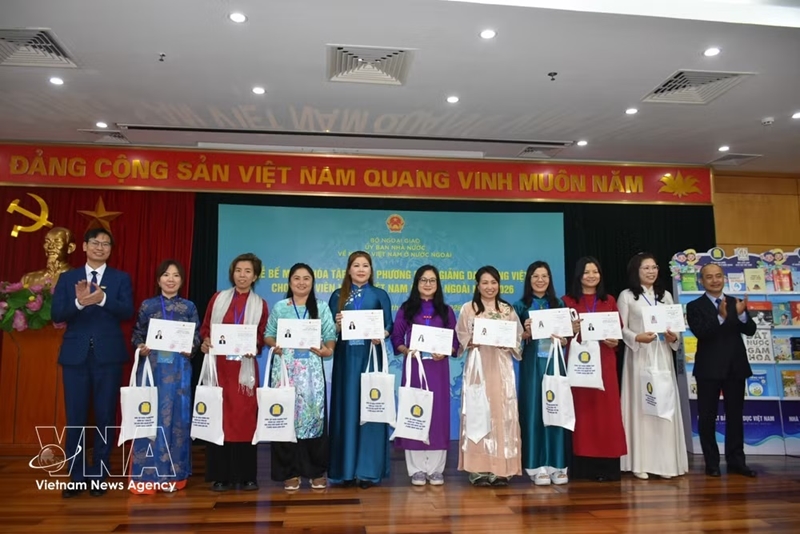
OV teachers attend a Vietnamese training course 2026 |
He said a notable part of the resolution is its call for more innovation in how Viet Nam approaches OV affairs.
“The past policy centered on uniting OVs and encouraging them to look toward the homeland; the emphasis now is on converting their strengths into concrete resources”, he noted.
According to him, the mindset of overseas Vietnamese is changing. In the past, many wanted to contribute out of a sense of attachment to their homeland, through activities that connected them with their roots or through initial investments. Today, more experts, entrepreneurs and academics want to play a more direct role in Viet Nam's development through scientific research, innovation, technology transfer, policy advice and high-quality workforce training.
The trend is in line with Resolution No. 23, which calls for making better use of the resources of OVs to support rapid, sustainable development and national defense, he stressed.
He emphasized the need for stronger mechanisms to turn the goals set out in the resolution into action. These should include a more open and transparent legal environment, incentives for investment and technology transfer, regular channels connecting ministries, local authorities and networks of OV experts, and flexible arrangements allowing academics, entrepreneurs and scientists to contribute to Viet Nam regardless of where they live.
He said he also expects Resolution No. 23 to usher in a more substantive phase of cooperation between overseas Vietnamese and local authorities, universities, research institutes and domestic businesses.
With digital transformation reducing the importance of geographical distance, he noted the key is to build stable, long-term channels that allow overseas Vietnamese to put their knowledge, experience and international networks to work for Viet Nam's development.
Source: VNA