Place where historical memory blends into rhythm of modern life
From early morning until late afternoon, the pathways in Le Thi Rieng Park are always filled with people taking their daily exercise. Birds chirp among old trees, creating a peaceful scene in the heart of Ho Chi Minh City. Yet deeper inside the park, around the memorial steles and the site where the search and recovery of fallen soldiers' remains are underway, the atmosphere becomes solemn.
    |
 |
|
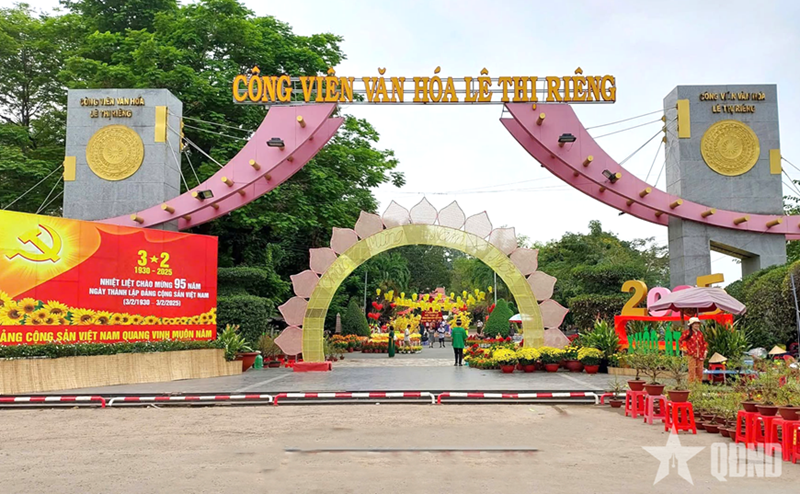
Main entrance to Le Thi Rieng Park |
|
|
 |
|
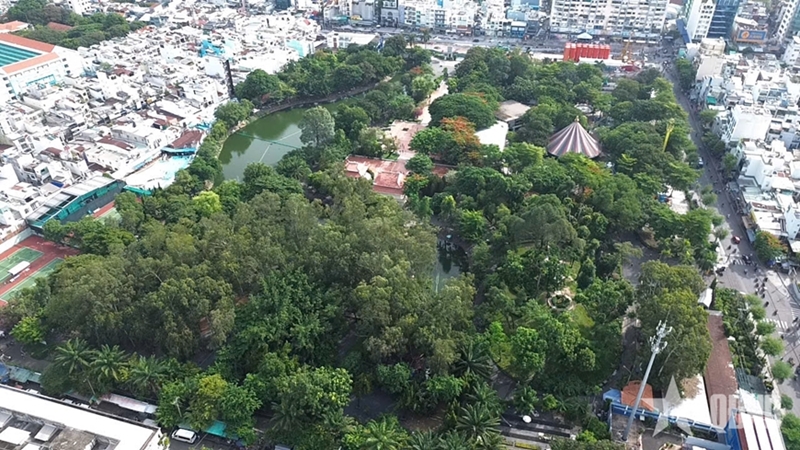
Le Thi Rieng Park seen from above |
Columns of incense smoke rise gently into the air, while fresh bouquets are carefully laid before the memorials. Many visitors stand silently for long moments, following every update released by the Ho Chi Minh City Military Command, hoping that the nation's fallen heroes will soon be reunited with their families and comrades.
Over the past time, delegations of leaders from the Party, the State, the Vietnam People's Army, as well as ministries, agencies and local authorities, have come to offer incense in tribute to the martyrs and encourage on-duty forces. Some are veterans returning to the battlefields of their youth, while others are relatives of fallen soldiers who still hold onto the hope of finding their loved ones after nearly six decades of waiting.
|
|
 |
|
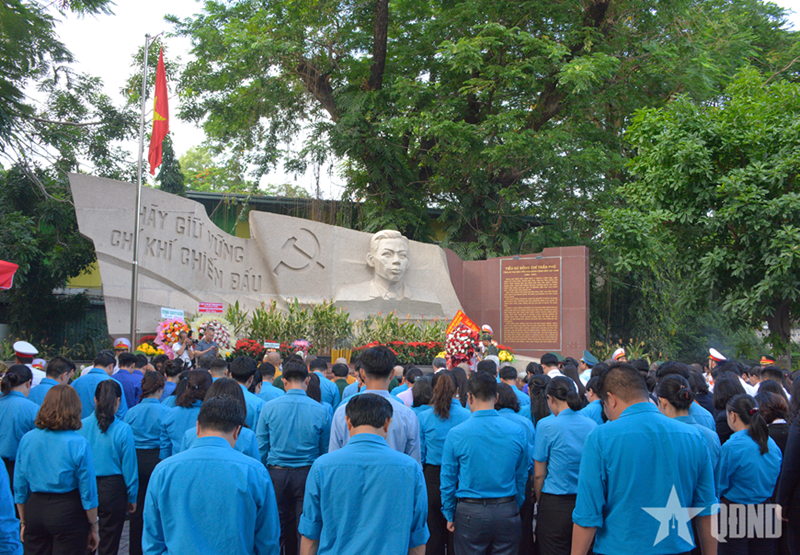
A delegation pays tribute to late General Secretary Tran Phu. |
Before becoming a cultural park, the site was formerly Do Thanh cemetery, one of Saigon's largest cemeteries before 1975. Following national reunification, Ho Chi Minh City relocated the graves and transformed the area into a public park. In 1988, Le Thi Rieng Park was officially inaugurated, creating a community space on land deeply marked by history.
The park was named after hero of the People's Armed Forces Le Thi Rieng, a member of the Central Committee of the National Front for the Liberation of South Vietnam and Vice President of the South Vietnam Women's Liberation Association. Naming the park in her honor not only pays tribute to one of the nation's distinguished persons, but also serves as a lasting reminder of countless officials, soldiers and civilians who sacrificed their lives for the country's independence and freedom.
For many years, monuments in Le Thi Rieng Park have served as “red addresses,” places of historical significance where Youth Union members, students, and officers and soldiers come to offer incense, learn about national history.
Place of gratitude
Yet what has made Le Thi Rieng Park truly remarkable in recent days is not only its memorials or the steady stream of visitors coming to offer incense, but also quiet, heartfelt stories of solidarity among people and comrades.
|
|
 |
|
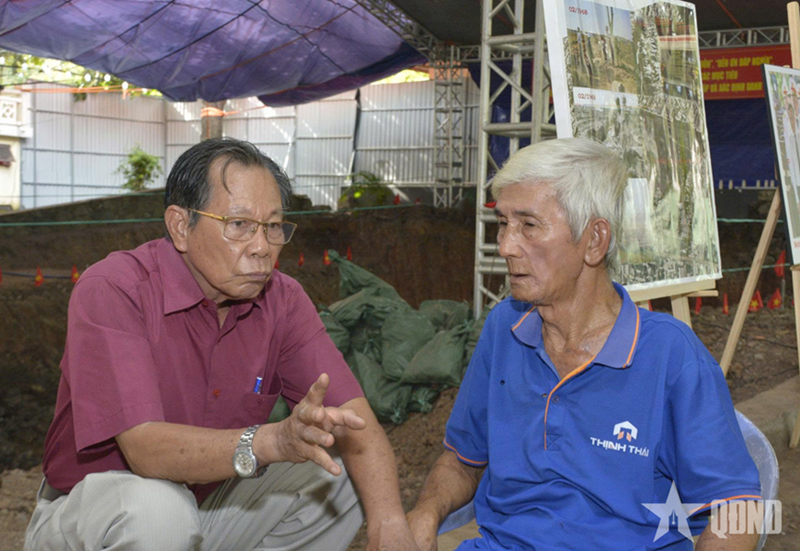
Veteran Tran Van Ban (left) and Nguyen Van Dinh |
Nguyen Van Dinh, who has lived in the park for many years, has temporarily set aside his work selling lottery tickets so that he can spend every day beside the excavation trenches. Despite his stooped back, weak hands and trembling legs, he silently follows every stage of the excavation, sharing with the search teams the memories he has of this land. His greatest wish is to witness more fallen soldiers being found after nearly six decades.
Elsewhere at the site, veteran Tran Van Ban, now in his eighties, continues to volunteer in collecting biological samples from the recovered remains of fallen soldiers. To him, every DNA sample represents another chance for a family to be reunited and for those who made the ultimate sacrifice to once again be identified by name.
|
|
 |
|
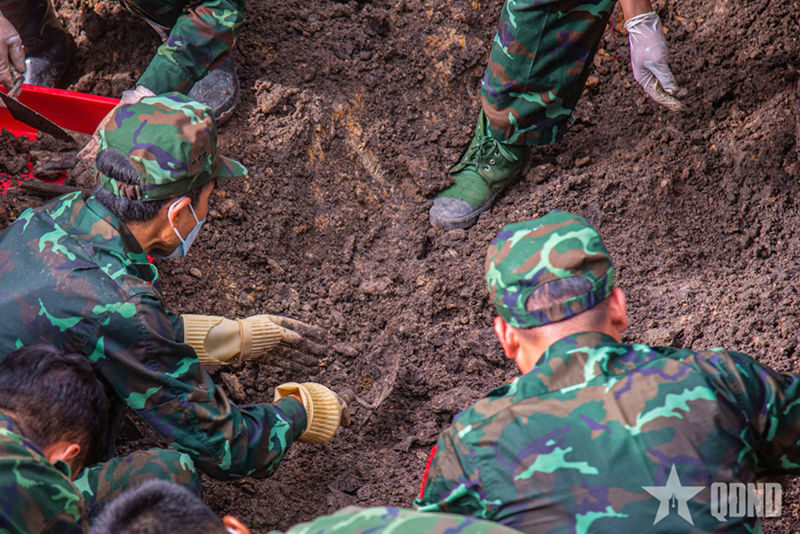
Troops performing the task of searching for and collecting martyrs’ remains |
|
|
 |
|
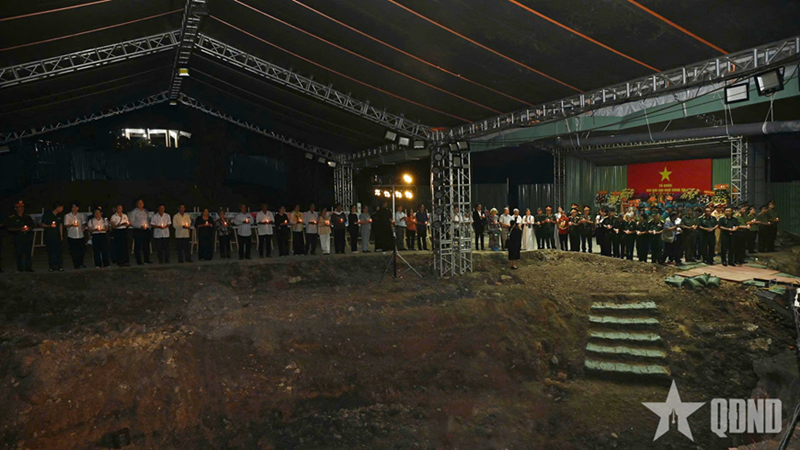
People offering incense in tribute to fallen soldiers |
Architect Nguyen Xuan Thang, who has spent many years researching documents related to the 1968 Spring General Offensive and Uprising, is also a familiar figure at the park. He is often seen carrying old maps and weathered files. Working alongside the authorities, he compares historical landmarks and locations, providing valuable information to help identify collective burial trenches. The perseverance of people like him has made an important contribution to the search for and recovery of fallen soldiers' remains.
For Do Thi Lua, a resident of Hoa Hung ward, Ho Chi Minh City, the park is more than a weekend destination for her family; it is also a living history classroom for her children.
Life continues peacefully on this land once scarred by war. Yet it is here that every stick of incense lit, every act of compassion shared, and every set of remains recovered transforms Le Thi Rieng Park into far more than just an urban park. It is a place of memory, gratitude and enduring faith that, no matter how much time passes, the sacrifices made for the nation will always be honored and preserved by present and future generations.
Translated by Quynh Oanh