Addressing legal awareness gap
In Long Sap commune, many residents still remember the years when drug-related problems plagued their villages. Buoc Pat, now part of Phieng Cai village, was once known as the “village without men” because many men and young people became involved in drug addiction and illegal drug trafficking, leaving women and elderly residents to support their families.
    |
 |
|
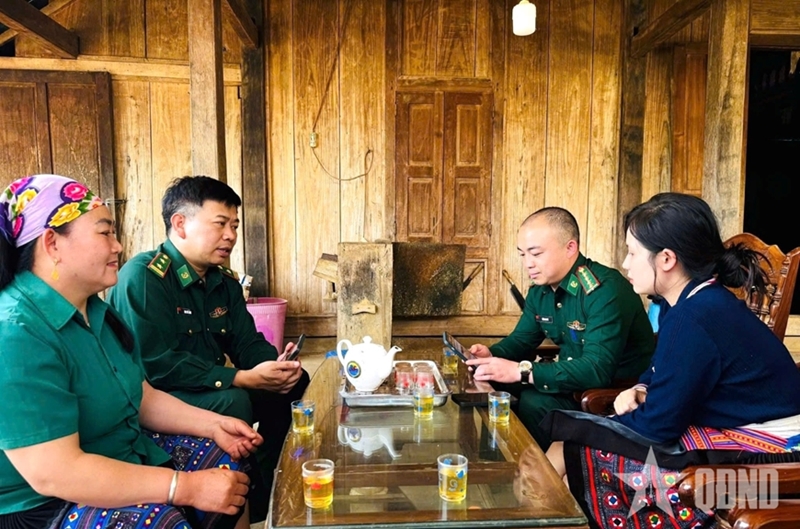
Officers and soldiers of Chieng On Border Post disseminate the law to local residents. |
Local resident Mua A De said that 16 of the village’s former 18 households had at least one family member who had served a prison sentence or undergone drug rehabilitation. Other problems are illegal border crossings, the use of hunting rifles and homemade firearms, and various legal violations. Limited legal awareness, lack of information, and difficult living conditions have made some residents vulnerable to exploitation.
Trang A Da, 26, from Phieng Cai village, previously went into Laos without completing the required procedures because he considered the paperwork complicated. His experience has highlighted the need for more accessible legal education.
Language barriers, uneven educational levels, difficult terrain, and outdated customs have also complicated outreach efforts. Lieutenant Colonel Mai The Canh, Deputy Political Commissar of Chieng On Border Post, said some residents struggled to distinguish official information from misleading content on social media. Differences in language and customs further hindered communication, making it essential to deliver legal information in simple, practical ways that address people's everyday concerns.
|
|
 |
|
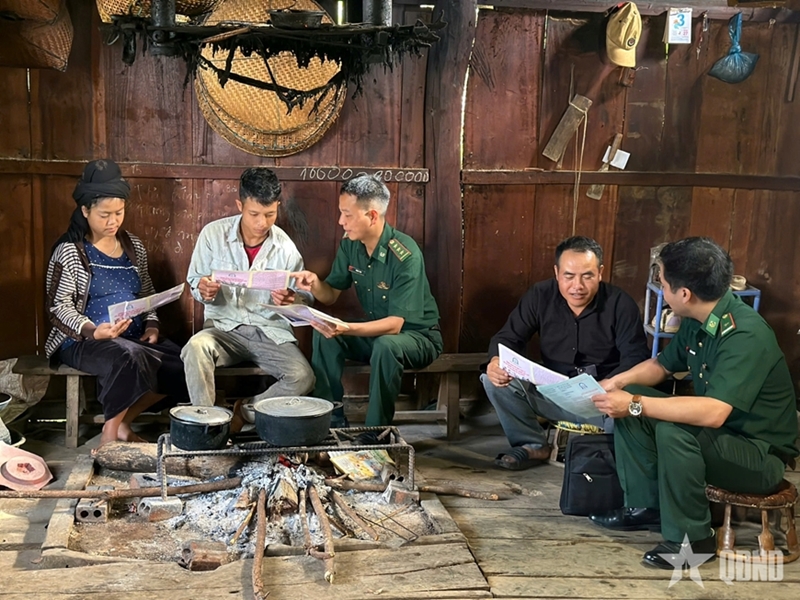
The Son La Border Guard disseminates the law to local residents. |
Bringing law closer to border communities
To address these challenges, the Son La Border Guard has diversified its legal education methods, combining public outreach with practical assistance to residents. Border guard officers and soldiers work with local Party committees and authorities, village elders, and village heads to visit households, explain legal regulations, and encourage compliance.
At Chieng On Border Post, the “Border Guard Loudspeaker” initiative brings legal information directly to remote communities. Officers and soldiers use small loudspeakers mounted on motorcycles to travel along mountain roads and reach villages and fields. They communicate government policies and laws, warn residents against harmful misinformation, discourage illegal migration and border crossings, and encourage participation in protecting border sections and markers.
To overcome language barriers, the unit organizes ethnic language classes for its personnel and assigns officers familiar with local cultures and languages to conduct outreach activities. They visit residents at home or meet them in the fields, wherever they can be reached.
|
|
 |
|
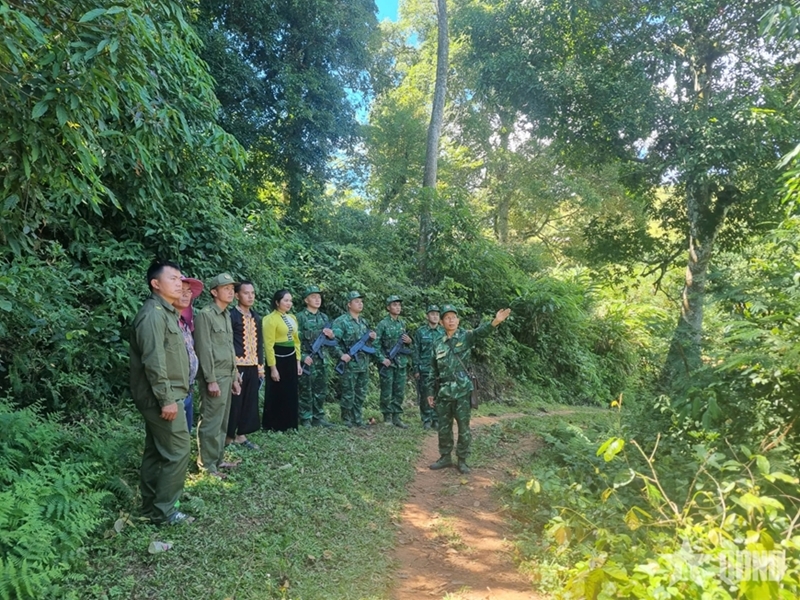
Officers and soldiers of the Border Post of the Long Sap International Border Gate provide information about the Viet Nam Border Guard Law to residents in the border area. |
At the Border Post of the Long Sap International Border Gate, legal education is also linked to efforts to combat drug-related crime, encourage rehabilitation, support former drug users, and help people who have completed prison sentences reintegrate into society. Alongside explaining legal prohibitions, border guard personnel help residents find livelihoods and stabilize their lives to reduce the risk of reoffending.
Thanks to their guidance, Trang A Da now understands entry and exit regulations and voluntarily follows the required procedures when crossing the border. “Regular outreach by border guard officers has helped me better understand legal policies and avoid violations. I no longer listen to bad guys or assist criminals, and I can focus on working and earning a living,” he said.
The changes are particularly evident in Phieng Cai, which includes the former Buoc Pat village. According to Colonel Lo Van Dien, Political Commissar of the Border Post of the Long Sap International Border Gate, the village has been recognized as having successfully overcome its drug-related problems. Security and public order have improved, allowing residents to focus on their livelihoods and economic development.
Trang A Tua, Secretary of the Party Cell and Head of Phieng Cai village, said drug abuse had once devastated many families and prevented residents from working and earning a living. Regular outreach by border guard personnel has helped people understand the dangers of drugs, comply with law, and encourage their children to stay away from social evils. Residents are now working to improve their livelihoods and maintain peace in the village.
Today, green passion fruit fields and fruit-laden plum orchards reflect the changes in Phieng Cai. Among the families rebuilding their lives is that of Trang A Sai, who struggled with drug addiction for 10 years. In late 2021, following the encouragement from border guard officers, he entered rehabilitation. After returning home in late 2023, he received support in the form of crops and livestock to develop his livelihood.
He now has more than 3,000 square meters of Shan Tuyet tea plantations, along with rice, corn, and poultry. Most importantly, he can stay home to care for his children instead of leaving his family to endure the hardships of the past. “Thanks to border guard soldiers, my family now has a spacious, well-built house to live in,” he said.
Through outreach sessions in villages, household visits, legal guidance, rehabilitation support, and livelihood assistance, the Son La Border Guard is gradually translating Project 1371 into practical results. Experience in border communities show that legal education is most effective when it addresses residents’ actual needs and is closely connected to their daily lives. When people understand and voluntarily comply with law, they also become active contributors to maintaining peace and security along the nation's border.
Translated by Tran Hoai