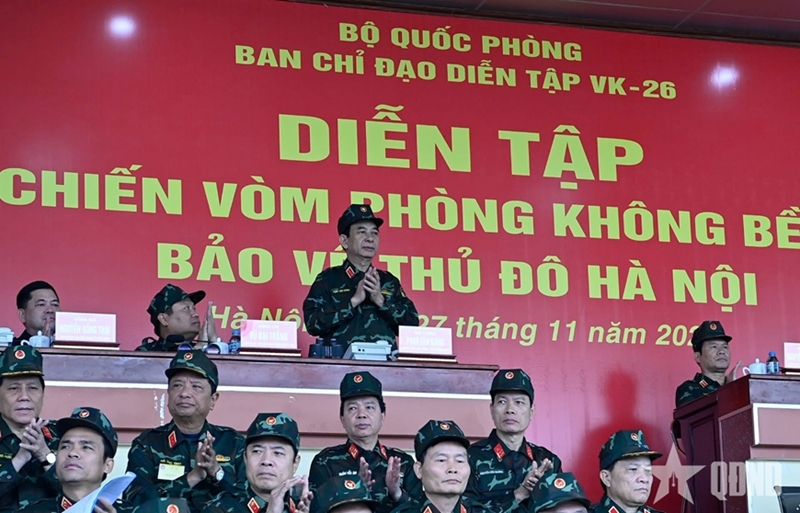
Deputy Prime Minister and Minister of National Defense General Phan Van Giang attended and directed the exercise.
Under the exercise scenario “Ha Noi Capital Command coordinates with the Air Defense - Air Force Service and other forces to conduct sustainable air defense dome operations to protect the capital.” Participating units carried out activities in accordance with the Steering Committee’s plan.
    |
 |
|
General Phan Van Giang attends and directs the exercise. |
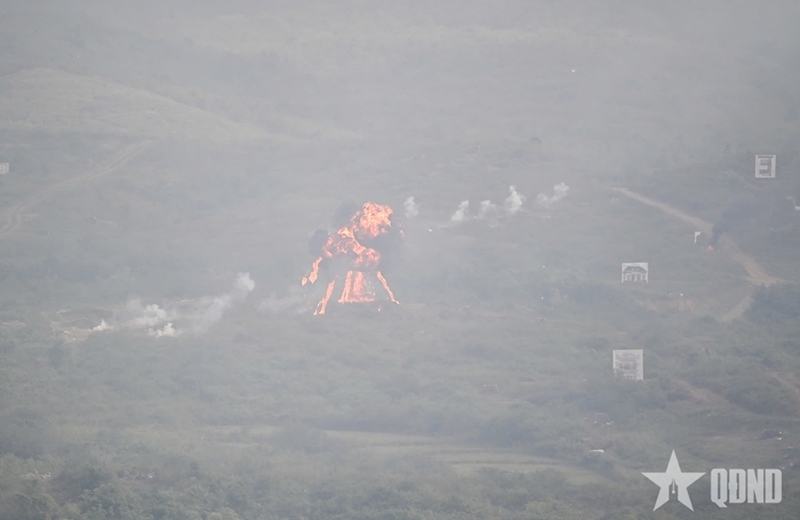
The exercise included reconnaissance, air defense notifications and alerts, combined with civilian evacuation; operations to repel simulated aerial firepower attacks from multiple directions, with a focus on the main and secondary axes; and measures to address the aftermath of each attack.
The exercise demonstrated close coordination and cooperation between air defense and air force units and other participating forces, helping improve their ability to respond to operational scenarios and organize combat operations to protect designated targets and areas.
|
|
 |
|
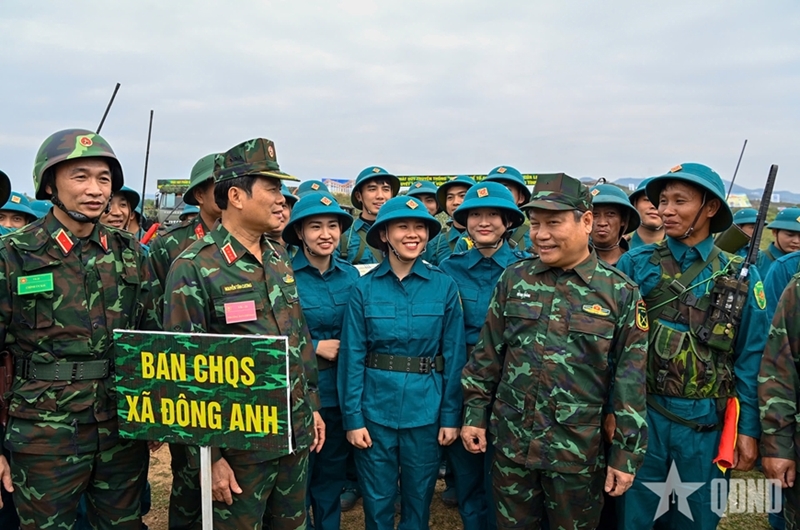
MND leaders and delegates present gifts to encourage the participating forces. |
In his remarks, General Phan Van Giang commended the participating forces for their efforts and successful completion of the practical and field-training components. He noted that the exercise had initially demonstrated the General Staff’s operational concept, particularly in coordinating forces and applying new content, methods and combat approaches.
The general stressed that, given the rapid development of unmanned aerial vehicles (UAVs), relevant forces should thoroughly study and assess the characteristics, operating methods, threat levels and potential destructive capabilities of each type of UAV.
|
|
 |
|
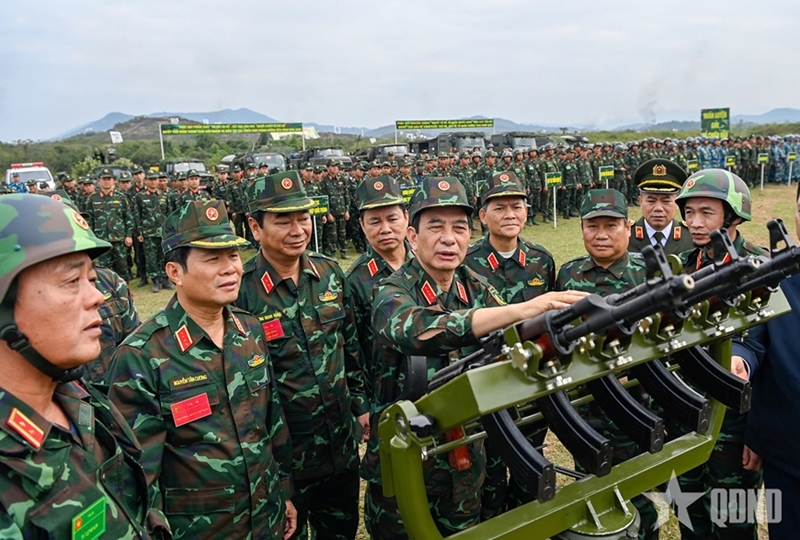
General Phan Van Giang and delegates inspect military equipment at the exercise. |
He pointed out that UAVs come in various types, operate across different terrains and at different altitudes, and are increasingly flexible and sophisticated in their control and deployment methods. Therefore, units should maintain a firm grasp of deployment areas, UAV control positions and command-and-control arrangements. They should also employ a diverse range of weapons, equipment and platforms to detect, suppress and destroy UAVs, while bringing into play the combined strength of all forces in counter-UAV operations.
General Phan Van Giang instructed agencies and units to review the exercise and draw lessons, while coordinating with local authorities to develop and improve defensive infrastructure, combat positions, trenches and fortifications in line with actual conditions. He also stressed the need to develop practical plans for civilian evacuation and protection, providing clear guidance on how residents should take shelter during enemy airstrikes. Operational plans should closely reflect potential adversaries’ characteristics, tactics and methods of operation, while ensuring feasibility and flexibility in responding to contingencies.
|
|
 |
|
Participating forces carry out exercise activities. |
|
|
 |
|
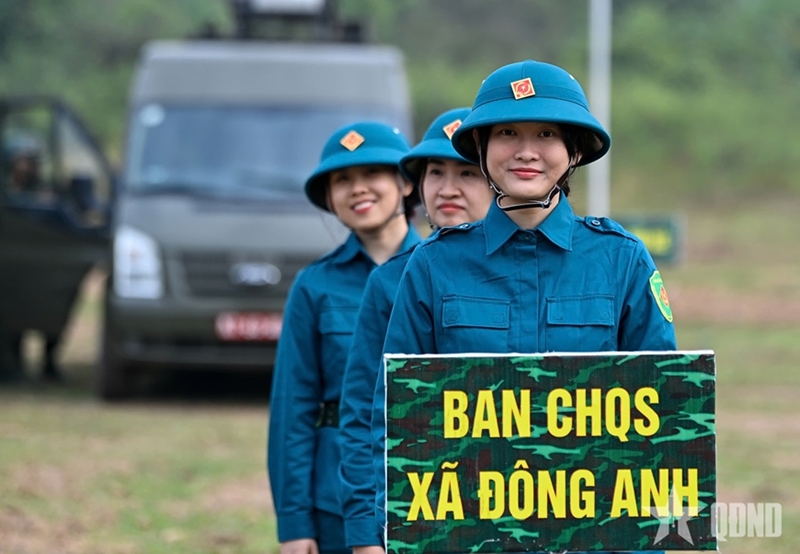
The militia force takes part in the exercise. |
A highlight of the exercise was the use of various types of weapons and technical equipment researched, developed, manufactured and upgraded by Viet Nam’s military, including missiles, artillery, firearms, UAVs, communications and electronic warfare systems, ammunition and explosives. The exercise helped assess the forces’ ability to operate and use these systems, while improving command capabilities, coordination and combat readiness in sustainable air defense dome operations.
Translated by Quynh Oanh