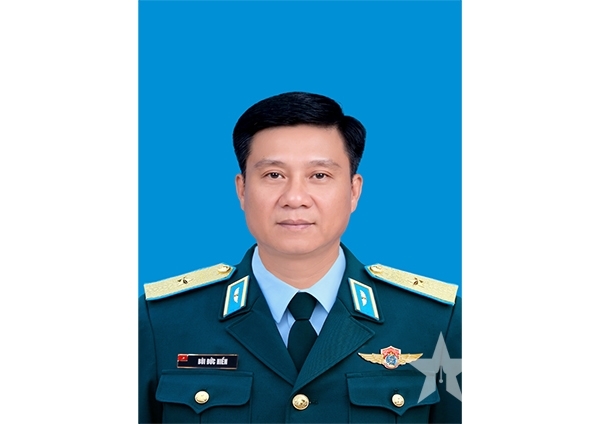
As UAVs become increasingly diverse in type, size, capability, and methods of operation, the distinction between civilian applications and potential threats to national defense and security is becoming more complex. In an interview with the People’s Army Newspaper, Major General Bui Duc Hien, Deputy Commander and Chief of Staff of the Air Defense - Air Force Service, discussed the Service’s efforts to address these emerging challenges.
    |
 |
|
Major General Bui Duc Hien |
Talking about how the Air Defense - Air Force Service is adapting to ensure early detection, accurate identification and pro-active management of UAV-related threats, Major General Bui Duc Hien stated that the rapid development of UAVs requires comprehensive changes in both thinking and airspace management methods. Previously, airspace surveillance focused largely on detecting aerial targets with relatively well-defined characteristics. Today, however, given the diversity of UAVs, forces cannot rely on a single piece of equipment or an isolated system. Instead, they must build comprehensive surveillance capabilities that combine modern technology with multiple sources of information and appropriate surveillance methods.
To fulfill its assigned tasks, the Service strictly maintains round-the-clock combat readiness, airspace management and flight operations management and control. It has stepped up the deployment of radar systems designed to detect targets flying at low and extremely low altitudes, in coordination with air defense observation posts, to ensure early detection and accurate classification of aerial targets. At the same time, it promotes the role of the people’s air defense system in detecting and reporting unusual activities.
In addition, the Service is making full use of its existing surveillance systems, strengthening connectivity and information sharing among relevant forces, and researching and applying scientific and technological advances, particularly artificial intelligence, to support target analysis, recognition, assessment and early warning.
Mentioning about the decisive factors in assessing aerial situations, exercising command and organizing appropriate responses, Major General Bui Duc Hien emphasized that the process from receiving initial information to making a response decision demands accuracy, consistency, timeliness and action within the proper authority. If information is not communicated smoothly, forces fail to coordinate effectively or commanders assess situations incorrectly, the effectiveness of modern equipment will be limited.
Accordingly, the Service is focusing on three key priorities.
First, it continues to improve command, management and operational procedures, enhance information quality and strengthen coordination among forces to ensure consistent situational assessments and clearly defined responsibilities at every command level and within each force, avoiding overlapping responsibilities or overlooked tasks.
Second, it places particular emphasis on human resource development, ensuring that officers and soldiers not only fully understand the technical and operational characteristics of their weapons and equipment, but also possess analytical thinking, sound situational judgment and the flexibility to respond to new types of UAVs and unexpected situations. To this end, the Service has comprehensively renewed training content, programs and methods, while increasing realistic scenario-based exercises to improve personnel’s proficiency with their equipment and coordination among forces.
Third, it is stepping up research into and application of appropriate technological solutions to enhance the management, surveillance and handling of UAV-related situations, in accordance with its assigned functions and duties and relevant legal regulations.
|
|
 |
|
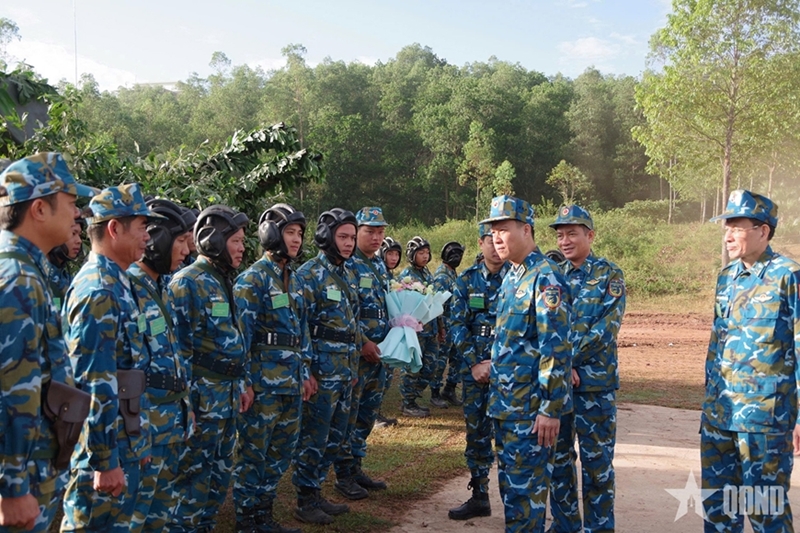
Air Defense - Air Force Service leaders encourage troops participating in an exercise at the National Firing Range in Military Region 1 in November 2026. |
Regarding the decisive breakthrough needed to move beyond responding to individual incidents toward pro-active, systematic and long-term management of civilian UAVs, the Service’s Deputy Commander and Chief of Staff noted that the key lies in shifting from a reactive approach to comprehensive, pro-active risk management. As an issue spanning multiple sectors and fields, it requires coordinated involvement from ministries, agencies, local authorities, and relevant forces.
The immediate priority is to modernize airspace surveillance and management systems, accelerate digital transformation, apply scientific and technological advances, and gradually establish a unified database to improve connectivity, information sharing and situation forecasting.
This must be accompanied by a pro-active, multi-layered airspace defense posture, particularly through the implementation of the “sustainable air defense dome” operational plan. UAV surveillance, monitoring and response capabilities must be integrated into the overall people’s air defense posture, in conjunction with the protection of critical facilities and key strategic areas.
At the same time, flight operations management plans must be further refined, and state management of civilian UAVs must be strengthened. Management should be strict and coordinated at every stage, from importation, production, trade, and ownership registration to flight authorization and monitoring.
Responsibilities must be clearly assigned to relevant agencies, organizations and individuals, while public communication and guidance should be strengthened to help UAV users understand and strictly comply with legal regulations.
Elaborating on the objectives, significance and implementation requirements of the “sustainable air defense dome” operational plan, Major General Bui Duc Hien affirmed that developing the plan is a strategic requirement aimed at establishing a robust air defense posture capable of detecting, monitoring and effectively responding to aerial threats, including new methods of attack in modern warfare.
Realizing this objective demands comprehensive renewal, from developing the air defense posture and building forces to modernizing weapons and equipment, applying science and technology, and developing high-quality human resources.
In recent years, the Service has actively strengthened its air defense posture, improved its airspace management and protection capabilities, promoted scientific research and technical innovations, gradually modernized weapons and equipment, and accelerated digital transformation in command, management and operational activities.
It has also renewed training to better reflect actual mission requirements, improve equipment mastery and command capabilities, and enhance coordination among forces.
Major General Bui Duc Hien noted that the strength of the “sustainable air defense dome” must come from the coordinated combination of the air defense posture, weapons and equipment, science and technology, and personnel, with command and organizational capabilities, along with mastery of weapons and equipment, playing a particularly important role.
Lessons learned from recent tactical live-fire exercises conducted by air defense units have helped refine combat options, operational intent, and combat plans, ensuring that they meet the requirements of airspace management and protection in the new situation.
Highlighting the Air Defense - Air Force Service’s responsibilities amid increasingly demanding UAV management and control tasks, Major General Bui Duc Hien stated that the Service will continue to pro-actively study and closely monitor developments, renew its thinking and methods of implementation, and build a force with firm political resolve, high professional competence, and the ability to master weapons, equipment and technology.
It will also strictly maintain combat readiness while improving airspace surveillance and management capabilities and coordination with relevant forces.
Furthermore, the Service will closely integrate force development and equipment modernization with improvements to coordination mechanisms and procedures, ensuring a balance between national defense and security requirements and the management of flight operations in support of socio-economic development.
All airspace management, surveillance and response activities must strictly comply with assigned functions, authority and legal regulations, while preventing any situation from catching the force off guard.
Taking a pro-active approach, the Air Defense - Air Force Service will continue working closely with other forces, agencies and local authorities to build a robust airspace management and protection posture capable of meeting mission requirements in the new situation.
Translated by Minh Anh