Speaking at a press briefing on the U.S. Trade Representative (USTR)’s preliminary findings under Section 301 of the Trade Act of 1974 concerning structural excess capacity and production in manufacturing industries, Thai said the U.S. investigation must follow its domestic laws, particularly Section 301.
Under the preliminary findings, the U.S. has proposed a maximum rate of 35%. If the two countries reach an agreement on reciprocal, fair and balanced trade, known as the ART, the rate can be lower to 20%.
    |
 |
|
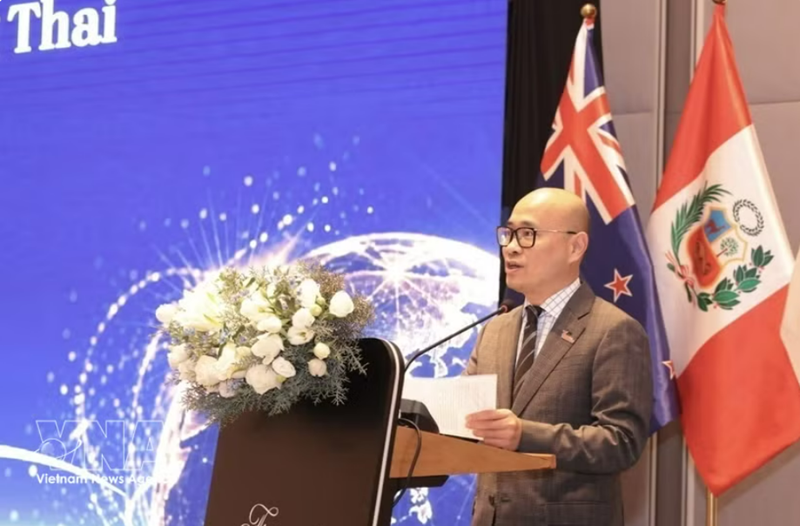
Deputy Minister of Industry and Trade Luong Hoang Thai |
Thai stressed that the findings are preliminary and that the U.S. investigation process still includes opportunities for consultation, clarification and public feedback before a final decision is made. Relevant countries, U.S. businesses and other stakeholders can submit their views during this process.
The final tariff decision rests with the U.S. under its own laws and will depend on information provided by the parties as well as discussions between the two countries in the coming period, he said.
The Ministry of Industry and Trade, together with other ministries and agencies of Viet Nam, has already provided information to the U.S. side and will continue to do so. Vietnamese-based businesses, including U.S.-invested companies, can also contribute their views to the investigation.
At the 5th meeting of senior officials of the Comprehensive and Progressive Agreement for Trans-Pacific Partnership (CPTPP), held in Hanoi from November 23 - 27, CPTPP members and partners from ASEAN and the European Union also discussed the issue. Participants did not agree with the USTR’s allegations that global manufacturing industries are suffering from excess capacity, Thai said.
Regarding the next steps, he said Viet Nam would pursue two channels of engagement with the U.S. The first is cooperation under the Section 301 investigation. Viet Nam will maintain close contact with U.S. authorities, submit further information and take part in public hearings. The ministry will also coordinate with industry associations, particularly the American Chamber of Commerce in Viet Nam, to ensure that U.S. investigators receive full, accurate and objective information.
The second channel is negotiations on the ART. Viet Nam has provided the necessary information and proposed commitments that are comparable to, or even go beyond, those made under some of its existing free trade agreements. These proposals demonstrate Viet Nam’s goodwill and readiness to reach an agreement, although the two sides still need to review and reach consensus on its provisions, he said.
Thai expressed his hope that the two countries would soon reach agreement and sign the deal, describing Viet Nam’s proposed commitments as unprecedented in scope.
He said the Government is also preparing businesses for possible trade risks amid complicated international developments. On November 21, the Government issued a resolution on an overall plan to manage trade surpluses and prevent risks in international trade activities for 2026-2030.
The Ministry of Industry and Trade has been tasked with working with other agencies to support businesses and help them develop appropriate risk-management plans. The ministry’s Trade Remedies Authority of Viet Nam also regularly issues warnings about potential cases involving the circumvention of trade remedies and other trade-related risks.
On November 25, Standing Deputy Prime Minister Pham Gia Tuc chaired meetings with ministries and agencies to discuss measures to proactively manage import-export risks. Thai said the Government would continue working alongside businesses and cooperating with U.S. agencies to minimize potential impacts.
Source: VNA