The PAPI Rankings 2021 was announced on May 10 in Hanoi by the Center for Community Support and Development Studies (CECODES), the Center for Research and Training of the Vietnam Fatherland Front (VFF-CRT), the United Nations Development Program (UNDP), and other partners.
PAPI is a policy monitoring tool that assesses citizen experiences and satisfaction with government performance at the national and sub-national levels in governance, public administration and public service delivery.
    |
 |
|
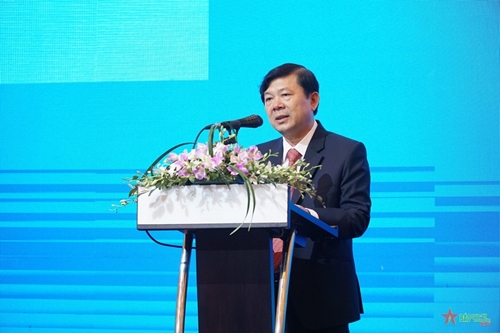
Dr. Nguyen Huu Dung, Vice President of the Vietnam Fatherland Front Committee, speaks at the ceremony |
Despite COVID-19-caused difficulties, PAPI program has collected opinions of 15,833 people nationwide, the highest number since 2009 when the program started. As a result, over the past 13 years, the total number of respondents to the program has reached 162,066.
Addressing the ceremony, Dr. Nguyen Huu Dung, Vice President of the Vietnam Fatherland Front Committee, said that PAPI has helped promote accountability towards citizens and contribute to innovation in the public sector for the benefit of people, aside from the aims of people know, people discuss, people do and people verify in grassroots-level democracy implementation.
UNDP Resident Representative in Vietnam Caitlin Wiesen said that the overall aim of PAPI is to improve the quality of government functions, responsiveness, transparency, and accountability of public institutions, and monitor the implementation of important agenda on human rights.
Highlighting the importance of PAPI 2021 findings, the UNDP official stressed that they reflect the impacts of the COVID-19 pandemic on the efficiency of public governance. These will help administrations at all levels develop scenarios in response to future economic and health crises.
According to PAPI Rankings 2021, 30 cities and provinces have improved their performance in public service provision, environmental governance and e-governance. In addition, basic infrastructure has improved with higher quality of roads, clean water and environmental sanitation along with decrease in crime in security and order in residential areas possibly due to the impact of social distancing and travel restrictions.
Translated by Mai Huong