The project seeks to build and apply a model based on advanced technologies, including artificial intelligence (AI), the Internet of Things (IoT), and fully automated smart transport systems, while modernizing multimodal logistics infrastructure in a synchronized manner. It will also ensure effective connectivity with railways, inland container depots, expressways, and economic corridors linking Vietnam and ASEAN countries with China’s southwest region.
    |
 |
|
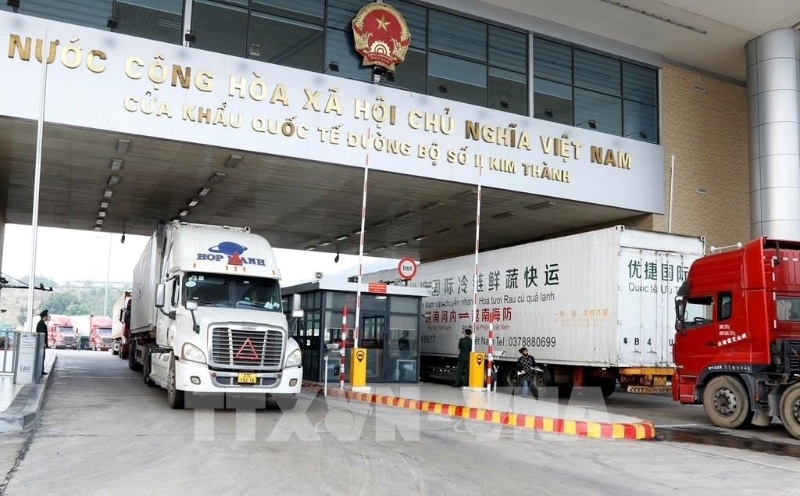
Vehicles crossing Kim Thanh International Land Border Gate No. 2 in Lao Cai |
The initiative is oriented towards forming a major hub for import–export activities, helping to enhance competitiveness, promote international integration, safeguard national defense and security, and support sustainable development in the Vietnam–China border area.
The smart border-gate model is expected to increase clearance capacity and efficiency to meet growing trade demand, while also helping combat smuggling, trade fraud, counterfeit goods, and substandard products.
By 2030, the project aims to double freight throughput at Kim Thanh and Ban Vuoc, reduce average logistics costs for businesses using fully automated smart transport by 20–30%, significantly shorten administrative processing times, and ensure compliance with safety, environmental, and modern logistics service standards. Total import–export turnover through the area is expected to reach approximately 9 billion USD.
Implementation will begin in the second quarter of 2026. Phase one will focus on establishing the legal framework, technical standards, and specialized procedures for the smart border-gate model, as well as reaching agreements with the Chinese side on cross-border road transport of goods using fully automated smart vehicles.
Phase two will involve operational deployment of the smart border-gate model in accordance with relevant sectoral regulations, alongside the development of the necessary infrastructure.
Source: VNA